
NEW
Font size
 Worksheets
Elements Of Art, Principles of Design and Colour Harmonies
Total questions: 30
Worksheet time: 22mins

The empty or open area between, around, above below and within objects.
form
Space
colour
balance

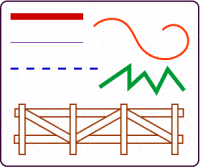
What element is represented here?
form
line
value
texture

___________ is also known as shading or fading from light to dark
colour
only black and white
value
shaded line

This principle of design uses the arrangement of different elements of art in order to highlight the differences between the elements. It is used to create interest.
Balance
Proportion
Contrast
Unity & Harmony
Which is an example of MOVEMENT?


What is the emphasis of this photograph?
The green apples around the pepper
The red pepper in the center
The stem of the apples
The Shadows created by the apples
An element of art is repeated in an organized way creating a design
Repetition & Pattern
Balance
Unity & Harmony
Proportion
This principle involves the relationship of the elements to each other and to the whole work of art. Simply put it is comparing.
Unity & Harmony
Balance
Proportion
Emphasis
This principle involves organizing elements in a work of art in such a way to distribute their visual weight. Radial, symmetrical, & nonsymmetrical.
Variety
Rhythm & Movement
Repetition & Pattern
Balance

Which principles did Andy Warhol use in his screen print of Marilyn Monroe?
Variety
Color
Shape
Emphasis
This Principle of Design is the feeling of harmony between all parts of the work of art, which creates a sense of completeness.
Balance
Repetition
Rhythm
Unity
A synonym for colour
hue
yellow
line
red

Which colours make brown?
red, blue, yellow
black and white
green and black
pink, red, white
Which of the following is a colour or hue?
Black
Grey
Purple
White

Red, blue and yellow are an example of what colour scheme?
Split-complimentary
Triadic
Tetradic
Monochromatic
Shades are created by mixing a hue with ...
White
Grey
Black
Blue
Analogous colours are
Opposite each other in the colour wheel
Equal distance from each other in the colour wheel
Next to each other in the colour wheel
Not on the colour wheel

Which of the following are examples of Split-Complimentary Colours
Yellow, Yellow-Orange, Yellow Green.
Black, White, Grey
Blue, Red- Orange, Orange
Red, Blue-Green, Yellow Green
Monochromatic colour scheme uses:
1 colour
2 colours
3 colours
4 colours
A colour that can not be made by mixing
complementary
Tint
primary
secondary

You can get a secondary colour when you mix TWO...
Cool Colours
Flurples
Primary Colours
Warm Colours
Colours that are opposite each other on the colour wheel are considered to be _______________________.
bright
complementary
dull
triadic

What are these called?
Tertiary Colors
Primary Colors
Monochromatic Colors
Complementary Colors
Tones are made by mixing the following
White and 1 Hue
Grey and 1 Hue
Green and 1 Hue
Black and White

These are ____________ colors.
Warm
Tertiary
Cool
Complimentary

