
NEW
Font size
S
M
L
XL
 Worksheets
Fall of the WRE
Total questions: 25
Worksheet time: 15mins
Name
Class
Date
1.
What year do most historians use as the End of the Roman Empire?
a)
27 BC
b)
476 AD
c)
400 AD
d)
240 AD
2.
When did Christianity become popular in the Roman Empire?
a)
476 AD
b)
27 BC
c)
381 AD
d)
350 BC
3.
Which is NOT a reason for the Fall of Rome?
a)
Barbarian Invasion
b)
Weak Emperors
c)
Corrupt government
d)
Disease
4.
How did heavy taxes impact the people of Rome?
a)
drove people into poverty, unemployment became an issue
b)
they could not transfer power peacefully
c)
the army became smaller
d)
they could not afford to have slaves
5.
High taxes and unemployment are considered what kind of reasons for the fall of the empire?
a)
political
b)
economic
c)
foreign invasion
d)
military
6.
A foreigner who fights for money is known as a _______.
a)
monopoly
b)
monetary
c)
mercenary
d)
mercurial
7.
Why was the size of the Roman Empire a problem that contributed to the empire's fall?
a)
The size of the empire made it hard to defend.
b)
Many emperors were needed to rule the empire.
c)
Much of the empire was empty land with no population.
d)
Most of the empire was dry land that could not support farming.
8.
What Is Inflation?
a)
Growth in Population
b)
Growth in Food
c)
Growth in Income
d)
Growth in Prices
9.
Why did Constantine move the capital to the Eastern Roman Empire?
a)
Rome, the old capital had fallen to barbarians
b)
the Eastern Empire was easier to defend
c)
more wealth and trade with Asia
d)
the eastern Romans were Christian
10.
Which part of the Roman Empire fell to barbarians?
a)
Western Rome
b)
Eastern Rome
Eastern Rome
Eastern Rome
Eastern Rome
Eastern Rome
c)
Southern Rome
d)
Northern Rome
11.
Who moved the capital from Rome to Byzantium?
a)
Augustus
b)
Nero
c)
Constantine
d)
Caesar
12.
Why was the Roman Empire split into two parts?
a)
It was too big for one person to rule
b)
an emperor's two sons took over
c)
There wasn't a split
d)
Germanic tribes invaded
13.
What was the biggest impact the Romans had on the history of religion?
a)
they promoted Buddhism
b)
they promoted many gods
c)
they promoted Christianity
d)
they promoted Judaism
14.
When the empire split, what was the new capital?
a)
Rome
b)
Constantinople
c)
Carthage
d)
Istanbul
15.
He was the leader of the Huns
a)
Genghis Khan
Genghis Khan
Genghis Khan
b)
Suleyman the Magnificent
c)
Attila
d)
Julius Caesar
16.
Germanic tribes threatened the Roman Empire. Who were they?
a)
Mongols and Goths
b)
Goths and Turks
c)
Vandals and Goths
d)
Mongols and Huns
17.
The city of Rome shrank because of
a)
barbarian attacks
b)
food shortages
c)
loss of jobs
d)
all are correct
18.
He split the Roman Empire into half
a)
Diocletian
b)
Constantine
Constantine
Constantine
c)
Trajan
d)
Nero
19.
They were nomads from central Asia and invaded the Roman Empire for years .
a)
Mongols
b)
Goths
c)
Persians
d)
Huns
20.
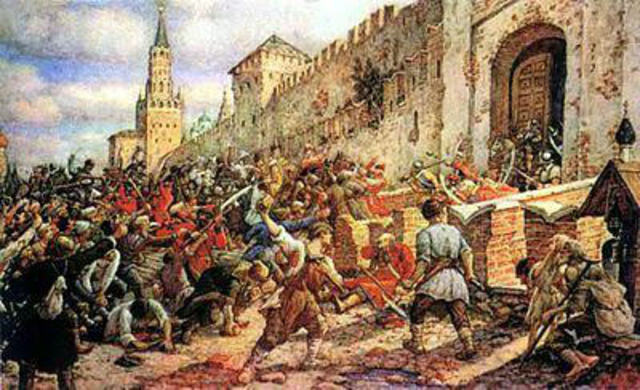
After the riots of 532, what emperor was responsible for the rebuilding of Constantinople?
a)
Leo III
b)
Charlemagne
c)
Constantine
d)
Justinian
21.

The Byzantine Empire was the eastern half of what remained of what ancient empire?
a)
The Ottoman Empire
b)
The Roman Empire
c)
The Holy Roman Empire
d)
The Mongolian Empire
22.

What emperor had the law code re-written and organized?
a)
Charlemagne
b)
Justinian
c)
Theodora
d)
Constantine
23.

What was one of the greatest public works projects during the Byzantine Empire?
a)
The Scriptorium
b)
The Colosseum
c)
The Pantheon
d)
The Hagia Sophia
24.
Where was the birthplace of Christianity?
a)
Christianity was born in Egypt, right near the ancient pyramids.
b)
Christianity was founded in modern day Saudi Arabia. Its two holiest cities are Mecca and Medina.
c)
Christianity was born in America. It was adapted from Native American religions.
d)
A territory at the eatern end of the Mediterranean Sea. Romans called it Judea. It was once a part of the ancient Kingdom of Israel.
25.
Christianity and Judaism both believe in one god and are called...
a)
Monotheistic
b)
Polytheistic
c)
Atheistic
d)
Agnostic
Reset

