
 Worksheets
WATER CYCLE
Total questions: 18
Worksheet time: 17mins

What part of the water cycle does this picture show?
Condensation
Precipitation
Evaporation
Collection
Which of these is an example of precipitation?
Clouds
Air
Snow
Vapour

Which best explains why runoff is important?
It increases condensation
It increases the chance of flooding
It makes evaporation occur faster
It returns water to other locations on Earth
What is it called when water is formed from a liquid to a water vapor?
Evaporation
Precipitation
Transpiration
Condensation

What comes after evaporation during the water cycle?
How does this occur?
Water evaporates into water vapor
Water vapor condenses and forms a cloud
Water precipitates to the ground
Water runs down into the atmosphere

What is it called when plants give off water vapor as a waste product?
Condensation
Evaporation
Precipitation
Transpiration
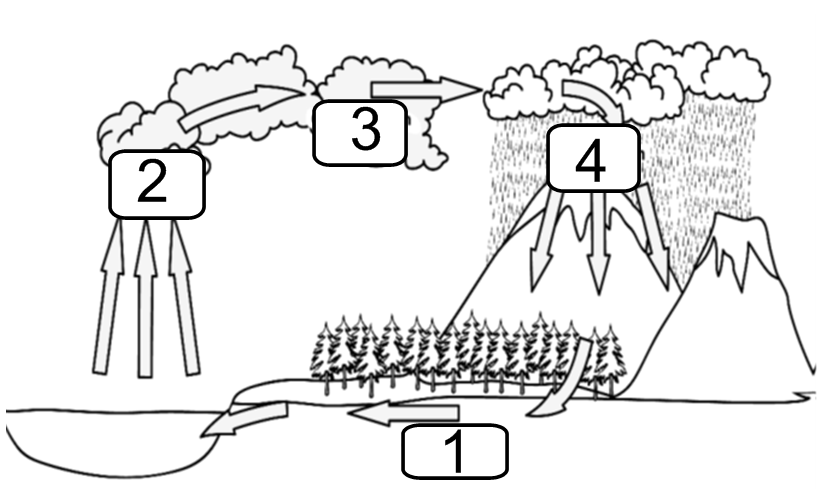
Which stage does the #2 show in the diagram?
Condensation
Evaporation
Precipitation
Run off

Which stage does the #3 show in the diagram?
Condensation
Evaporation
Precipitation
Run off
Which stage does the #4 show in the diagram?
Condensation
Evaporation
Precipitation
Run off
What is the process during which water cools and turns from a gas to a liquid?
Condensation
Run off
Precipitation
Evaporation

This is a picture of ...
snow
rain
fog
hail
What is precipitation?
The part of the water cycle when the sun heats up water, turning it from a liquid into water vapor or steam. It rises from the ground into the air.
The part of the water cycle when the water vapor in the air gets cold. The water turns back into a liquid and forms clouds.
The part of the water cycle when clouds get heavy and can no longer hold the liquid water. This causes the water to fall from the sky to the earth as rain, snow, sleet, or hail.
The part of water cycle when rain water runs off the ground as ground water that plants and animals use to drink. Water flows over the soil and collect in the rivers, lakes or the seas.
What is condensation?
The part of the water cycle when the sun heats up water, turning it from a liquid into water vapor or steam. It rises from the ground into the air.
The part of the water cycle when the water vapor in the air gets cold. The water turns back into a liquid and forms clouds.
The part of the water cycle when clouds get heavy and can no longer hold the liquid water. This causes the water to fall from the sky to the earth as rain, snow, sleet, or hail.
The part of water cycle when rain water runs off the ground as ground water that plants and animals use to drink. Water flows over the soil and collect in the rivers, lakes or the seas.
What is collection?
The part of the water cycle when the sun heats up water, turning it from a liquid into water vapor or steam. It rises from the ground into the air.
The part of the water cycle when the water vapor in the air gets cold. The water turns back into a liquid and forms clouds.
The part of the water cycle when clouds get heavy and can no longer hold the liquid water. This causes the water to fall from the sky to the earth as rain, snow, sleet, or hail.
The part of water cycle when rain water runs off the ground as ground water that plants and animals use to drink. Water flows over the soil and collect in the rivers, lakes or the seas.
The following human activities can affect the water cycle, except ….
deforestation
burning of fossil fuel
reuse, reduce, recycle
burning the forest
The importance of water cycle, except ...
refresh the water
take off the water
purify the air
cool the air
The increase in the earth's temperature is known as (a) .
Harmful gases coming from refineries and factories mix with water in the air and fall back to the earth as (a) .

