wayground logo

Free Printable Worksheets

Font size

S
M
L
XL
Worksheets

Electricity

Total questions: 50

Worksheet time: 27mins

Name
Class
Date
1.

What is the SI unit for charge?

a)

Ampere

b)

Coulomb

c)

Volt

d)

Ohm

2.
The flow of electricity in a circuit-
a)
current
b)
flow
c)
circuit
3.
Electricity that flows in a closed path is called a
a)
path
b)
current
c)
circuit
4.
To complete a circuit the switch must be
a)
unattached
b)
open
c)
closed
5.
Two batteries in a circuit make the lights in the circuit brighter than one battery.
a)
true
b)
false
6.
If the lights are on, the circuit is
a)
closed
b)
open
7.
If the lights are off, the circuit is
a)
closed
b)
open
8.
In a parallel circuit the current
a)
makes one circle
b)
stays in one path
c)
splits and goes through two components
9.
Two types of circuits are
a)
parallel and magnetic
b)
electromagnetic and series
c)
series and parallel
10.
The flow of electricity requires a
a)
complete path
b)
incomplete path
c)
insulated current
11.
When socks get stuck to towels in your dryer, this is an example of________________
a)
current electricity
b)
static electricity
12.
What is the major difference between static electricity and current electricity?
a)
Current electricity involves a continuous flow of neutrons; static electricity is a sudden transfer of protons
b)
Current electricity can be deadly; static electricity is almost always safe
c)
In current electricity, there's a single transfer of electrons; in static electricity, there's a steady flow of electrons
d)
Current electricity involves a flow of electrons; static electricity involves a single transfer of electrons
13.
True or False, Lighting is a form of static electricity.
a)
True
b)
False
14.

Static means ____________.

a)

moving

b)

not moving

15.
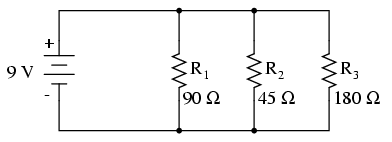
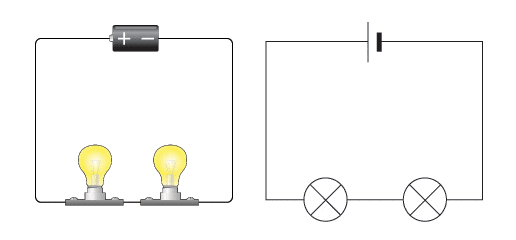
This is an example of a _______ circuit
a)
open
b)
series
c)
parallel
d)
square
16.
This is an example of a ______ circuit
a)
Series
b)
Parallel
c)
Open
d)
Dihexihedral
17.
What kind of circuit is this?
a)
Series
b)
Consecutive
c)
Parallel
d)
Training
18.
What kind of circuit is this?
a)
Series
b)
Consecutive
c)
Parallel
d)
Training
19.
What kind of circuit is this?
a)
series
b)
parallel
20.
This circuit has more than one loop. When one light goes out, the others stay on. 
a)
closed circuit
b)
series circuit
c)
parallel circuit
d)
open circuit
21.
What is one problem with using a series circuit? 
a)
It has a lot of series. 
b)
If one goes down, they all go down! 
c)
It doesn't work properly.
d)
There are no problems. 
22.
What is one benefits of using a parallel circuit?  
a)
It gets confusing.
b)
There are no problems.
c)
If one goes down, it does not affect the others. 
d)
Porque es para llelio. 
23.
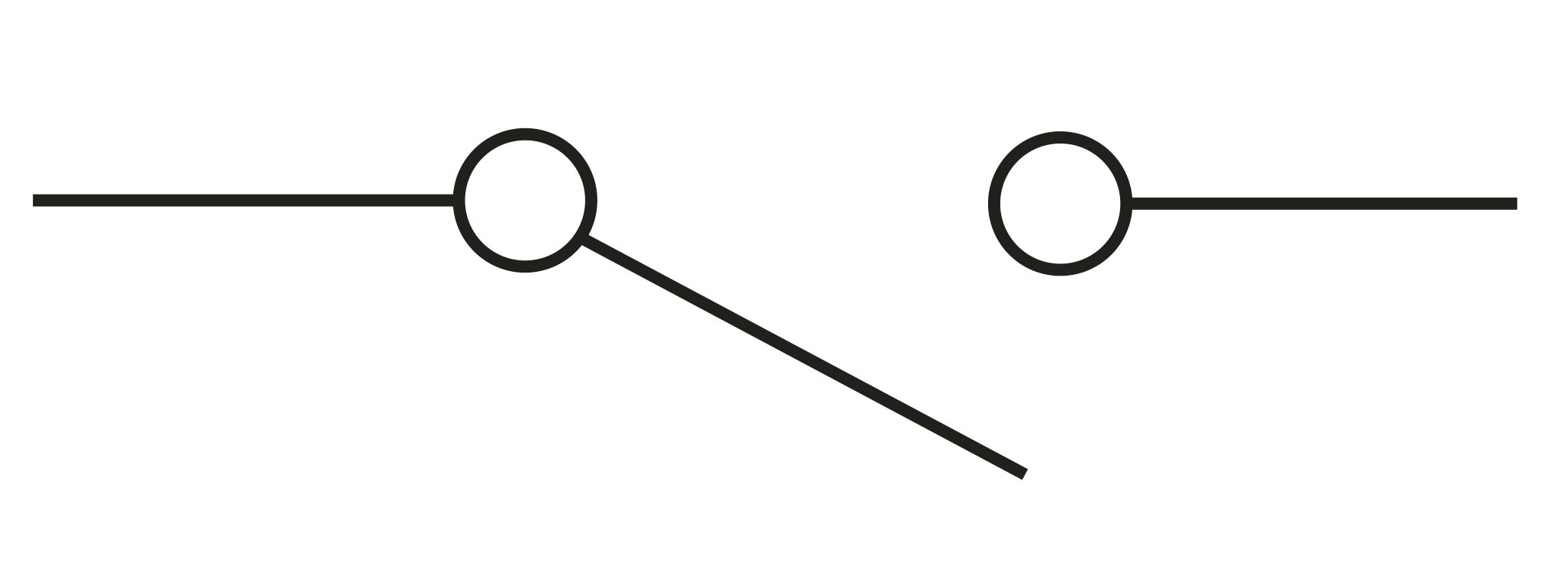
this is the symbol for a _____?
a)
switch
b)
light 
c)
battery
d)
wires
24.
In an electrical circuit, electrons move from the __________.
a)
Negative pole to negative pole
b)
Negative pole to positive pole
c)
Positive pole to positive pole
25.
What will happen if one light bulb is removed from this circuit?
a)
the other bulbs will go out
b)
the other bulbs will get dimmer
c)
the other bulbs will get brighter
d)
the battery will become stronger
26.
A student was playing music on her new cell phone.    The teacher explained that the phone was powered by a battery. The teacher then asked her to explain what was happening to the energy in her new phone.   How could she best explain this to the class?
a)
Electric energy is transformed into sound energy.
b)
Light energy is transformed into sound energy.
c)
Sound energy is transformed into electric energy.
d)
Sound energy is transformed into electric energy.
27.
A student wants to use the diagram below to explain what happens when the light bulb turns on. How could she best explain what is happening?
a)
Light energy is transformed to electric energy.
b)
Electric energy is transformed to light energy.
c)
Electric energy is transformed to motion energy.
d)
Motion energy is transformed to electric energy.
28.
Will the light bulb light up if the switch remains open as shown?
a)
Yes, because the circuit will be complete.
b)
Yes, because the battery will push the electric current.
c)
No, because the electric circuit is not complete.
d)
No, because the battery will push the electric current.
29.
Will this circuit light the bulb? 
a)
Yes
b)
No
30.
The circuit  lights the light bulb. What is the purpose of the switch in the circuit?
a)
to push the electric current
b)
to open and close the circuit
c)
to insulate the circuit
d)
to make the electricity
31.
Jill finds that all of the electric cords in her school are covered in plastic. Why is it important to cover the electric cords with plastic?
a)
Plastic is an insulator.
b)
Plastic is a conductor.
c)
Plastic is strong.
d)
Plastic will melt.
32.
A particle that carries a negative electric charge is called a(n) ______.
a)
neutron
b)
atom
c)
proton
d)
electron
33.
The potential difference that causes charges to move in a circuit is ___.
a)
voltage
b)
resistance
c)
current
d)
electric discharge
34.
An example of a voltage source is a _____.
a)
voltmeter
b)
battery
c)
resistance
d)
switch
35.
A circuit that is connected to Earth is said to be _____.
a)
series
b)
parallel
c)
grounded
d)
discharged
36.
Your hair might be attracted to your comb as your hair and the combe become oppositely charged.
a)
true
b)
false
37.
A neutral object becomes negatively charged when it loses electrons.
a)
true
b)
false
38.
Electrical resistance is low in a good conductor.
a)
true
b)
false
39.
A circuit breaker contains a thin strip of metal that melts if too much current passes through it.
a)
true
b)
false
40.

What supplies the energy or power in an electric circuit?

a)

light bulb

b)

wire

c)

battery

41.

Which choice describes the behavior of an electric charge?

a)

Like charges attract. Unlike charges repel.

b)

Like charges repel. Unlike charges attract.

c)

Like charges attract. Unlike charges attract.

d)

Like charges repel. Unlike charges repel.

42.

Which of these is caused by static electricity?

a)

A magnet attracts a paper clip

b)

Glue holds two pieces of paper together

c)

Socks taken from a clothes dryer stick together

d)

Ice sticks to a car’s windshield

43.

The shock you sometimes feel when you touch a metal doorknob on a dry day is electric ________.

a)

Circuit

b)

Current

c)

Discharge

d)

Resistance

44.

What is electricity?

a)

an object that electrons do not flow through

b)

energy created by moving charged particles

c)

when two objects repel each other

d)

a circuit that has only one path for electricity to flow

45.
Using the picture above, which letter correctly labels the battery?
a)
A
b)
B
c)
C
d)
D
46.
Using the picture above, which letter correctly labels the switch?
a)
A
b)
B
c)
C
d)
D
47.
Using the picture above, which letter correctly labels the light bulb?
a)
A
b)
B
c)
C
d)
D
48.
Using the picture above, which letter correctly labels the wire?
a)
A
b)
B
c)
C
d)
D
49.
The flow of electricity through a conductor
a)
Battery
b)
Current
c)
Static electricity
d)
Switch
50.
A switch that opens a circuit by turning itself off is a...
a)
circuit breaker
b)
motor
c)
electromagnet
d)
insulator