wayground logo

Free Printable Worksheets

Font size

S
M
L
XL
Worksheets

Greece -II

Total questions: 50

Worksheet time: 27mins

Name
Class
Date
1.

Which is the second largest city in Greece?

a)

Athens

b)

Patrai

c)

Macedonia

d)

Thessaloniki

2.

Greece shares land border with_________ to the north west.

a)

Turkey

b)

Albania

c)

Macedonia

3.

_________ % of Greece is mountainous.

a)

70

b)

50

c)

80

d)

90

4.

President of Greece is____________.

a)

Katerina Sakellaropoulou

b)

Kyriakos Mitsotakis

5.

Greece got independence from ____________.

a)

Persian Empire

b)

Akkadian Empire

c)

Ottoman Empire

6.

Which is the highest mountain in Greece?

a)

Mt. Kaimaktsalan

b)

Mt. Olympus

c)

Mt. Smolikas

d)

Mt. Gramos

7.

The international country calling code of Greece is

(a)  

8.

Which of the following in not a Greek accomplishment?

a)

Inventions such as a first ship and wheel barrow

b)

competitions like the Olympics

c)

Epics like Iliad and Odyssey

d)

contributions to democracy

9.

which word best describes the land of the Greek?

a)

Dessert

b)

rolling plains

c)

flat

d)

rocky mountains

10.

Ancient civilization that is responsible for the creation of democracy

a)

Greece

b)

Rome

c)

Sumer

d)

India

11.
What was the only occupation possible for a male in Sparta?
a)
soldier
b)
slave
c)
farmer
d)
teacher
12.
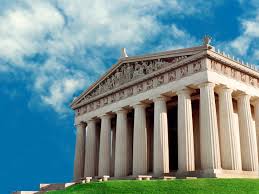
What ancient Greek monument is shown in this image?
a)
Acropolis
b)
Aqueduct
c)
Coliseum
d)
Parthenon
13.
What city-state is described by this list?
-All males must join the military
-Women given more rights than other women in Greece
-Strong emphasis on physical training
a)
Sparta
b)
Rome
c)
Athens
d)
Troy
14.
Greece was unable to form one unified nation because it was divided by which natural resource?
a)
mountains
b)
rivers
c)
lakes
d)
oceans
15.
Who was one of the most powerful and influential men in Athens, that died during the Peloponnesian War?
a)
Alexander
b)
Hippocrates
c)
Pericles
d)
Zeus
16.
Which structure is considered to be the finest example of classical Greek architecture?  
a)
The temple of Apollo
b)
The stadium at Olympia
c)
The Great Library at Alexandria
d)
The Parthenon
17.
Who was the most powerful and important of the Greek gods and goddesses?
a)
Apollo
b)
Athena
c)
Hercules
d)
Zeus
18.
Ancient Greek culture continues to influence modern 
a)
weaponry and warfare.
b)
music and dance.
c)
architecture, literature, and drama.
d)
computer technology.
19.
Alexandria became an important center for the study of  
a)
medicine and mathematics.
b)
weapons and warfare.
c)
shipbuilding. 
d)
economics.
20.
The first and last letter of the Greek alphabet are 
a)
Alpha and Beta.
b)
Alpha and Omega.
c)
Tau and Upsilon.
d)
Upsilon and Omega.
21.
A long, narrative poem that tells an adventurous story is a(n)
a)
comedy.
b)
 epic.
c)
fable.
d)
tragedy.
22.
Who wrote the epic poems the Iliad and the Odyssey, about the Trojan War?
a)
Aesop
b)
Euripedes
c)
Homer
d)
Sophocles
23.

Who supposedly wrote the fables that teach people a lesson using animals?

a)

Aesop

b)

Euripedes

c)

Homer

d)

Sophocles

24.
What two types of drama did Athenians invent that are still used today?
a)
Comedy and Romance
b)
Comedy and Tragedy
c)
Mystery and Suspense
d)
Romance and Tragedy
25.
Who was considered the “Father of Medicine”?
a)
Alexander
b)
Hippocrates
c)
Pericles
d)
Zeus
26.
Which activity was central to Socrates’s approach to philosophy?
a)
asking questions
b)
making arguments
c)
testing predictions
d)
gathering evidence
27.
Which Greek polis valued education, philosophy and the arts? 
a)
Argos
b)
Corinth
c)
Athens
d)
Sparta
28.
Who would have been a citizen in Athens?
a)
All men and women
b)
Free, landowning, Athenian men
c)
All men
d)
Men and women born in Athens
29.
Which philosopher was a tutor for Alexander the Great when he was a boy?
a)
Aristotle
b)
Plato
c)
Socrates
d)
Sappho
30.
The city-state of Sparta took this form of government in which a small group had the power to make decisions for the entire society
a)
Oligarchy
b)
Democracy
c)
Monarchy
d)
Tyranny
31.
Age when Spartan boys began military training
a)
Thirty
b)
Sixty
c)
Seven
d)
Eighteen
32.
What was a Greek soldier called and what was the name of the formation in which he fought?
a)
Hoplite, phalanx
b)
Hoplite, trireme
c)
Spartan, greaves
d)
Cuirass, hoplite
33.

How is ancient Greek democracy different from our democracy?

a)

They did not allow foreigners to vote or make decisions

b)

citizens voted directly to make decisions

c)

citizens gave their leaders total power

d)

citizens elect representatives to make laws

34.

Was Greece in world war 1&2

a)

Yes

b)

No

35.
 Alexander the Great spread Greek culture throughout his empire which mixed with Egyptian and Persian culture.  This new type of culture was named ____________________________ culture.
a)
Alexandrian
b)
Persian
c)
Hellenistic
d)
Arabian
36.

A Greek philosopher who taught people to use question and answer way of thinking

a)

Socrates

b)

Aristotle

37.

A person who seizes power of man in an illegal way is called______

a)

Tyrant

b)

Savage

38.

Full form of NATO

a)

North Atlantic Treaty Organization

b)

North Atlantic Trade Organization

39.

Greece is part of __________ peninsula.

a)

Balkan

b)

Peloponnese

c)

Actium

d)

Chalkidiki

40.

Who was the leader of Athens after the defeat of the Persians took Athens into "Golden Age" of prosperity and achievement?

a)

Themistocles

b)

Alexander

c)

Pericles

d)

Socrates

41.

Greece has

a)

11th longest coastline in the world

b)

5th longest coastline in the world

c)

2nd longest coastline in the world

d)

7th longest coastline in the world

42.

The first civilization in Greece

a)

Minoan civilization

b)

Mycenaean civilization

43.

Earlier Turkey is known as

a)

Asia Minor

b)

Troy

44.

A fortress on the top of a hill in Greek city states

a)

Acropolis

b)

Agora

c)

Attica

45.

Greece is a unitary parliamentary republic.

a)

Yes

b)

No

46.

The number of inhabited island in Greece

a)

166

b)

227

47.

Traditional stories that include gods and goddesses that often try to explain the events in nature

a)

myths

b)

legends

c)

fable

d)

tall tales

48.

Outdoor marketplaces are known as

a)

agora

b)

pollis

c)

agile

d)

peninsula

49.

Religion of Greece

(a)  

50.

Who is not a Greek philosopher

a)

Plato

b)

Aristotle

c)

Pythagoras

d)

Socrates