
 Worksheets
Ch 18 Gene Regulation
Total questions: 25
Worksheet time: 19mins
Name
Class
Date
1.
Most gene regulation happens at which step along the way?
a)
translation
b)
transcription
c)
signal transduction
d)
DNA replication
2.

Operons are found in the cells of which of the following types of organisms?
a)
prokaryotes
b)
eukaryotes
c)
animals only
d)
viruses
3.
What is the name of the stretch of DNA where RNA polymerase binds?
a)
operator
b)
promoter
c)
enhancer
d)
regulatory gene
4.
The "on/off" switch for an operon is called the
a)
promoter
b)
enhancer
c)
operator
d)
gene
5.
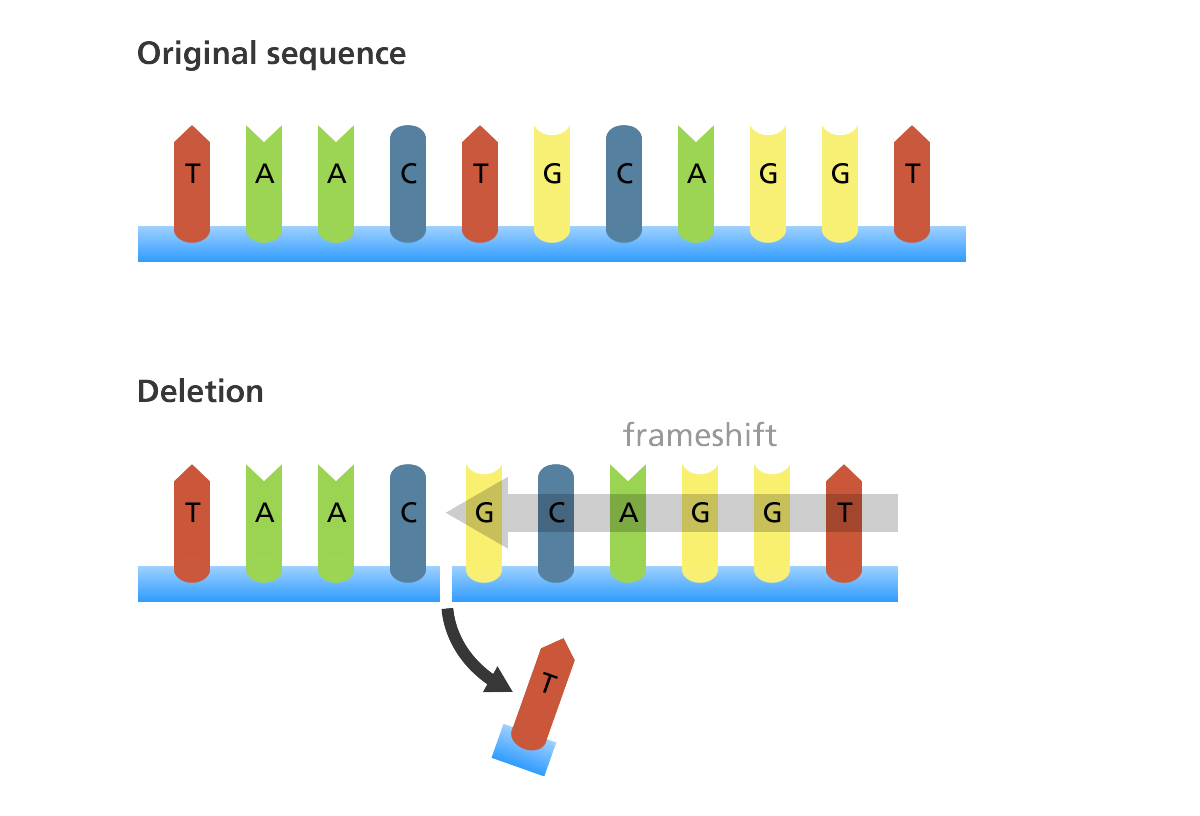
Why are insertion and deletion mutations so harmful?
a)
They change all of the codons from the mutation on down the line, which changes the amino acid sequence
b)
They insert things that an organism doesn't need.
c)
They often delete things that organisms need.
d)
Insertion and deletions are not any more harmful than substitution mutations.
6.
In the lac operon model the genes within the operon will be expressed if:
a)
lactose is absent in the cell
b)
glucose is present in the cell
c)
lactose is present in the cell
7.
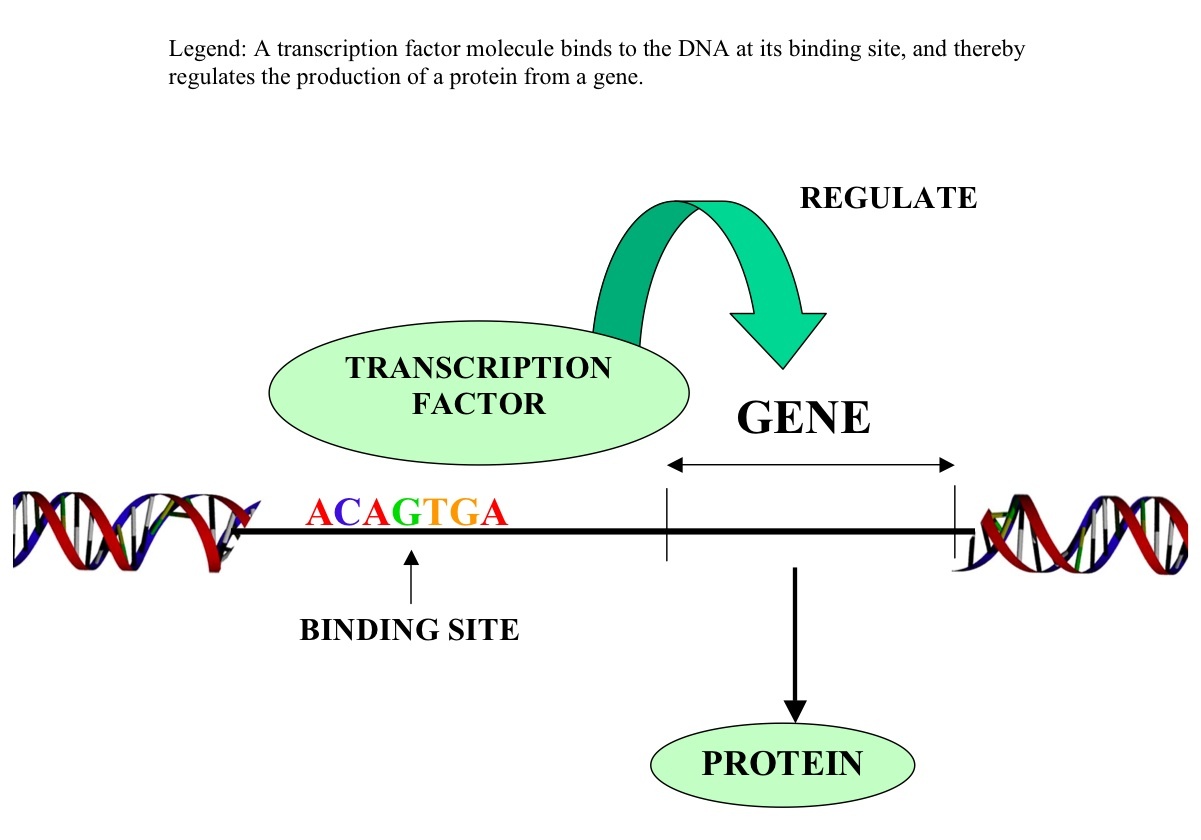
In eukaryotes, proteins that help the RNA polymerase bind to the regulatory region for transcription are called ____________.
a)
transcription factors
b)
topoisomerase
c)
regulatory genes
d)
activators
8.
A small molecule that binds to the repressor and makes it inactive is
a)
corepressor
b)
inducer
c)
promoter
d)
operator
9.
A small molecule that binds to a repressor and makes it active
a)
repressor
b)
regulator
c)
activator
d)
corepressor
10.
When a gene transcribes unless turned off by a repressor, it is considered _____ control
a)
negative
b)
positive
11.
When a gene does not transcribe unless turned on by activator , it is considered _____ control
a)
positive
b)
negative
12.
Two types of negative control are
a)
repressible & inducible
b)
repressible & active
c)
active & inactive
d)
repressible & corepressible
13.
Inducible negative control is when when the gene is transcribed by the ____ of a specific molecule
a)
presence
b)
absence
14.
Repressible negative control is when when the gene is transcribed by the ____ of a specific molecule
a)
presence
b)
absence
15.
What is an example of positive control?
a)
The lac operon being transcribed when lactose is present
b)
The trp operon being transcribed when tryptophan is absent
c)
the lac promoter being activated by CAP when cAMP levels rise
d)
control is all just an illusion
16.
All of the following are true about DNA methylation EXCEPT
a)
takes place on the DNA
b)
enzymes add a methyl group
c)
when it occurs, transcription is more likely to occur
d)
chromatin becomes more tightly packed
17.
All of the following are true about histone acetylation EXCEPT
a)
takes place on the histone
b)
enzymes add a acetyl group
c)
when it occurs, transcription is more likely to occur
d)
chromatin becomes more tightly packed
18.
Inheritance of traits by mechanisms not directly involving nucleotide sequence is called
a)
epigenetic inheritance
b)
differential gene expression
c)
chromosomal inheritance
d)
gene regulation
19.
In eukaryotes, a cluster of proteins that assemble on the promoter is called the
a)
transcription initiation complex
b)
control element
c)
activator
d)
protein blobby thing
20.
In eukaryotes, proteins that help the RNA polymerase bind to the promoter for transcription
a)
transcription factors
b)
topoisomerase
c)
regulatory genes
d)
activators
21.
A distal control region that activators bind to are bent to contact mediator proteins and form the transcription initiation complex
a)
enhancers
b)
promoters
c)
repressors
d)
transcription factors
22.
In embryonic development, the process by which cells specialize is called
a)
differentiation
b)
morphogenesis
c)
cell division
d)
endoplasmic reticulum
23.
In embryonic development, the physical process of an organism developing its shape is called
a)
differentiation
b)
morphogenesis
c)
cell division
d)
topoisomerase
24.
differentiation and morphogenesis are controlled by internal transcription factors, proteins and organelles in the cell... this is called
a)
cytoplasmic determinants
b)
inductive signals
c)
endosymbiotic theory
d)
epigenetic inheritance
25.
differentiation and morphogenesis are controlled by external factors, such as contact and signals from neighboring cells... this is called
a)
cytoplasmic determinants
b)
inductive signals
c)
endosymbiotic theory
d)
epigenetic inheritance
100 %

