
 Worksheets
Use the periodic poster you made to review these facts.
Total questions: 35
Worksheet time: 22mins
Which way do columns and rows go on the periodic table?
columns go ↔ and rows go ∥
columns go ∥ and rows go ↔
columns and rows are the same thing
Which 2 elements have their outside ring full of electrons?
Be
He
H
Ne
In which column are the elements that have their outside ring full of electrons?
Column 1
Column 8
They all do.
What are valence electrons?
Electrons in the outside ring.
Electrons in the middle ring.
Electrons in the innermost ring.
2 of these elements only have 1 valence electron. Which 2 elements?
Lithium
Helium
Magnesium
Sodium

What happens as you go across a row (left to right) like this:
The atom gets more rings.
The atom gets more valence electrons.
The atom weighs less.

What happens to the elements as you go down a column as shown here?
The atom gets more rings.
The atom gets more valence electrons.
The atom gets a smaller mass.
What Family of elements has only 1 valence electron and includes Lithium (Li) and Sodium (Na)?
Noble gases
Halogens
Alkaline Earth Metals
Alkali Metals
What Family of elements has 2 valence electrons and includes Be and Mg?
Noble gases
Halogens
Alkaline Earth Metals
Alkali Metals
What Family of elements has 7 valence electrons and includes Fluorine and Chlorine?
Noble gases
Halogens
Alkaline Earth Metals
Alkali Metals
What Family of elements has their outer ring full of electrons and includes He and Ne?
Noble gases
Halogens
Alkaline Earth Metals
Alkali Metals
How will you know that 2 elements are in the same family? (Two correct answers.)
Their names are close, like Magnesium and Manganese.
They are in the same row.
They are in the same column.
They have the same number of valence electrons.

Find Barium (Ba) on the periodic table and predict how many valence electrons it will have.
1
2
5
6

Find Xenon (Xe) on the periodic table and predict how many valence electrons it will have.
5
6
7
8

What type of elements are to the left of the staircase?
(But remember that H is an exception.)

What kind of elements are on the right side of the staircase?

Based on its location on the periodic table, what type of element is Oxygen (O)?
solid
nonmetal
metal

Based on its location on the periodic table, Lithium (Li) is a
liquid
metal
nonmetal

Based on its location on the periodic table, sulfur, which is to the right of the zigzag line,
is a good conductor of heat and electricity
is a poor conductor of heat and electricity
is highly reactive

Based on the periodic table, bromine (Br) has _____ protons in its nucleus.
35
4
7
75
I have 10 protons in my nucleus. What element am I?
Na (Sodium)
H (Hydrogen)
Ni (Nickel)
Ne (Neon)
I have 4 protons in my nucleus. Which element am I?
B (Boron)
Be (Beryllium)
Ti (Titanium)
C (Carbon)
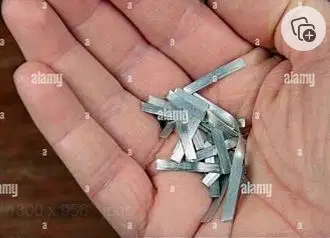
I am shiny and can be pounded flat.
Which element could I be?
O (Oxygen)
F (Fluorine)
He (Helium)
Mg (Magnesium)
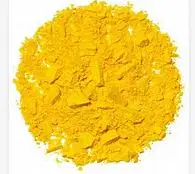
I have a dull look (not shiny) and am brittle -- which means I turn into dust if you hit me with a hammer. Which element could I be?
(HINT: Am I a nonmetal or a metal?)
Na (Sodium)
Ti (Titanium)
S (Sulfur)
Al (Aluminum)
The row number on the periodic table tells you how many rings an element has. Which element has 4 rings?
Boron number 5
Aluminum number 13
Calcium number 20
Carbon number 4
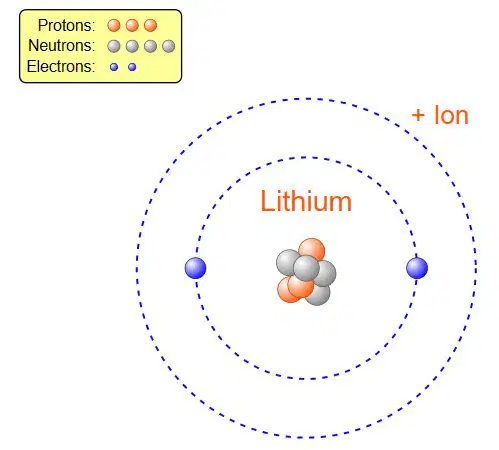
a = p = e for an atom. What do you call it if protons do not equal electrons?
ion
isotope
molecule
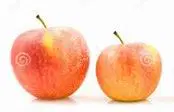
What do you call 2 atoms of the SAME element that have different masses?
(Kind of like these 2 apples.)
ions
isotopes
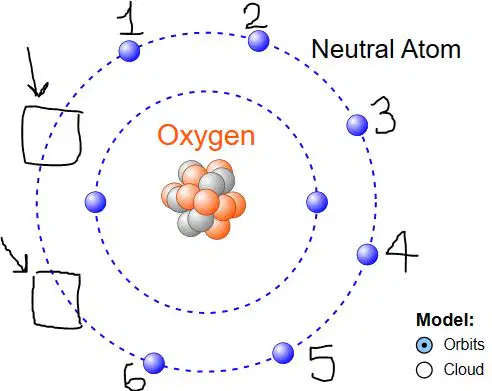
If an atom has 6 valence electrons what will it try to do?
(HINT: Are electrons − or + ?)
gain 2 more and become +2
gain 2 more and become -2
lose all 6 and become +6
Which element is already full of valence electrons, (so it doesn't react)?
Hydrogen number 1
Sodium number 11
helium number 2
Argon number 18
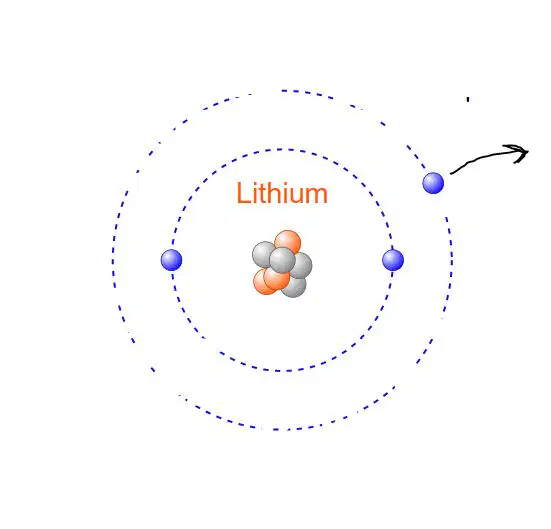
Lithium is +1 when it loses its 1 valence electron. What other element is +1?
(Use your periodic table.)
Fluorine number 9
Helium number 2
potassium number 19
Aluminum number 13
Some elements that are right on the staircase
(like Silicon -- Si) have characteristics of metals AND nonmetals. What are they called?
metalloids
transition metals
isotopes

Silicon can conduct electricity and it is shiny, but if you pound it, it is brittle and will turn to dust. Which characteristic makes it be like a nonmetal?
conducts electricity
shiny
brittle
Some elements that are right on the staircase
(like Silicon -- Si) have characteristics of metals AND nonmetals. What are they called?
metalloids
transition metals
isotopes

What element is this? (Protons are red.)
Use your periodic table.
Fluorine
Lithium
Boron
What is the mass number of this atom?
3 because 3 blue electrons
7 because 3 red protons and 4 gray neutrons
10 because 10 particles are shown (red, grey, blue)

