
 Worksheets
Biology Honors Enzyme Review
Total questions: 15
Worksheet time: 8mins
Name
Class
Date
1.
What happens to an enzyme when it denatures?
a)
The activation energy of the reaction is doubled.
b)
The activation energy of the reaction is lowered.
c)
It's optimal conditions for temperature of the enzyme are doubled.
d)
The shape of the enzyme molecule is changed.
2.
Where do substrates bind on an enzyme?
a)
voltage-gated channels
b)
surface receptor
c)
calcium channels
d)
active site
3.
What is the purpose of an enzyme?
a)
give permission for the reaction
b)
raise activation energy
c)
speed up reactions
d)
control how many reactions occur
4.
With what 3 letters do enzymes typically end?
a)
-ose
b)
-ase
c)
-ese
d)
-tic
5.
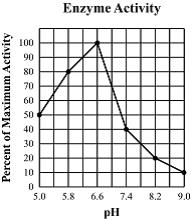
Which of the following conclusions can be drawn from this graph?
a)
The optimum pH of the enzyme is 6.6.
b)
The optimum pH of the enzyme is 5.8
c)
The enzyme’s activity increases as pH increases 5.0 to 9.0
d)
The enzyme’s activity is greater around pH of 8.0 .
6.
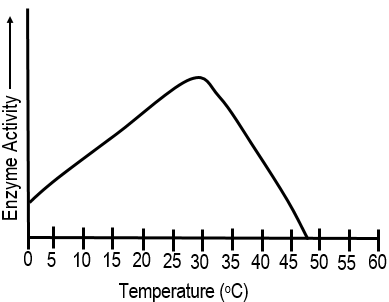
Based on the graph, what is the optimal temperature for this enzyme?
a)
15oC
b)
40oC
c)
30oC
d)
35oC
7.
What happens when enzymes are heated to a high temperature?
a)
The enzymes die.
b)
The shapes of the enzyme are altered denature
c)
The enzymes' amino acid sequence changes.
d)
The enzymes remain the same
8.
Which of these is most likely an enzyme?
a)
Sucrose
b)
Galactose
c)
Fructose
d)
Amylase
9.
What is another name for enzymes?
a)
chemical catalysts
b)
microorganisms
c)
biological catalysts
d)
inorganic catalysts
10.
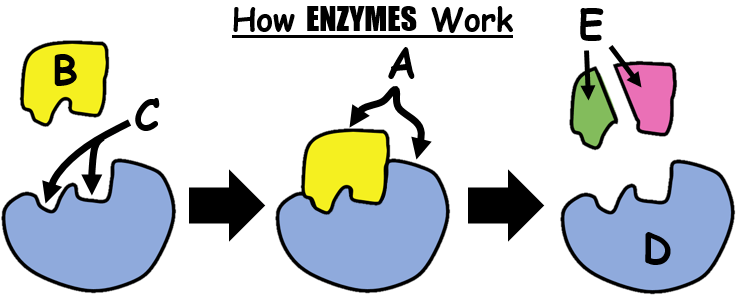
Letter D...
a)
active site
b)
enzyme
c)
substrate
d)
products
11.
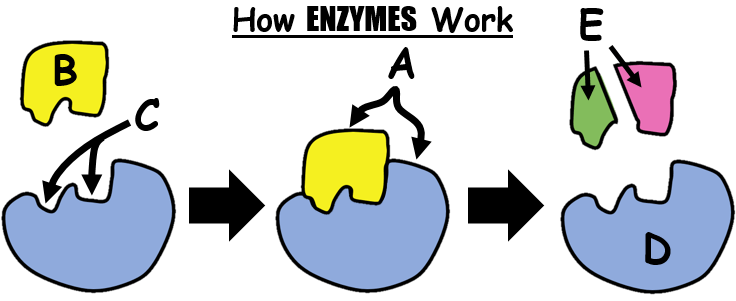
Letter B...
a)
active site
b)
enzyme
c)
substrate
d)
products
12.
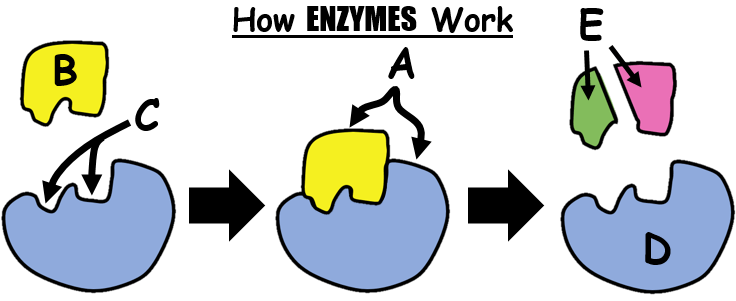
Letter C...
a)
active site
b)
enzymes
c)
substrate
d)
products
13.
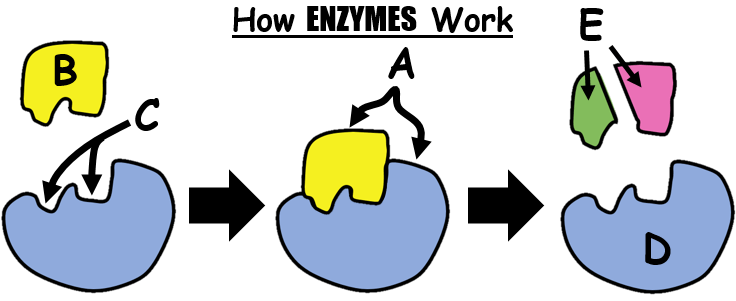
Letter E...
a)
active site
b)
enzyme
c)
substrate
d)
products
14.
Which 2 factors can affect the rate of enzyme activity?
a)
Light intensity
b)
Temperature
c)
pH
d)
Oxygen concentration
15.
When a piece of liver is dropped into hydrogen peroxide, the peroxide bubbles vigorously as the hydrogen peroxide (H2O2) decomposes into water (H2O) and oxygen (O2). This rapid change in reaction rate suggests
a)
that liver contains lots of germs
b)
the liver contains an enzyme that breaks down hydrogen peroxide
c)
that liver is a substrate for hydrogen peroxide
d)
that hydrogen peroxide is a powerful enzyme
100 %

