
 Worksheets
Fractional Distillation & Cracking Process
Total questions: 25
Worksheet time: 13mins
Fractional distillation separates crude oil based on the different __________ of the molecules in the mixture
melting point
boiling point
freezing point
chemical reactivity
Molecules collected at the bottom of the fractionating column tend to be...
more viscous, less flammable and less volatile
less viscous, more flammable and more volatile
more viscous, more flammable and less volatile
less viscous, less flammable and more volatile
Molecules collected at the top of the fractionating column tend to be...
more viscous, less flammable and less volatile
less viscous, more flammable and more volatile
more viscous, more flammable and less volatile
less viscous, less flammable and more volatile
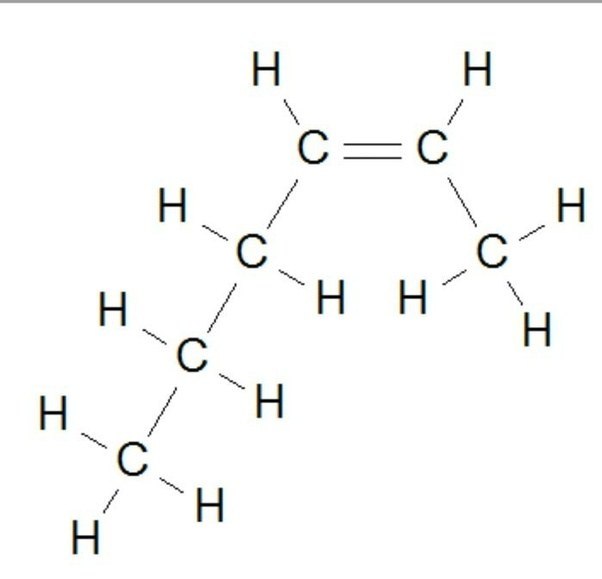
Name the following hydrocarbon
butane
hexane
heptane
hexene
When testing for alkenes (unsaturation) bromine water turns from...
orange --> blue/black
colourless --> pink
orange --> colourless
orange --> clear
Alkenes have the general formula:
CnH2n
CnH2n+1
CnH2n+2
CnHn
What term describes alkene molecules that contain a C=C double bond?
saturated
unsaturated
Alkanes have the general formula:
CnH2n
CnH2n+1
CnH2n+2
CnHn
Where in the fractionating column are shorter chain hydrocarbon molecules obtained?
At the top
At the bottom
What are the 2 products of complete combustion?
carbon dioxide + hydrogen
carbon dioxide + water
carbon monoxide + water
carbon monoxide + hydrogen
What are the products of incomplete combustion?
carbon monoxide
water
carbon
hydrogen
Which of these isn't a fraction produce through fractional distillation?
Bitumen
Naptha
Fuel oil
Ethanol
What is crude oil formed from?
Remains of shale gas trapped under the sea bed
Remains of gases trapped in the ozone layer
Remains of plants and animals that died millions of years ago
Remains of animal faeces from millions of years ago
Which bond breaks during cracking?
C-C bond
C-C double bond
C-H bond
C-OH bond
What is cracking?
Process of breaking long chain alkenes into shorter chain alkanes, alkenes and hydrogen
Process of breaking long chain alkanes into shorter chain alkanes, alkenes and hydrogen
Process of separating long chain alkanes into shorter chain alkanes, alkenes and hydrogen
Process of breaking long chain haloalkanes into shorter chain haloalkenes
Which of these is not a condition of catalytic cracking?
Slight pressure
Rhodium catalyst
Zeolite catalyst
High temperature
Which form of cracking produces the highest percentage of alkenes?
Catalytic
Steam
Fractional
Thermal
Which of these statements are incorrect about thermal cracking?
Low pressure
Produces high percentage of arenes
Produces high percentage of alkenes
High temperature
Which of these fractions are most in demand?
LPG
Bitumen
Petrol
Gas oil
Which is NOT a property of a long chain hydrocarbon?
Viscous
Flammable
Not very volatile
High boiling point
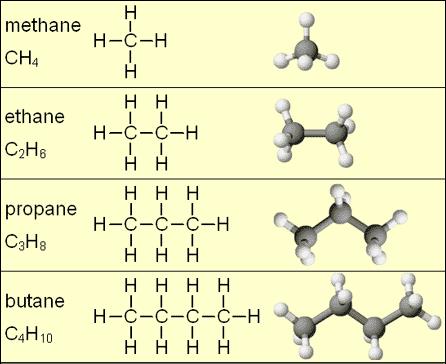
Which of these substances is not a hydrocarbon?
methane
ethane
propane
butane
ammonia
Crude oil is made up of:
Ethane
Butane
A mixture of different hydrocarbons
Extremely large hydrocarbons which are broken up once extracted
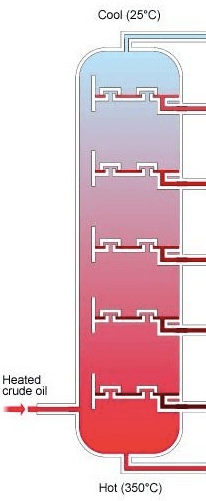
What process happens at each level in the fractionating column?
Evaporation
Condensation
Combustion
Cracking is a process used to break up hydrocarbon chains because the products are more (a) than the reactants.

