wayground logo

Free Printable Worksheets

NEW

Font size

S
M
L
XL
Worksheets

gr6

Total questions: 25

Worksheet time: 13mins

Name
Class
Date
1.
A celestial body that is composed of Gas and emits light. 
a)
Venus
b)
magellanic cloud
c)
milky way
d)
star
2.
Space and all the matter and energy in it. 
a)
Clusters
b)
Universe
c)
voids
d)
Light Year
3.
What kind of galaxy is this?
a)
Ring
b)
Irregular
c)
Spiral
d)
Elliptical 
4.
What type of galaxy do we live in?
a)
Spiral
b)
Elliptical
c)
Irregular
d)
Coaxial
5.
What are asteroids?
a)
Smaller celestial objects that are mostly made of rock
b)
Smaller celestial objects mostly made of ice and other particles
6.
What type of galaxy is this?
a)
Spiral
b)
Elliptical
c)
Irregular
d)
Irrational
7.

A galaxy that does not have a regular shape?

a)

Spiral

b)

Elliptical

c)

Irregular

d)

Quasar

8.

What unit is used to measure distances in space?

a)

Light year

b)

Kilometer

c)

Miles

d)

Solar unit

9.
Mercury, Venus, Earth, and Mars are called.....?
a)
Jovian Planets
b)
Awesome Sauce Planets
c)
Gas Giants
d)
Inner Planets
10.
Which planet is the hottest?
a)
Earth
b)
Neptune
c)
Mercury
d)
Venus
11.
What factor determines the color of a star?
a)
Size
b)
Shape
c)
Magnitude
d)
Temperature
12.
Which planet is now characterized as a dwarf planet?
a)
Neptune
b)
Pluto
c)
Miss Best
d)
Coca-cola
13.
Which is the largest object in our solar system?
a)
Sun
b)
Jupiter
c)
Earth
d)
Pluto
14.
Which planet is seventh from the sun?
a)
Saturn
b)
Earth
c)
Venus
d)
Uranus
15.
What is a planet?
a)
a group of stars that forms a pattern in the sky
b)
a large ball of hot gases that gives off heat and light
c)
a large ball or rock or gas that moves around the sun
d)
a toy aliens play with
16.
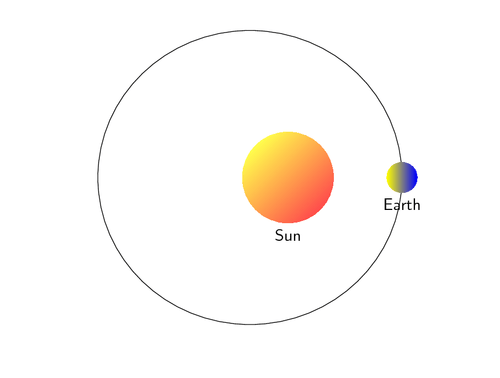
This picture shows the path Earth takes as it moves around the sun. What is the path called?
a)
a constellation
b)
a moon
c)
an orbit
d)
a planet
17.
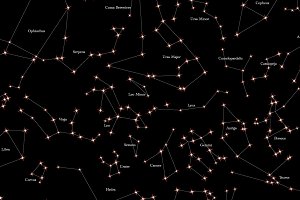
A group of stars forms a pattern. What is this pattern called?
a)
a solar system
b)
a constellation
c)
a ball of hot gases
d)
a planet
18.
Which thing is a huge ball of hot gases that gives off heat and light?
a)
a moon
b)
a planet
c)
a star
d)
a spaceship
19.
In nuclear fusion, smaller atoms are forced together to create larger atoms. Does this process release, absorb or maintain energy?
a)
Absorb energy
b)
Maintain energy
c)
Release energy
20.

Define nuclear fusion.

a)

Nuclear fusion – combining lighter atoms to make heavier ones – is what makes it possible.

b)

Nuclear fusion – splitting lighter atoms to make heavier ones – is what makes it possible.

c)

Nuclear fusion – combining heavier atoms to make lighter ones – is what makes it possible.

d)

Nuclear fusion – splitting heavier atoms to make lighter ones – is what makes it possible.

21.

In comparison to other stars in the sky, the Sun appears brighter because it is–

a)

Bigger

b)

Smaller

c)

Nearer

d)

Further

22.
Stars are formed in a large cloud of gas and dust called a
a)
cumulonimbus cloud
b)
nebula
c)
neutron star
d)
black hole
23.

A constellation is a group of visible ____ that form a pattern when viewed from Earth.

a)

stars

b)

planets

c)

patterns

24.

The stars in a constellation appear to be close to each other in the shape, but may be ______ in space.

a)

great distances apart

b)

very close

c)

some are very close

25.

Which constellation is best known because it contains the “big dipper,” which looks like a ladle.

a)

ursa major

b)

orion

c)

polaris