wayground logo

Free Printable Worksheets

Font size

S
M
L
XL
Worksheets

reflection of light year 4 science

Total questions: 60

Worksheet time: 2hrs 0mins

Name
Class
Date
1.
a copy of an object formed by reflected or refracted rays of light
a)
image
b)
reflection
c)
regular reflection
d)
diffuse reflection
2.
Which of the following is not a source of light? 
a)
A. candle
b)
B. caver’s lamp
c)
C. mirror
d)
D. sun
3.
Law of reflection state that - The angle of incidence is .................. to the angle of reflection.
a)
equal
b)
double
c)
half
4.
The ray of light that strikes a reflecting surface is called ________.
a)
incident ray
b)
reflected ray
c)
normal ray
d)
none of the above
5.
The angle produced as a source of light bounces off a reflecting surface is called ______.
a)
angle of crookedness
b)
angle of reflection
c)
angle of incidence
d)
angle of bounce
6.
what is the angle between the incident ray and the normal called as
a)
angle of incidence
b)
angle of reflection
c)
angle of convergent
d)
angle of divergent
7.
what is the angle between the reflected ray and the normal called as
a)
angle of incidence
b)
angle of reflection
c)
angle of convergent
d)
angle of divergent
8.
What does incidence angle equal?
a)
reflection angle
b)
∠C
c)
∠D
d)
all of these
9.
straight lines that represent light waves
a)
rays
b)
image
c)
reflection
d)
visible light
10.
........... – the angle between the normal and the reflected ray.
a)
Angle of incidence
b)
Angle of reflection
c)
Angle of coincidence
d)
Angle of direction
11.
........... – the angle between the normal and the incident ray.
a)
Angle of incidence
b)
Angle of reflection
c)
Angle of coincidence
d)
Angle of direction
12.
What is reflection?
a)
Reflection is the bouncing  of light off the surface that it strikes on.
b)
Reflection is the absorbing of light off the surface that it strikes on.
c)
Reflection is the bending of light off the surface that it strikes on.
d)
Reflection is the scattering of light off the surface that it strikes on.
13.
Which of these statements is true?
a)
Light travels in straight lines.
b)
Light is stopped when it meets a solid object.
c)
Light does not travel in straight lines.
d)
Light will only travel for about 2000km before it stops.
14.
How does light move?
a)
zig-zag
b)
up and down
c)
scattered
d)
straight line
15.
What does Zoe use to aim the light at Bert's balloon?
a)
a sign
b)
another laser
c)
a mirror
d)
none of these
16.
Which of these is the best reflector of light?
a)
shiny metal
b)
white paper
c)
carpet
d)
wood
17.
Light ________ our eyes.
a)
enters
b)
shoots out from
c)
is produced in
d)
none of these
18.
The ray of light that strikes a reflecting surface is called ________.
a)
incident ray
b)
reflected ray
c)
normal ray
d)
none of the above
19.
Light travels in ___________ lines
a)
wavy
b)
bent
c)
straight
d)
backwards
20.
What is light?
a)
clear or easy to see through
b)
to put forth or send out
c)
a type of energy that makes things visible
d)
a transparent crystal used to separatelight
21.
What does it mean to reflect?
a)
a polished surface which reflects an image
b)
a transparent crystal used to separate light
c)
to form or reproduce an image by mirroring  it
d)
to bend something, almost always light
22.

How does the light travels?

a)

in parallel

b)

in a straight line

c)

on its own orbit

d)

on its own path

23.

What conclusion can be made from this investigation?

a)

Light travels in parallel

b)

Light travels in a straight line

c)

Light cannot pass through and opaque object

d)

Light cannot bend

24.
an image made by light bouncing off a surface, such as a mirror or metal spoon
a)
refraction
b)
reflection
c)
absorbtion
d)
medium
25.
Smooth surfaces _______ a lot of light.
a)
reflect
b)
bend
c)
absorb
d)
twist
26.

Which object allows you to see your reflection?

a)

rock

b)

mirror

c)

paper

27.

this image is an example of...

a)

reflection

b)

refraction

28.

reflection or refraction?

a)

reflection

b)

refraction

29.

When light hits an area and bounces back it is called:

a)

echo

b)

refraction

c)

reflection

d)

absorbing

30.

What is the best explanation for Mickey seeing himself in the mirror?

a)

refraction

b)

absorbed

c)

reflection

d)

flipped

31.

Images in a plane mirror are

a)

real

b)

larger

c)

same size

d)

smaller

32.

When light bounces off light, this is called...

a)

refraction

b)

absorption

c)

reflection

d)

a prism

33.

What happens when light hits a mirror?

a)

It goes through the mirror and bends.

b)

It goes around the mirror.

c)

It bounces off the mirror.

d)

It goes straight through the mirror.

34.

1. Which type of mirror produces an image that is always erect, always the same height as the object, and always virtual?

a)

diffuse

b)

concave

c)

plane

d)

convex

35.

A pencil is 15 cm from the plane mirror, what is the distance from the image to the mirror ?

a)

15 cm

b)

30 cm

c)

35 cm

d)

60 cm

36.

A candle is 30 cm high .what is the height of the image in the plane mirror?

a)

10 cm

b)

15 cm

c)

30 cm

d)

45 cm

37.

Write the phenomenon does the figure show

a)

Spectacular reflection

b)

Total Internal Reflection

c)

Diffuse reflection

d)

Refraction

38.

An object placed 10 cm from the reflecting surface of plane mirror, what is true ?

a)

Image is formed at infinity

b)

Image is formed 10 cm behind the mirror

c)

Image is formed 10 cm in front of the mirror

d)

No image is formed

39.

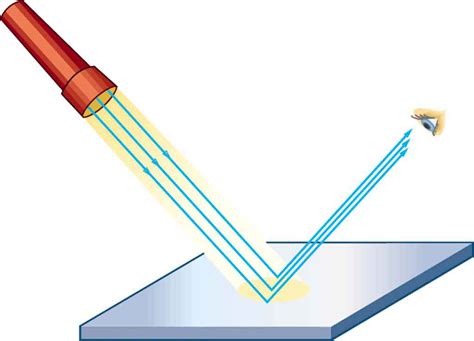
Diagram shows a phenomenon occurs when the spotlight is directed onto a mirror surface. What is the principle of light shown in the situation?

a)

Light travels in a straight line

b)

Refraction of light

c)

Reflection of light

d)

Light travels in parallel

40.

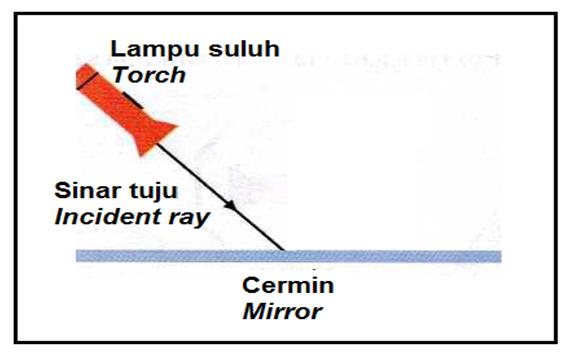
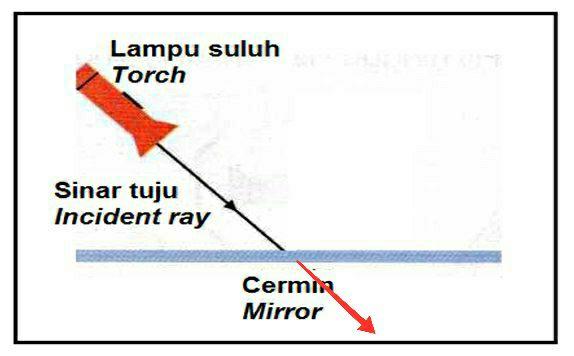
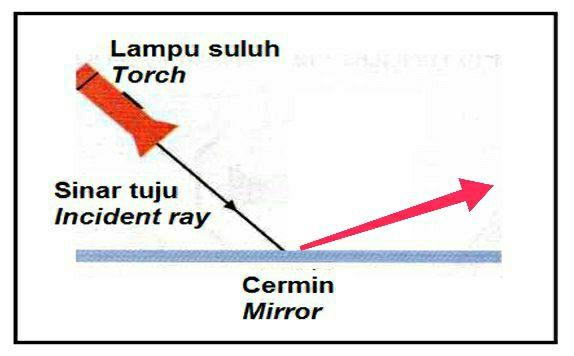
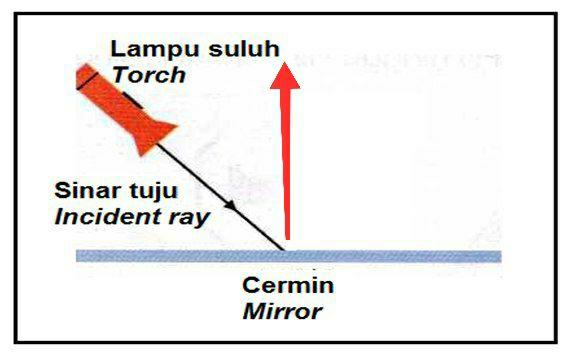
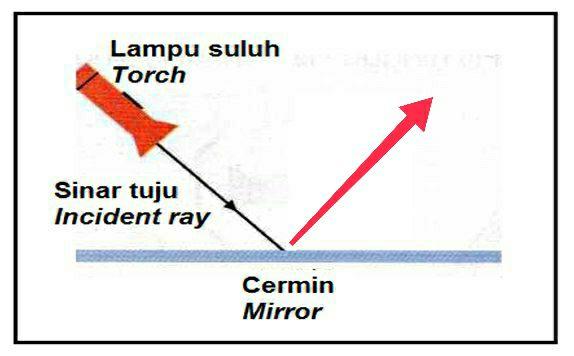
The following diagram shows the ray diagram when a torch light is torched towards a mirror. Which of the following is the correct reflected ray?
a)
b)
c)
d)
41.

The following diagram shows a driver who could see the image of a vehicle behind him without turning his back.

Why?

a)

Light travels in a straight line

b)

Light is refracted

c)

Light is reflected

d)

Light travels in two different mediums

42.

Tick the correct of TWO devices which use the principle of light reflection in our daily lives.

a)
b)
c)
d)
43.

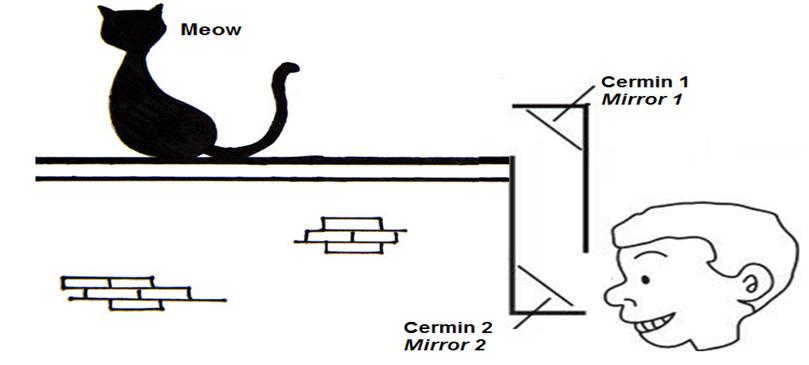
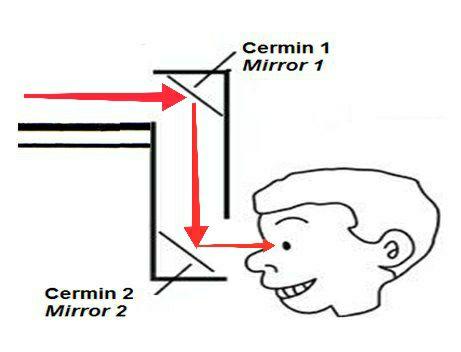
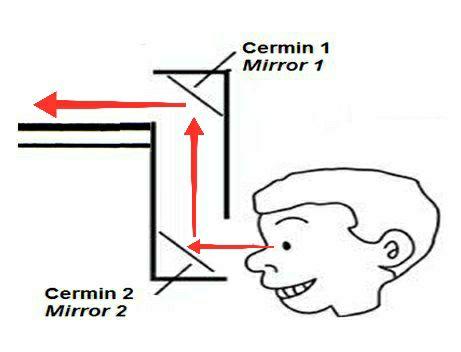
Ariff is watching a cat on a wall using a periscope. Which of the following is the correct reflected ray diagram in the periscope? Tick the correct answer.
a)
b)
c)

None

d)

None

44.

Which of the following shows that light travels in a straight line? Tick the correct answers.

a)

A

b)

B

c)

C

d)

D

e)

E

45.

Which of the following shows the principle of light reflection? Tick the correct answers.

a)

A

b)

B

c)

D

d)

E

e)

F

46.

In the diagram, which letter represents the angle of incidence?

a)

A

b)

B

c)

C

d)

D

47.

Which diagram represents specular reflection?

a)

A

b)

B

48.

Which diagram represents diffuse reflection?

a)

A

b)

B

c)

C

d)

D

49.

In order to see a picture it must

a)

produce light

b)

reflect light

c)

absorb light

50.

To get the best reflection from a mirror you need

a)

a very shiny surface to reflect lots of light

b)

to stand right in front of it

c)

to shine a bright light on it

d)

it to produce light

51.

When we say light bends it means

a)

Light does yogasana

b)

Light turns away

c)

Light changes direction

52.
Light is a kind of.....
a)
reflection
b)
energy
c)
heat
d)
matter
53.
What happens to light after it hits a mirror?
a)
It goes through the mirror and bend.
b)
It goes straight through the mirror.
c)
It goes around the mirror.
d)
It bounces off the mirror.
54.
What kind of path does light take?
a)
It travels in a straight line until it hits something or goes through it.
b)
It bounces off all objects.
c)
It curves around all objects.
d)
It goes through all objects.
55.

Which of these is the best reflector of light?

a)

shiny metal

b)

carpet

c)

white paper

d)

wood

56.

wax paper is?

a)

translucent

b)

transparent

c)

clear

d)

opaque

57.

An image can be seen in a shiny surface when the light is...

a)

refracted

b)

reflected

58.

In the illustration, the light ray striking the object is?

a)

refracted

b)

reflected

59.

We can see objects because of_______?

a)

refraction

b)

reflection

60.

Choose the correct answer.

a)

refraction

b)

reflection