
 Worksheets
2nd Year Assessment 2 - Reproduction/acid/bases/Chem
Total questions: 20
Worksheet time: 10mins
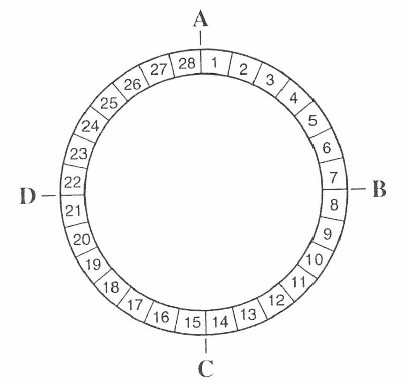
The diagram shows the 28 days of the menstrual cycle. When does the lining of the uterus break down?
A
B
C
D
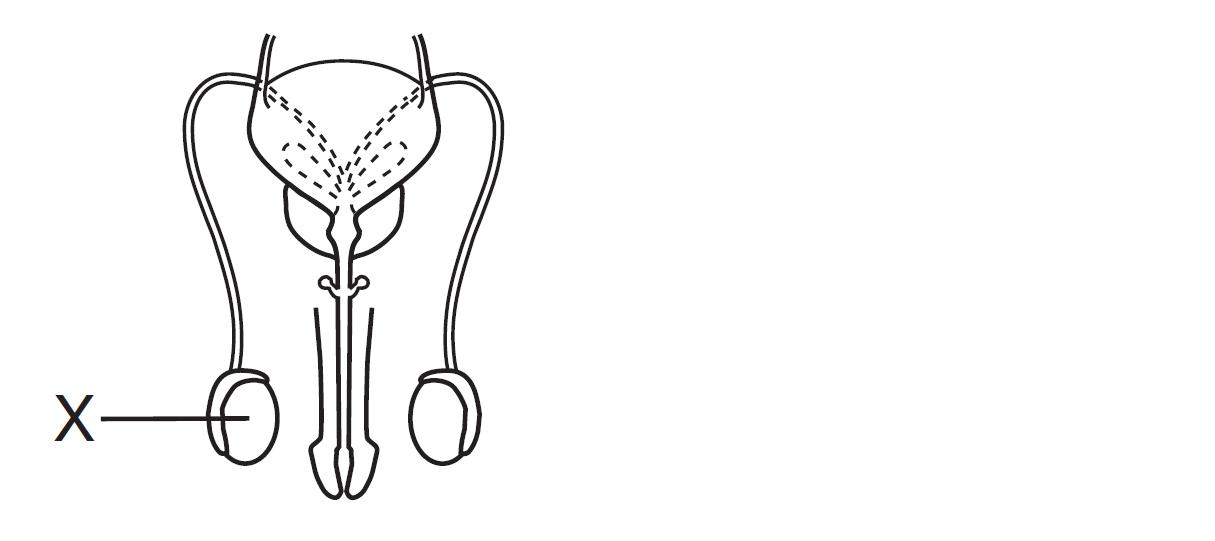
The diagram below represents a system in the human body. The function of structure X is to _____________
produce energy needed for sperm to move
provide food for the sperm to carry to the egg
produce and store urine
produce sperms and male sex hormones
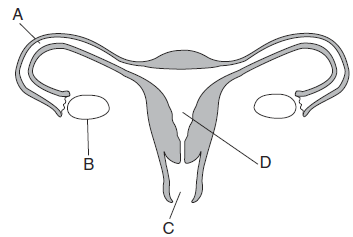
The human female reproductive system is represented below. Where will the embryo attach itself after fertilization?
A
B
C
D
What does IVF stand for?
In vitro fertilisation
Insert viable foetus
Internal variable fertilisation
Internal vitro fertilisation

Milk is a very weak acid. What might its pH value be?
6.5
7.8
4.2
12.2
When an acid is dissolved in water, it turns red litmus paper blue.
True
False
Which of the following are properties of acids?
They conduct electricity when dissolved in water
They taste sour
They react with metals to produce hydrogen gas
All of the answer choices are correct

What is the long graduated piece of equipment called?
Pipette
Tube
Burette
Measuring Cylinder
A substance that alters the rate of a chemical reaction is called a(n)______________.
concentrate
catalyst
inhibitor
product
A chemical reaction in which energy is absorbed is ______________.
an endothermic reaction
an exothermic reaction
a single replacement reaction
a double replacement reaction
________ the concentration ______ the reaction rate.
increasing; decreases
increasing; increases
decreasing; increases
decreasing; does not effect

Which of the following is the chemical formula for preparing oxygen?
2H2O2 = 2H2O + O2
H2O = CO2 + O2
H2O = CO2 + HO2
H2O + CO2 = O2

What statement is correct?
All of the statements
Limewater turns milky in the presence of CO2
Hydrogen burns with a pop
Oxygen relights a glowing splint
Which of following air pollutant gases are causing global warming or "Greenhouse" effect?
SO3
NO2
CO
CO2


