wayground logo

Free Printable Worksheets

NEW

Font size

S
M
L
XL
Worksheets

Chemical Bonding and Shapes LC1 COL

Total questions: 63

Worksheet time: 47mins

Name
Class
Date
1.
Magnesium bromide is an ionic compound with the chemical formula MgBr₂.  What does the "2" tell you?
a)
There are 2 bromide ions for every magnesium ion
b)
Bromide has a 2- charge
c)
Bromide has a 2+ charge
d)
There are 2 magnesium ions to every bromide ion
2.
An ionic bond is the attraction between:
a)
oppositely charged ions
b)
similarly charged ions
c)
neutral ions
d)
neutral atoms
3.

The ability of an atom in a molecule to attract electrons is best quantified by the ______.

a)

electronegativity

b)

paramagnetism

c)

diamagnetism

d)

electron change-to-mass ratio

e)

first ionization energy

4.

Valence electrons are involved in the formation of a chemical bond

a)

True

b)

False

5.

Chemical bond formed from the electrostatic attraction between positive and negative ions

a)

covalent bond

b)

ionic bond

c)

metallic bond

6.

When 2 atoms share electrons

a)

Ionic bond

b)

covalent bond

c)

metallic bond

7.

Which of the following is NOT an example of a molecular formula?

a)

H2O

b)

B

c)

NH3

d)

O2

8.

Use VSEPR theory to predict the shape of the hydrogen chloride molecule, HCl.

a)

tetrahedral

b)

linear

c)

bent

d)

trigonal planar

9.
Which of the following is an example of an IONIC COMPOUND?
a)
NaCl
b)
H2O
c)
CO2
d)
NO
10.
Which of the following is a characteristic property of ionic compounds?
a)
They form hard, brittle crystals with characteristic shapes
b)
They have low melting points
c)
They have low boiling points
d)
They contain no charged particles
11.
The chemical formula of carbon tetrachloride is
a)
CCl
b)
C₄Cl
c)
CCl₄
d)
C(IV)Cl
12.

What is the name of the compound Na2(SO4)?

a)

Sodium sulfate

b)

Sodium sulfide

c)

Sodium sulfite

d)

Sodium sulfuroxide

13.

What is the name of the compound Sc(OH)3?

a)

Scandium (III) hydroxide

b)

Scandium (I) hydroxide

c)

Scandium (II) hydroxide

d)

Scandium hydroxide

14.
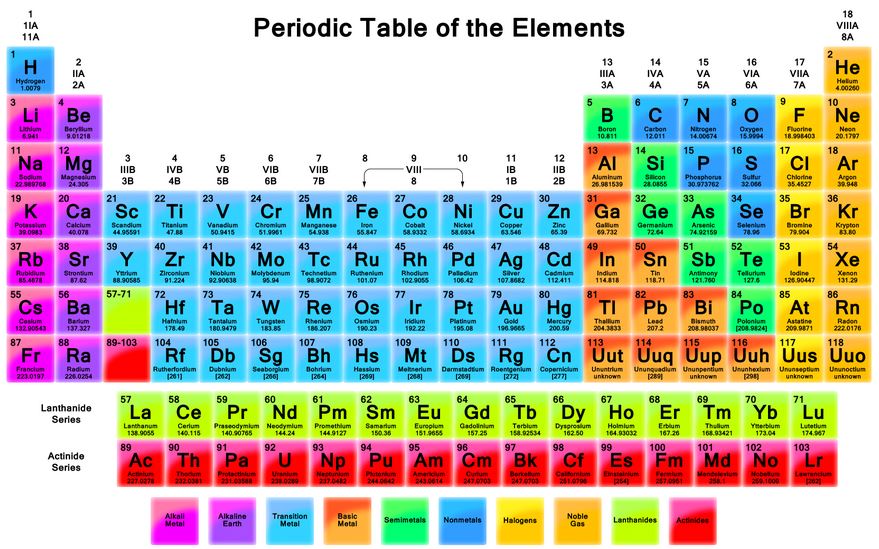
Which of the following has a full valence shell?
a)
Oxygen
b)
Neon
c)
Barium
d)
Carbon
15.
Elements on the LEFT side of the periodic table will most likely form:
a)
Positive ions
b)
Negative ions
c)
Neutral Ions
d)
None of these
16.
Which type of bond has an equal sharing of electrons?
a)
Polar Covalent 
b)
Non Polar Covalent
c)
Ionic
d)
Metallic
17.
Which type of bond has an unequal sharing of electrons?
a)
Polar Covalent 
b)
Non Polar Covalent
c)
Ionic
d)
Metallic
18.
All chemical bonds involve two atoms sharing electrons.
a)
True
b)
False
19.
How are covalent bonds explained?
a)
When one atom takes the other atom's electron
b)
When the atom shares an electron with an another atom
c)
When the two nucleus merge
d)
When the neutrons leave the nucleus
20.

3. What do atoms that form positive ions tend to do?

a)

Tend to lose electrons

b)

Tend to lose protons

c)

Tend to gain electrons

d)

Tend to gain protons

21.

17. What is the number of valence electrons for Carbon (Group 14)?

a)

1

b)

2

c)

3

d)

4

22.
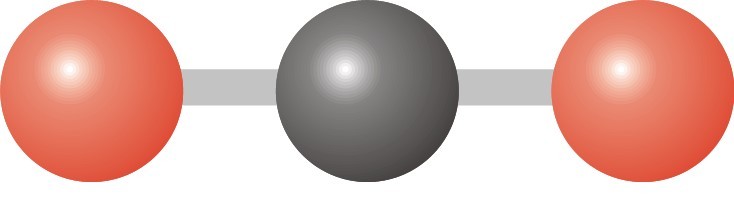
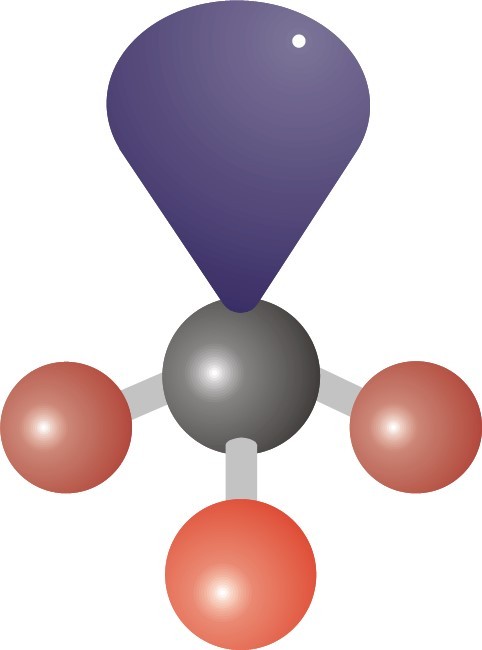
What is the MOLECULAR geometry of the molecule?
a)
Linear
b)
Bent
c)
Trigonal Planar
d)
Seesaw
23.
What is the MOLECULAR geometry of the central oxygen?
a)
Linear
b)
Trigonal Planar
c)
Bent
d)
Tetrahedral
24.
What is the name of SO3?
a)
Sulfur Oxide
b)
Sulfur trioxide
c)
Monosulfur trioxide
d)
Sulfur (VI) Oxide
25.
What is the chemical formula for Sodium Sulfide?
a)
NaS
b)
Na2S2
c)
Na2S
d)
NaS2
26.
What is the best explanation of VSEPR theory?
a)
It explains the shapes that electrons make around atoms when they repel
b)
It explains how many electrons fit into an element's valent shell
c)
It explains why electrons pair up
d)
It explains why electrons repel each other
27.
 A lone pair is defined as
a)
A pair of bonding electrons
b)
One non-bonding electron
c)
A pair of non-bonding electrons
d)
A pair of electrons on the central atom
28.

Which Lewis Dot Model drawing correctly shows an O2 molecule?

a)
b)
c)
d)
29.
How many electrons are shared in a double bond?
a)
1
b)
2
c)
4
d)
6
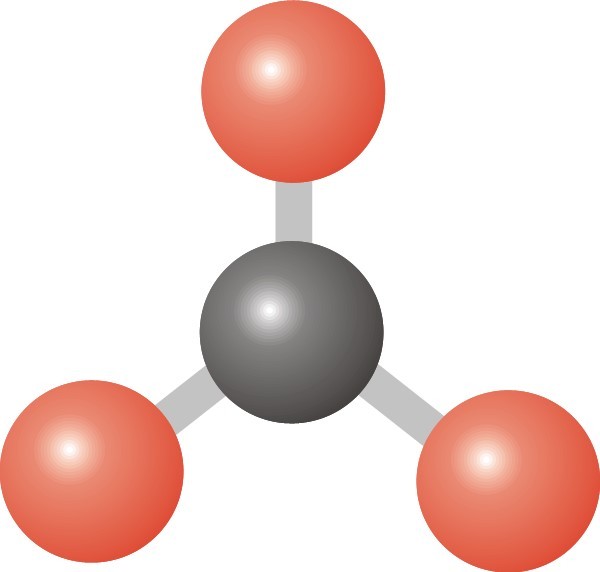
30.

Which type of molecular shape is shown by this molecule?

a)

trigonal pyramidal

b)

tetrahedral

c)

bent

d)

trigonal planar

31.

Which of these Lewis structures is incorrect?

a)
b)
c)
d)
32.

Which is the correct molecular structure for carbon dioxide?

a)
b)
c)
d)
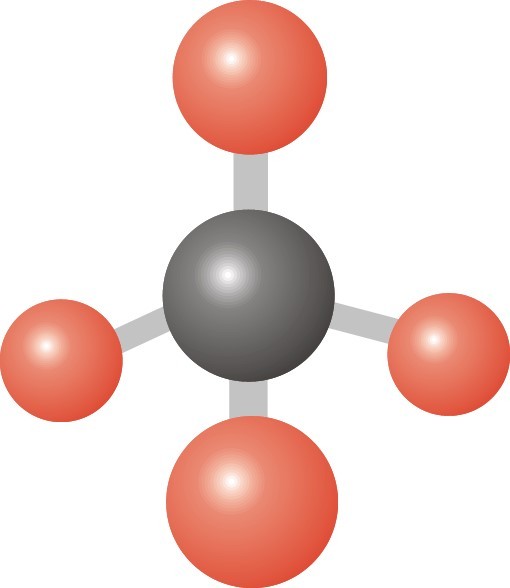
33.
What is the ELECTRONIC geometry of the following?
a)
Linear
b)
Trigonal planar
c)
Tetrahedral
d)
Trigonal Bipyramidal
34.
What is the MOLECULAR geometry of the central oxygen?
a)
Linear
b)
Trigonal Planar
c)
Bent
d)
Tetrahedral
35.

Which molecule would have this molecular geometry?

a)

H2O

b)

CH4

c)

PCl5

d)

CO2

36.
What molecule could this be? 
a)
BF3
b)
CH4
c)
H2O
d)
CO2
37.
Who could this molecule be?
a)
CH4
b)
CO2
c)
PCl5
d)
BF3
38.

What molecular shape is the structure shown here?

a)

tetrahedral

b)

trigonal planar

c)

bent

d)

trigonal pyramidal

39.

2 bonded atoms and no lone pairs on the center atom

a)

linear

b)

trigonal planar

c)

bent

d)

tetrahedral

e)

trigonal pyramidal

40.
Who could this be?
a)
H2O
b)
NH3
c)
CO2
d)
CH4
41.
Which has the greater EN: 
N or C?
a)
C
b)
N
42.
Choose the set that goes from lowest to highest electronegativity?
a)
Cu, Mg, Sr, Ca
b)
F, Cl, Br, Si
c)
Cs, Rb, Ca, Mg
d)
Zn, Cd, Ag, Cu
43.
Electronegativity is...
a)
how good an atom is at attracting electrons
b)
the ability of an atom to lose electrons
c)
the energy required to remove an electron from a specific atom
d)
how easy it is to make friends. 
44.
Elements closer to the noble gases have stronger attraction for electrons.
a)
True
b)
False
45.
What elements have zero electronegativity?
a)
metals
b)
nonmetals
c)
metalloids
d)
noble gases
46.

Which bond shares electrons unevenly?

a)

Covalent

b)

Polar Covalent

c)

Ionic

47.

What does the word "polar" refer to?

a)

together, mutually, in common

b)

valence electrons

c)

an atom or molecule with a net electric charge due to the loss or gain of one or more electrons.

d)

To have a positive and negative end like a magnet

48.

The difference in electronegativity affects the type of bond will be formed. What type of bond would be formed with a difference of 0.3?

a)

Covalent

b)

Polar Covalent

c)

Ionic

49.

The difference in electronegativity affects the type of bond will be formed. What type of bond would be formed with a difference of 2.0?

a)

Covalent

b)

Polar Covalent

c)

Ionic

50.

The difference in electronegativity affects the type of bond will be formed. What type of bond would be formed with a difference of 0.6?

a)

Covalent

b)

Polar Covalent

c)

Ionic

51.

What type of bond would be formed between F and H?

a)

Covalent

b)

Polar Covalent

c)

Ionic

52.

What type of bond would be formed between O and H?

a)

Covalent

b)

Polar Covalent

c)

Ionic

53.

What type of bond would be formed between two H?

a)

Covalent

b)

Polar Covalent

c)

Ionic

54.

This is an example of a(n) __________.

a)

Intramolecular Force

b)

Dipole

c)

Nonpolar Molecule

d)

Intermolecular Force

55.

Which intermolecular force requires hydrogen and one of the following: nitrogen, oxygen, fluorine?

a)

Dipole-dipole

b)

Hydrogen bonding

c)

London dispersion forces

56.
Intermolecular forces are the forces
a)
within molecules
b)
between molecules
57.
Does CH4 have hydrogen bonding?
a)
yes
b)
no
58.
What explains the very high melting and boiling point of water
a)
Strong dipole-dipole bonds between water molecules
b)
Strong hydrogen bonds between water molecules
c)
Dispersion forces which are present in all molecules
d)
Asymmetrical shape of the polar bonds.
59.
Which is the second strongest intermolecular force, after hydrogen bonding?
a)
dipole-dipole attraction
b)
London forces
60.

Which substance has the weakest intermolecular forces?

a)

Substance A, boiling point of 75 °C

b)

Substance B, boiling point of 105 °C

c)

Substance C, boiling point of 25 °C

d)

Substance d, boiling point of 45 °C

61.

Which is the correct description about van der Waals' forces?

a)

They are the weakest of the intermolecular forces arising from instantaneous dipole - induced dipole interactions.

b)

They are the strongest of the intermolecular forces arising from dipole - dipole interactions.

62.

Which of the following gives the correct order of boiling points of H2O, HCl and HF?

a)

H2O > HCl > HF

b)

H2O > HF > HCl

c)

HF > HCl > H2O

d)

HF > H2O > HCl

63.

oil and water do not mix because they are

a)

polar and polar

b)

polar and saturated

c)

non polar and polar

d)

polar and non polar