
 Worksheets
ELA 7 Final Review
Total questions: 77
Worksheet time: 1hrs 19mins
What is point of view?
The perspective from which a narrative is told.
The problem in the story.
Time and place in which the events of a narrative
occur.
The main idea or message in a plot.
What is first person point of view?
The narrative is told by one of the characters and seen only through his or her eyes.
Narrator is all knowing; the author is telling the story, using the words they and them.
A character is telling the story using we or you.
The perspective from which from which a narrative is told.
The exposition is....
the problem in the story.
about figures in a literary work who are often human, but can also represent other beings (animals, etc.).
Time and place in which the events of a narrative
occur.
The part of the story that informs the reader about characters and setting.
Conflict is....
the problem in the story.
about figures in a literary work who are often human, but can also represent other beings (animals, etc.).
Time and place in which the events of a narrative
occur.
The part of the story that informs the reader about characters and setting.
The setting is....
the problem in the story.
about figures in a literary work who are often human, but can also represent other beings (animals, etc.).
Time and place in which the events of a narrative
occur.
The part of the story that informs the reader about characters and setting.
Rising action is
The culmination or ending of a fictional plot.
The events leading from the climax to the resolution.
Once conflict is established, related events occur working toward climax.
A turning point in the action; often when a character takes action to end conflict.
The protagonist is...
The main idea or message in the plot.
The main character who drives the plot.
The character who creates the problem.
The various means by which an author describes, and develops a character in a literary work.
Dialogue is..
the various means by which an author describes, and develops a character in a literary work.
when he author explicitly presents and explains what the character is like by telling the reader about the character.
when he author shows what a character is like through actions statements, thoughts, and feelings.
the conversation between two or more characters in a literary work.
Pacing is...
conversation between two or more characters in a literary work.
a stylistic device, which shows how fast a story unfolds.
a spoken or written representation or account of a person, object, or event.
the main idea or message in a plot.
Conflict is...
a comparison using "like" or "as".
a problem, issue, or struggle in a story.
the time and place in a story.
describing words about a character.
A theme is...
a lesson/message of the story.
a big topic in the story.
the ending of the story.
Onomatopoeia is a word that imitates the sound it represents
True
False
What is the definition of a "climax" in a story?
The story's surroundings or environment.
A decisive moment that is tense/a major turning point.
A challenge presented to the main character in order to solve their problems.
The main character in the story.
Which of the following sentences is an example of a simile?
He'd known the criminal was a dirty dog for years.
On the planet Kio, there were at least four suns.
His eyes were as green as the grassy meadow.
She was bold, beautiful, and brilliant.
Personification is...
the treatment of an object/idea as if it were a person.
the overall mood of a text.
a metaphor recurring throughout a text.
Foreshadowing is...
a hint or indication of future events.
when the author creates a dark mood.
when two characters have a conflict with one another.
when the tone of the story suddenly shifts.
An introduction paragraph in an essay has 3 parts. What are those three parts in the correct order?
Thesis, hook, claim
Background information, FOR, thesis
hook, background information, thesis
hook, background, theme
An object in a text represents something bigger about life
summary
suggest
contrast
symbolism
Comparing with "like" or " as"
metaphor
simile
contrast
i don't know
A lesson, message, or moral of a text
setting
theme
tone
simile
goes back in time
contribute
main idea
flashback
metaphor
What is the feeling an author has about a topic as it is expressed in a text?
mood
tone
setting
conclusion
The feeling the reader gets from a text. This may change many times throughout a text...
tone
mood
setting
theme


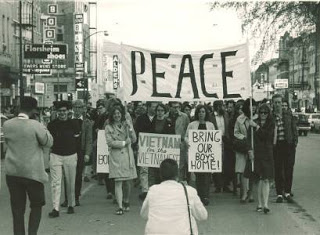
What is the point of view?
What is the point of view?


he?
What is a fact-o-meter?
A meter stick that has the word "fact" on it.
A line that shows how much of an article is fact and how much opinion.
A triangle with fact and opinion.
A tool that Mr. Prato made up about who knows what.
What is an agenda when it comes to bias?
A list of what we're going to do today.
Your planner for assignments.
The secret motive behind why someone is trying to persuade.
A list of what a writer wants to include in a story.
What is a PIE triangle on the seven questions?
A blueberry pie shaped like a triangle.
A triangle with seven points.
A triangle for figuring out the theme.
A triangle that shows the author's purpose in an article.
What is a cornerstone sentence in an article?
One sentence that shows the theme of the article and is probably the most important sentence in that article.
The sentence in the corner of the page.
The first sentence of the article.
The sentence that reveals who the author is.
What is a level three, diving board connection?
A questions that leaves the text and dives into the real world to make a meaninful connection to the text.
A question that requires an inference in the text.
A question that you can point to in the text.
A secret quesiton on the bottom of a swimming pool.
What is a one word summary of an article answering The Seven Questions?
One word you can point to.
One word that summarizes the theme of the article.
A secret word you have to find in the article.
Mr. Scott's favorite word in the article.
What are The Six Traits of Writing?
Six paragraphs you have to write in class.
Word choice, voice, sentence fluency, grammar, organization, ideas and content (the 6 things that make up great writing).
Mrs. Freeman's six favorite things about writing.
Six things people often forget to do when writing.
Who are the seventh grade ELA teachers?
Mr. O'Keefe, Mr. Scott, and Mrs. Freeman
Mr. Cosby, Mr. Scott, Mrs. Larson
Mrs. Freeman, Mr. Allen, Mrs. Tamburini
Mr. Scott, Ms. Prada, and Mr. Prato

