
 Worksheets
Weathering & Erosion
Total questions: 12
Worksheet time: 9mins
Name
Class
Date
1.

The process by which rocks are broken down
a)
Weathering
b)
Deposition
c)
Erosion
d)
Sedimentation
2.

The process in which sediment settles out (drops to the bottom) of the water or wind that is carrying it
a)
Weathering
b)
Erosion
c)
Sedimentation
d)
Deposition
3.
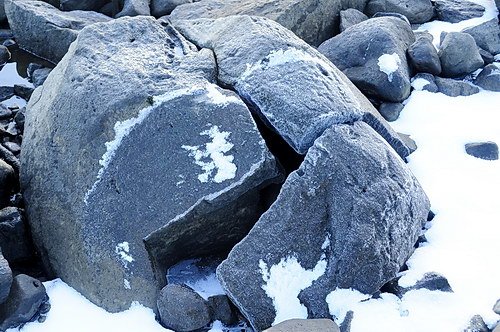
How does freezing water cause the weathering of rocks? The freezing water—
a)
keeps the rocks in place.
b)
makes the rocks last longer.
c)
expands cracks and breaks rocks.
d)
causes rocks to fall in landslides.
4.
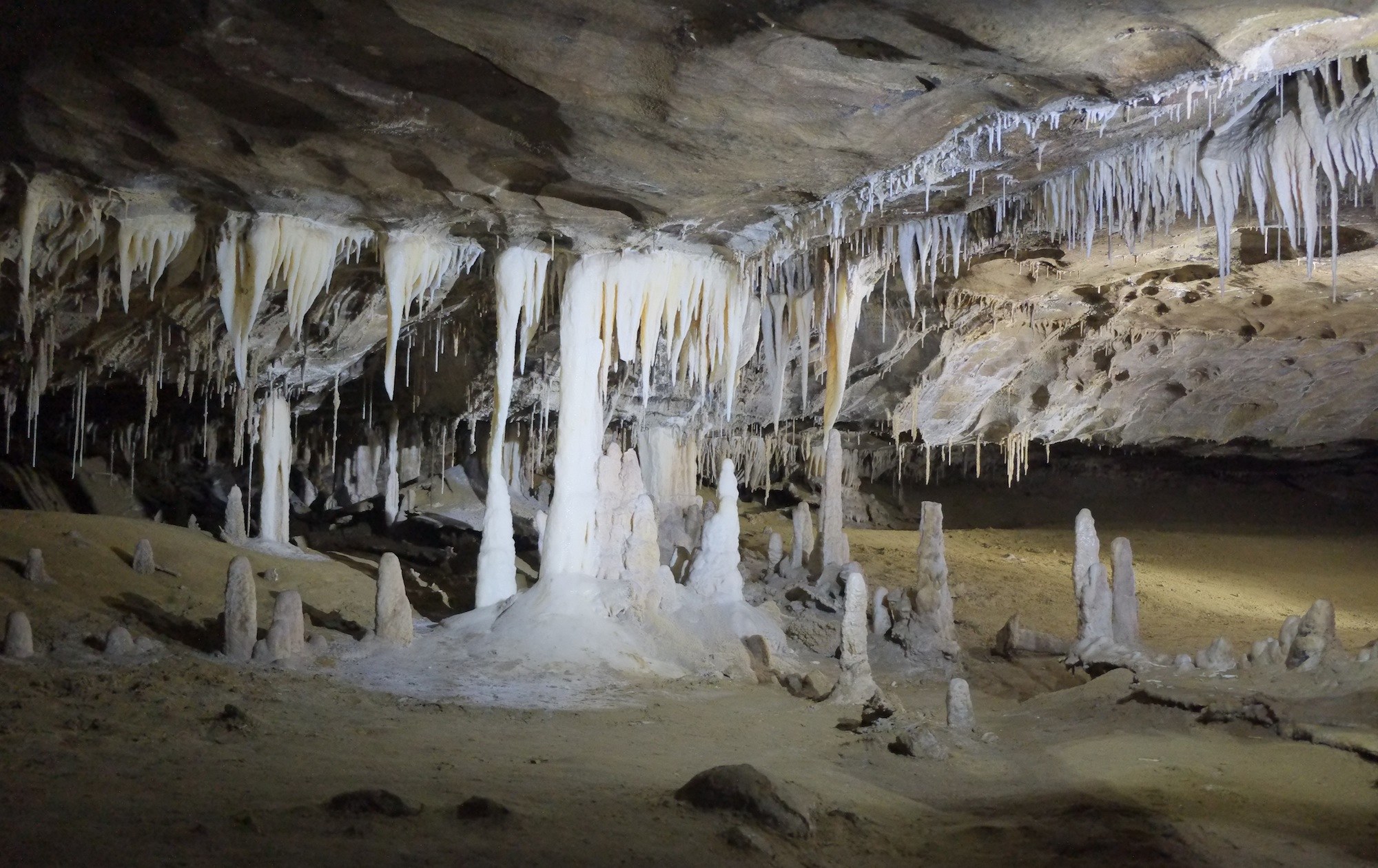
Deposition changes the Earth’s surface because bits of broken rock and soil _____.
a)
stop rivers from flowing.
b)
make rich farmlands.
c)
are dropped in new places.
d)
move very slowly.
5.

The process by which water, ice, wind, or gravity moves weathered rock and soil from one place to another.
a)
Weathering
b)
Erosion
c)
Deposition
d)
Crop Rotation
6.

How do plants weather rocks?
a)
During photosynthesis
b)
When the plant moves water from the roots to the leaves, the rock breaks
c)
When roots grow into cracks of rocks and expand, the rock breaks
d)
Plants don't weather rocks
7.
What words do "break it, take it, drop it" match?
a)
weathering, erosion, deposition
b)
sediment, delta, deposition
c)
mechanical weathering, chemical weathering
d)
Erosion, mass wasting, sediment
8.

The diagrams shows a rock with water trapped in the cracks during the day and at night.
Which statement best explains why this process results in weathering?
Which statement best explains why this process results in weathering?
a)
frozen water acts as a solute
b)
water expands when it freezes
c)
the mass of water increases when it freezes
d)
frozen water dissolves most types of rock
9.

Over long periods of time, deposition may change the Earth’s surface by _____.
a)
forming new land features.
b)
breaking down large rocks into smaller ones.
c)
washing away beaches.
d)
moving topsoil.
10.
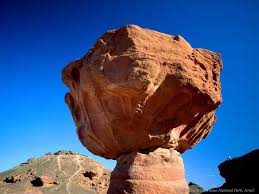
The process that breaks down rocks and other materials on Earth's surface is called
a)
Weathering
b)
Erosion
c)
Deposition
d)
Decomposition
11.

A cliff formed near the ocean. Which statement best describes how this cliff formed?
a)
Warm air melted the rock.
b)
Sun rays evaporated the rock.
c)
Ocean waves washed away rock.
d)
Plant roots pushed away the rock.
12.

Which of these is an example of erosion?
a)
Light shining onto a mountain.
b)
Rain breaking down rocks on a mountain into smaller pieces.
c)
Wind blowing away sediment to a new place on the mountain.
d)
All of the above.
100 %

