wayground logo

Free Printable Worksheets

Font size

S
M
L
XL
Worksheets

INT SCI Unit 07 -Harnessing Energy - Mr. B.

Total questions: 83

Worksheet time: 1hrs 4mins

Name
Class
Date
1.

Which way do electrons flow in a circuit?

a)

Negative to Positive

b)

Positive to Negative

c)

Either Direction

d)

Both Directions

2.

What is the actual thing that electricity is?

(a)  

3.

Electrical energy that flows in a closed path is called a ____.

a)

path

b)

current

c)

circuit

4.

The flow of electricity in a circuit is called ____.

a)

current

b)

power

c)

circuit

5.

The plastic around the wire is a(n) ____.

a)

conductor

b)

insulator

c)

decoration

6.

What is the power source for this circuit?

a)

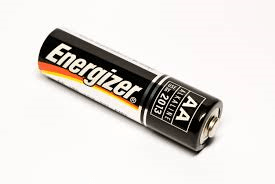
Battery

b)

Electric socket

c)

Wires

d)

Bulb

7.
What will happen when these magnets are brought close together?
a)
They will attract each other.
b)
They will repel each other.
c)
Both magnets will turn to the left
d)
Both magnets will turn to the right
8.

Iron, nickel and cobalt are all ___________ materials.

a)

shiny

b)

poles

c)

magnetic

d)

cold

9.

These magnets will

a)

Attract

b)

Repel

10.

What is this?

a)

motor

b)

electromagnet

c)

generator

d)

turbine

11.

Which energy transformation occurs in an operating electric motor?

a)

electrical → mechanical

b)

mechanical → electrical

c)

chemical → electrical

d)

electrical → chemical

12.

Combing your hair with a plastic comb produces static electricity.

a)

True

b)

False

13.

When we talk about electricity, we can distinguish two types of materials:

a)

Hard and soft.

b)

Conductive and insulating.

c)

Rigid and flexible.

14.

The electrical conductor allow the electricity to pass through them.

a)

True

b)

False

15.

Which ones are conductive materials:

a)

Wood

b)

Silver

c)

Gold

d)

Copper

16.

Insulating materials are....

a)

Copper

b)

Plastic

c)

Iron

d)

Wood

17.

The Earth functions as a magnet.

a)

True

b)

False.

18.

What is a parallel circuit?

a)

a circuit

b)

the difference between two numbers

c)

a circuit with two pathways for electricity to flow

d)

the flow of power

19.

How do you know if a material is a conductor ?

a)

electricity can pass through it

b)

electricity will make a spark

c)

nothing will happen

d)

electricity will not pass through it

20.

What happens when you touch a piece of iron to a magnet?

a)

the iron stays the same

b)

do not use a piece of iron

c)

the iron becomes a permanent magnet

d)

the iron becomes a temporary magnet

21.
What is the original energy source for the electrical circuit in the diagram?
a)
insulated wires
b)
music
c)
solar cells
d)
sun
22.
What energy is transformed directly into light, sound, and heat produced by the television?
a)
chemical
b)
electrical
c)
mechanical
d)
solar
23.
Which energy transformation occurred?
a)
chemical energy transformed into light and heat energy.
b)
Electrical energy transformed into light and heat energy.
c)
Heat energy transformed into light and electrical energy.
d)
Light energy transformed into heat and chemical energy.
24.
Which section represents mechanical energy being converted to electrical energy?
a)
Part A
b)
Part B
c)
Part C
d)
Part D
25.
What is the correct sequence of energy transformation that occurs when the switch is moved to the on position?
a)
chemical >light > heat
b)
chemical > heat > electrical
c)
chemical > electrical > light
d)
chemical > light > electrical
26.
The diagram shows a coil of copper wire wrapped around an iron cylinder and connected to a battery.  How will students be able to use  this device in a science experiment?
a)
They can use the electricity it generates to power a light bulb.
b)
They can use the temporary magnetic field it creates to pick up metal paper clips.
c)
They can use the device as a switch in an electrical circuit.
d)
They can use its chemical energy to create electricity that sins the coiled wire.
27.

What actually powers the generator to create the electricity?

a)

the concrete dam

b)

the electric power lines

c)

the moving river

d)

the air pressure

28.

What is represented by x (hint: the way it is being used)?

a)

electric motor

b)

engine

c)

generator

d)

turbine

29.

Anything that stores energy (power) to be used later. Can be chemical or mechanical.

a)

turbine

b)

motor

c)

circuit

d)

battery

e)

calorie

30.
a)

Photovoltaics

b)

Hydropower

c)

Turbine

d)

Biofuel

e)

Geothermal

31.

a)

Photovoltaics

b)

Hydropower

c)

Turbine

d)

Biofuel

e)

Geothermal

32.

What does this relate to?

a)

Energy Efficiency

b)

Law of Conservation of Matter and Energy

c)

Net Metering

d)

Infrastructure

33.

What term most related to this?

a)

Infrastructure

b)

Net Metering

c)

Pollution

d)

Trade Offs

34.

Which of the following is not an example of infrastructure?

a)
b)
c)
d)
e)
35.

Which is the best example of an environmental trade off.

a)

You get a nicer car for less money in an unpopular color.

b)

You get less slightly less horsepower, but get five more miles per gallon in improved fuel economy.

c)

You get your favorite black leather seats, but they burn your backside in the hot summer weather.

d)

You get the deluxe sports package with the tighter suspension and premium racing transmission.

36.

Natural gas comes from both nonrenewable fossil fuel sources underground AND renewable sources such as animals that fart and burp. 😯

a)

True

b)

False

37.

The big trade off with nuclear energy is?

a)

No trade offs; all good.

b)

No air pollution; but dangerous radiation and leftovers

c)

No extra heat, but very little power

d)

Makes better electricity than hydroelectric power; but radiation

e)

No trade offs; all bad.

38.

Renewable means

a)

unlimited

b)

polluting

c)

that it will expire

d)

can be reproduced

39.

These are...

a)

photovoltaics

b)

hydroelectrics

c)

geothermals

d)

the power grid

e)

transmission lines

40.

Car batteries do which of the following?

a)

A) Convert mechanical energy to electrical energy

b)

B) Convert chemical energy to electrical energy

c)

C) Store electrical energy

d)

D) Both A and B are correct

e)

E) Both B and C are correct

41.

Why does a battery stop working?

a)

All of its energy is destroyed.

b)

It has transformed its energy into other types of energy.

c)

It is too old.

42.
The Law of Conservation of Energy states that__________
a)
The overall amount of energy remains the same but some energy is completely destroyed during energy transformations
b)
The overall amount of energy remains the same energy cannot be created or destroyed.
c)
The overall amount of energy can change depending on the energy conversions that take place. 
d)
The overall amount of energy can change because sometimes energy is lost to the environment 
43.
What kind of energy is represented in the picture?
a)
Thermal
b)
Chemical
c)
Sound
d)
Nuclear
44.

Which type of energy is best seen in the picture?

a)

chemical

b)

radiant

c)

sound

d)

electrical

45.

The sun uses this type of energy to make light and thermal energy (heat)

a)

electrical

b)

atomic

c)

sound

d)

chemical

46.

Gasoline stores _____________________________ energy

a)

atomic

b)

electrical

c)

radiant

d)

chemical

47.

Energy that is stored and released when atoms split or join together is called

a)

radiant (light and/or heat)

b)

electrical

c)

atomic (nuclear)

d)

mechanical

48.

What type of energy is seen here?

a)

chemical energy

b)

radiant energy

c)

mechanical energy

d)

atomic energy

49.

A student connected some wire to a battery and a small bulb to make a simple circuit. Energy from the battery is changed into electricity. What type of energy is stored in the battery?

a)

chemical

b)

atomic

c)

radiant

d)

mechanical

50.

The purpose of the panels is to change radiant energy into ____________.

a)

radiant energy

b)

electrical energy

c)

chemical energy

d)

mechanical energy

51.
Derek's hands are cold. Which is the best way for Derek to warm his hands?
a)
Hold them above his head.
b)
Shake them in the air.
c)
Spread his fingers far apart.
d)
Rub them together.
52.

A candle makes heat and -

a)

light

b)

electricity

c)

sound

53.
What energy transformation occurs when an oven is powered on?
a)
Electrical -->Thermal
b)
Thermal --> Electrical
c)
Chemical -->Electrical--> thermal
d)
Electrical --> chemical 
54.
A boy skating downhill on a skateboard is transforming —
a)
potential energy into kinetic energy
b)
kinetic energy into potential energy
c)
thermal energy into potential energy
d)
kinetic energy into chemical energy 
55.
The source of this energy is food, battery, and gas
a)
Thermal
b)
Sound
c)
Chemical 
d)
Gravitational 
56.
The energy stored in an object as a result of position or height is -
a)
Mechanical energy
b)
Thermal energy
c)
Gravitational potential energy
d)
Stored mechanical/elastic energy 
57.
Which of the following shows an energy transformation from chemical to electrical to light energy?
a)
A bolt of lightning lights the night sky.
b)
A candle glows brightly in the dark.
c)
A fire in a fireplace lights up a room.
d)
A battery causes a flashlight to shine. 
58.

What energy transformation occurs as a mouse produces body heat?

a)

Chemical --> Thermal

b)

Thermal --> Chemical

c)

Electrical --> Thermal

d)

Thermal --> Mechanical

59.

What energy transformation occurs as an electric eel shocks its prey?

a)

Electrical --> Mechanical

b)

Thermal --> Electrical

c)

Chemical --> Electrical

d)

Radiant --> Electrical

60.
Solar Energy is transferred to _____ Energy.
a)
Mechanical
b)
Solar
c)
Sound
d)
Electrical
61.
Electrical Energy is transferred to _____ Energy.
a)
Mechanical
b)
Solar
c)
Electrical
d)
Thermal
62.
Mechanical Energy is transferred to _____ Energy.
a)
Solar
b)
Mechanical
c)
Electrical
d)
Potential
63.
Chemical Energy is transferred to _____ Energy.
a)
Thermal
b)
Solar
c)
Mechanical
d)
Chemical
64.
what type of energy is stored in a battery?
a)
electrical
b)
chemical
c)
thermal
d)
mechanical
65.
Can you destroy energy?
a)
Yes
b)
No
66.
Can you create energy?
a)
Yes
b)
No
67.
Making a Fruit Smoothie is YUMMY!
Plug a Blender into the wall outlet, and you're ready to go. 
Which choice below BEST shows the energy transformation of making a smoothie?
a)
Electrical to Kinetic
b)
Electrical to Chemical
c)
Mechanical to Sound
d)
Kinetic to Thermal
68.
In a nuclear power plant, uranium atoms are split in a process called “fission.”  This releases a tremendous amount of energy.  In order to provide this energy to factories and homes, the power plant converts the energy to –
a)
water
b)
oil
c)
natural gas
d)
electricity 
69.
Energy from deep within the Earth is called  ____ energy.
a)
solar
b)
wind
c)
biomass
d)
geothermal
70.
The sun produces energy using _____.
a)
fission
b)
fusion
c)
biomass
d)
geothermal
71.
Energy from the sun is called - 
a)
solar
b)
wind
c)
biomass
d)
geothermal
72.
How does solar energy impact the environment?
a)
none
b)
loss of habitat
c)
air pollution
d)
changing water levels
73.
Where would the best location for solar power be?
a)
Florida
b)
Pennsylvania
c)
Maine
d)
Montana
74.
Which energy source does NOT use turbines?
a)
wind
b)
hydropower
c)
solar
d)
nuclear
75.
Which of the following can NOT trace their original energy source back to the sun?
a)
hydropower
b)
geothermal
c)
wind
d)
solar
76.
Which energy source contributes to air pollution?
a)
hydropower
b)
solar
c)
geothermal
d)
biomass
77.

____________________ is energy that can be replaced as quickly as it is used.

a)

nonrenewable

b)

renewable

c)

nuclear

d)

kinetic

78.

What percentage of energy used in the U.S. comes from renewable energy?

a)

5%

b)

12%

c)

50%

d)

80%

e)

90%

79.

____________________ energy is created by transforming radiant energy from the sun.

a)

geothermal

b)

biomass

c)

solar

d)

nuclear

80.

What percentage of energy used in Scotland comes from renewable energy sources?

a)

90%

b)

10%

c)

50%

d)

80%

81.

What percentage of energy used in Germany comes from renewable energy sources?

a)

90%

b)

46%

c)

50%

d)

10%

e)

100%

82.

What percentage of energy used in China comes from renewable energy sources?

a)

90%

b)

46%

c)

38%

d)

10%

e)

100%

83.

What percentage of energy used in Zimbabwe comes from renewable energy sources?

a)

100%

b)

30%

c)

53%

d)

10%