
Font size
 Worksheets
Natural Selection
Total questions: 20
Worksheet time: 20mins

Natural selection explains HOW organisms change over time. What is the process in which populations are changed over time?
Digestion
Elimination
Evolution
Adaptation
Another term for Natural Selection is:
Breeding
Commensulism
Communism
Survival of the fittest
What word describes a trait that helps an organism survive in its environment?
natural selection
mutation
camouflage
adaptation
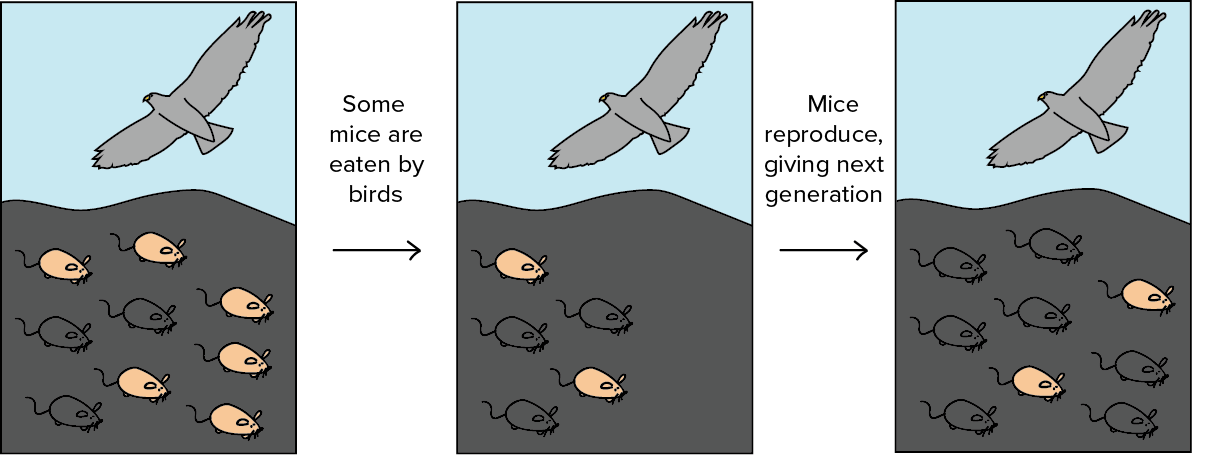
Why is the mouse population changing over time? (You can enlarge the picture by placing your cursor on it.)
The light mice can reproduce more successfully than the dark mice
The hawks eat more dark mice than light mice because the dark mice taste better
The hawks eat more light mice than dark mice because they can see the light mice more easily
The hawks eat more dark mice than light mice because they can see the dark mice more easily
Which organisms are most likely to survive?
the best adapted (best fit)
the fastest
the strongest
the most domesticated (tamed)
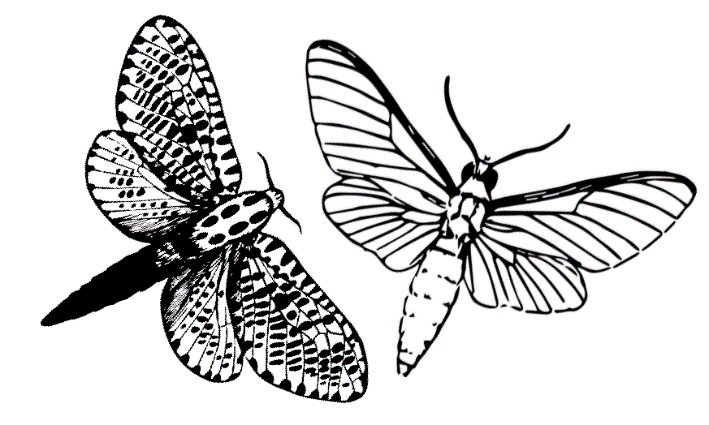
According to natural selection, light colored tree trunks would favor ___________________________.
light colored moths
dark colored moths
red colored moths
red and light colored moths
Why are advantageous (better fit) traits more likely to be passed onto offspring?
They are more likely to survive and reproduce.
They are more likely to die and not reproduce.
They are able to reproduce more offspring.

A slight difference in an inherited trait between individual members of the same species. (Example: Some rabbits have white fur and some have black fur.)
variations
adapatations
homologous structures
analogous structures
The passing of genetic traits (DNA) from parent to offspring is __________.
Survival of the fittest
Heredity
Evolution
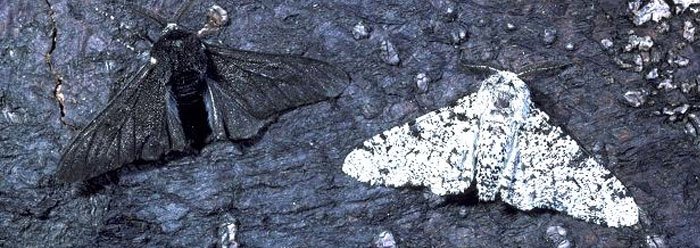
The trees these moths used to live on were white, but have been covered in soot from coal factories. Which moth will be more successful in this environment?
Dark moth
Light moth
Both will be equally successful
Neither will be successful

Which trait(s) would be considered an adaptation for a moth? (Check all that apply.)
Flies very slow.
Wings camouflaged within its environment
The catepillar stage camouflages within its environment.
Flies very fast.
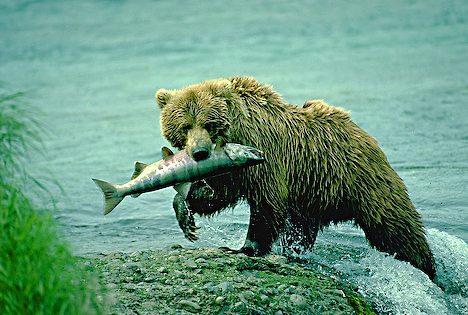
A grizzly bear survives because he is well-adapted (best fit) to his environment. When he reproduces he passes on those traits to his offspring. this process is called
Natural Selection
Selective Breeding
Random mutations
Variations in a species
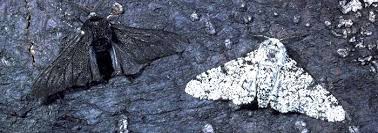
Predict which moth would increase in population over time.
light colored
dark colored

What is the best claim for this image?
The grey wolves are best adapted to the Arctic
The brown rabbits are best adapted to the Arctic.
The white rabbits are best adapted to the Arctic.

If Easter eggs were living species of organisms, their different colors would be considered:
Adaptations
Variations
Different species
Extinct species

The peppered moth's color camouflaged it on the light colored tree bark. It's color was an example of a/n
Variation
Dominant trait
Recessive trait
Adaptation

