
 Worksheets
S3 Carbon Chemistry Mid-Unit Quiz
Total questions: 30
Worksheet time: 18mins

What is fractional distillation?
a process used to separate crude oil
a process used to burn fuels
a process used to make new substances
a process used to extract oil from the ground
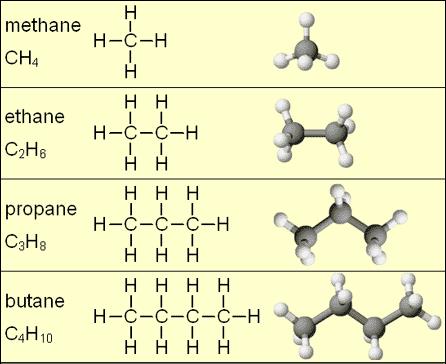
Which of the following substances is not a hydrocarbon?
methane (CH4)
ethane (C2H6)
propane (C3H8)
ammonia (NH3)
Crude oil is made up of:
Ethane
Butane
A mixture of different hydrocarbons
Extremely large hydrocarbons which are broken up once extracted
Fractional distillation separates crude oil based on the different __________ of the molecules in the mixture
melting point
boiling point
freezing point
chemical reactivity

Where do shorter chain hydrocarbon molecules collect in the fractionating tower?
At the top
In the middle
At the bottom

Where do longer chain hydrocarbon molecules collect in the fractionating tower?
At the top
In the middle
At the bottom
Shorter chain hydrocarbon molecules have:
Higher boiling points
Lower boiling points

What is the name of the following molecule?
Methane
Propane
Ethane
Butane
What do we call the groups of hydrocarbons obtained once crude oil has been separated using fractional distillation?
percentages
pieces
products
fractions
What elements are found in a hydrocarbon?
carbon
oxygen
helium
hydrogen
Which fraction is the most flammable?
Petrol
Refinery gas
Residue
Kerosene
Which part of the fractionating tower is the highest temperature?
top
right
bottom
left
What can Naphtha be used for?
Fuel for cars
Camping stoves
Heating homes
Making plastics and chemicals
What can Kerosine be used for?
Jet fuel
Road surfaces
Heating homes
Truck fuel
A molecule with a low boiling point will...
be found towards the bottom of the fractionating tower
be found towards the top of the fractionating tower
have short hydrocarbon chains
have long hydrocarbon chains
The longer the hydrocarbon chain, the ________ the flammability?
Lower
Higher
The longer the hydrocarbon chain, the _________ the viscosity?
Lower
Higher
Name the compound that has a molecular formula of C3H8
Propene
Butane
Butene
Propane
The "ane" ending in "alkane" tells us that the molecules contain carbon to carbon _________-bonds.
single
double
triple
quadruple
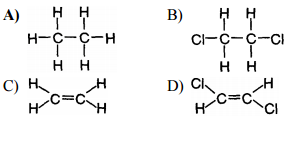
Which of these molecules is a saturated hydrocarbon?
A
B
C
D
The general formula for an alkane is
CnH2n+2
CnH2n
CnH2n+1OH
CnH2n+1COOH
The general formula for an alkene is
CnH2n+2
CnH2n
CnH2n+1OH
CnH2n+1COOH
The process of cracking........
involves breaking longer chain hydrocarbons into smaller chain hydrocarbons
separates hydrocarbons based on their carbon chain length
separates hydrocarbons based on their viscosity
involves making longer chain hydrocarbons from smaller chain hydrocarbons
Complete the equation C16H34 ---> __________ + C2H4
C16H34
C2H30
C10H20
C14H30
C10H22 --> C5H12 + C3H6 + ?
C2H4
C3H4
CO2
CH4
When testing for alkenes (unsaturation) bromine solution changes colour from...
orange/brown --> blue/black
colourless --> pink
orange/brown --> colourless
green --> colourless
Cracking long chain hydrocarbons produces...
a mixture of alkanes and alkenes
alkanes only
alkenes only
polymers only

Name the following molecule
Pentene
Pentane
Hexane
Heptene
Both alkanes and alkenes react rapidly with bromine solution at room temperature.
True
False

