
 Worksheets
7th Grade Orchestra Review
Total questions: 40
Worksheet time: 21mins

Which symbol means down bow?


What does the tempo LENTO mean?
Fast
Slow
Moderate tempo
Running quickly through the trees

Allegro means
Fast
Slow
Very Fast
Very Slow

A moderate speed.
Fast
Slow
Moderato

An extremely fast tempo, about 180 beats per minute.
Largo
Lento
Allegro
Prestissimo

Slow, but a moving speed, about 60 beats per minute.
Adagio
Allegro
Presto

Very slow, broad tempo, about 50 beats per minute.
Presto
Largo
Allegro

What tempo means to "gradually get faster"?
Rolling down the hill
Getting pushed down a hill
Accelerando
Stop

Ritarando means
to get faster
to gradually run
to gradually get slower
to eat all you veggies.

This is a fast tempo, about 120 beats per minute.
Largo
Allegro
Presto
Jump rope

This is a very fast tempo, about 160 beats per minute.
Allegro
Presto
Pesto
Lento


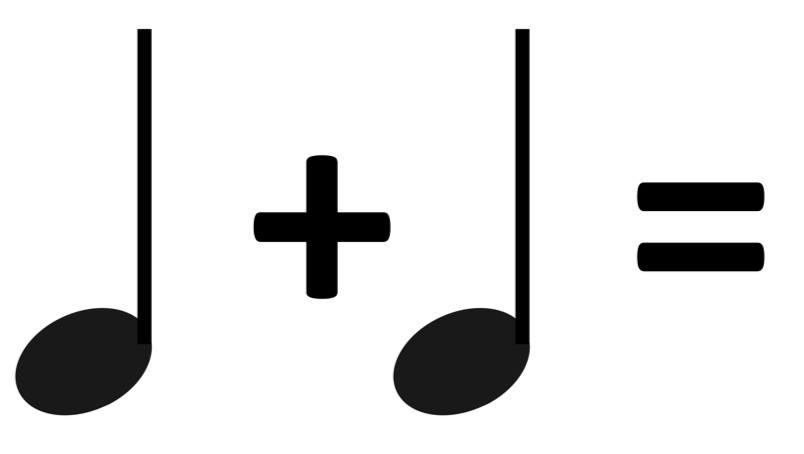
How many beats?
2
1
4
Choose the correct rhythm:


What is the # for Hz your tuner should be set to?
350Hz
440Hz
1010Hz
1Hz

Turning you fine tuner clockwise make the pitch go higher.
True
False

Turning your fine tuner counter clockwise makes your pitch go lower.
True
False

What do you do if you have a floppy string?
Turn on your tuner to the correct pitch, hum/sing the pitch in your head or out loud, turn the correct peg slowly, apply pressure to both the peg and the scroll until the string is no longer floppy.
Turn it fast
Turn on your tuner, scream the pitch out loud until your voice breaks, take the floppy string and use it like a rubber band and sling it in the air
Turn on your tuner and stare at the floppy string. Try to turn it with your mind.

When adding a new string, what should you do?
Make sure to put on the correct string.
Make sure to put in the string tip into the peg after it is in the peg box.
Once it is in the peg turn the peg slowly and apply pressure.
Continue to hold the string with a bit of pressure so that the string does not come undone.
Make sure the bottom of the string in put in correctly in the tailpiece where the fine tuners are.

Sharp - note gets a little lower
Sharp - note gets a little higher
Natural Sign
Flat Sign
Tempo
Speed of the Music
Forte
Moderato

Which of the following has a time signature of 3/4?


cancels out the previous sharp or flat
natural
sharp
flat
fake


How many sharps are in the D Major Scale?
1
2
3
4
How many sharps are in the G major scale?
1
2
3
4
How many sharps are in the C major scales?
1
2
3
0
How would you describe the term accidental in music?
The lines on the page
The notes written in the scale
The treble and bass clef
Sharps and flats notes written, that may not be in the written key signature

raises the note by 1 semitone (half-step)
lowers the note by 1 semitone (half-step)
play slower
get louder

What is the order of letters for the C Major Scale?
ABCDEFGA
CEG
CDEFGABC
CDEFG

What is the name of this key?
Ab Minor
A Major
C Major
C# Major

