Wayground logo

Free Printable Worksheets

Font size

S
M
L
XL
Worksheets

States and Properties of Matter

Total questions: 35

Worksheet time: 34mins

Name
Class
Date
1.

Of the three states of matter, particles are moving the fastest and are the farthest apart in a _________.

a)

solid

b)

liquid

c)

gas

2.

1.The state of matter with a fixed volume but no fixed shape is _______.

a)

solid

b)

liquid

c)

gas

3.

1.Particles cannot change position in a ________

a)

solid

b)

liquid

c)

gas

4.

Density is a physical property that describes how much matter is in a certain amount of space. Which picture shows the highest density?

a)
b)
c)
5.
matter
a)
Anything that has weight and takes up space
b)
anything that has a smell and you can feel it
c)
only a few things have matter
d)
the longest distance running
6.

Which of these is a chemical property of iron?

a)

It is dense.

b)

It has a melting point.

c)

It is hard to bend.

d)

It can become rusted.

7.

Which statement about chemical properties is true?

a)

Chemical properties include melting and boiling points.

b)

Bending metal is an example of a chemical property.

c)

A chemical property is the ability of a substance to change into something else.

8.

Ice melting is an example of a ___________ ____________.

a)

Chemical Change

b)

Physical Change

c)

Composition Change

9.

Which of the following is a chemical property?

a)

Malleability

b)

Decomposition

c)

Boiling Point

10.

What is happening in this picture of water boiling?

a)

Molecules are speeding up

b)

Molecules are slowing down

11.

I made toast for breakfast! This is an example of a _________.

a)

Chemical change

b)

Physical change

c)

Wave change

12.

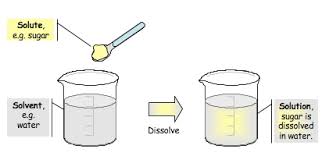
The ability of sugar to dissolve in water is called

a)

malleability

b)

Density

c)

State

d)

solubility

13.

True or false. Your mass would change if you went to another planet.

a)

True

b)

False

14.
The water is ______ dense than the boat
a)
more
b)
less
15.

Which process changes a gas to a liquid?

a)

freezing

b)

evaporation

c)

melting

d)

condensation

16.
How do the atoms behave in a liquid?
a)
Atoms move very fast.
b)
Atoms keep their shape.
c)
Atoms slide against each other to fill a bottle.
17.
Cornstarch slime has properties of both _______ and _______.
a)
gas, solid
b)
solid, liquid
c)
liquid, liquid
18.
Going from a liquid to a solid is called _____________.
a)
Freezing
b)
Melting
c)
Condensation
d)
Evaporation
19.
Going from a solid to a liquid is called _____________.
a)
Condensation
b)
Evaporation
c)
Sublimation
d)
Melting
20.
Going from a liquid to a gas is called ______________.
a)
Evaporation
b)
Sublimation
c)
Condensation
d)
Precipitation
21.
Going from a gas to a liquid is called ______________.
a)
Melting
b)
Precipitation
c)
Condensation
d)
Evaporation
22.
True or False. When a substance goes through a chemical change, it makes something new.
a)
True
b)
False
23.
When a substance goes from a solid to a gas WITHOUT changing into a liquid, this process is called ____________.
a)
Evaporation
b)
Sublimation
c)
Magic
24.
True or False. When pressure is added to water, temperature goes up and the water molecules move faster.
a)
True
b)
False
25.
What is the difference between dry ice and water? Dry ice is made of ________. Water is made of ________.
a)
carbon dioxide (CO2)
H2O
b)
Air
Water
c)
Solid
Liquid
d)
Atoms
Elements
26.

Which of the following would be considered a physical change?

a)

Cutting paper

b)

pH test

c)

Burning marshmellow

d)

Roasting a Turkey

27.
Which of the following is represented by point 3 on the graph above. 
a)
Gas heating
b)
Sublimation
c)
Liquid Heating
d)
Evaporation
28.
Which of the following is a Physical Property 
a)
Toxicity
b)
Flammability
c)
Malleability
d)
Reactivity
29.
A block of metal has a mass of 14.0 Kg and a volume of 2.0 Liters what is the density?
a)
14.0 kg/L 
b)
7.0 Kg/L
c)
2.0 Kg/L 
d)
0.5 Kg/l
30.
Photosynthesis is an example of a
a)
physical change
b)
chemical change
31.
Exploding fireworks is an example of a(n) __________ .
a)
physical change 
b)
chemical change 
c)
static electricity
d)
heredity
32.
Rotting bananas is an example of a(n) ___________ .
a)
physical change
b)
chemical change
c)
heredity
d)
cloning
33.
Cutting your hair is an example of a(n) __________ .
a)
physical change
b)
chemical change
c)
photosynthesis
d)
selective breeding
34.
A group of students investigated physical and chemical changes using paper.  The students recorded their observations in a table.
Which student correctly recorded all the changes that took place?
a)
Student 1
b)
Student 2
c)
Student 3
d)
Student 4
35.
tire is inflated 
a)
chemical change 
b)
physical change