wayground logo

Free Printable Worksheets

NEW

Font size

S
M
L
XL
Worksheets

Isca Biology: Enzymes (triple)

Total questions: 28

Worksheet time: 21mins
Name
Class
Date
1.
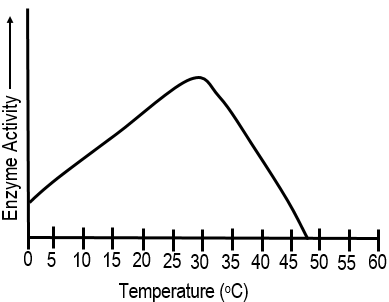
Based on the graph, what is the optimal temperature for this enzyme? 
a)
15oC
b)
40oC
c)
30oC
d)
35oC
2.
An enzyme speeds up a chemical reaction in the cell but can only be used once.  True or False? 
a)
true
b)
false
3.
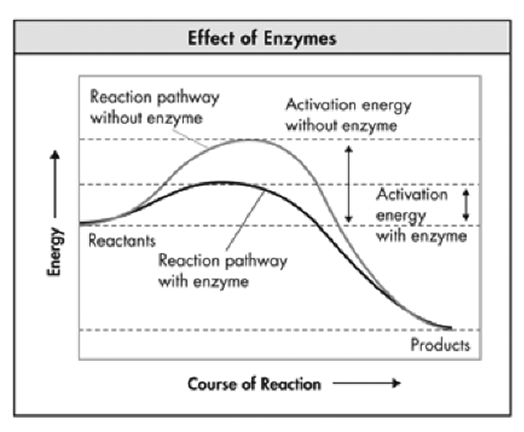
The graph shows how enzymes affect reactions in cells. Which statement best summarizes the information shown in the graph?
a)
Enzymes increase the energy of the reactants.
b)
Enzymes decrease the energy level of the products.
c)
Enzyme decrease the activation energy of the reaction.
d)
Enzymes reverse the direction of the reaction.
4.

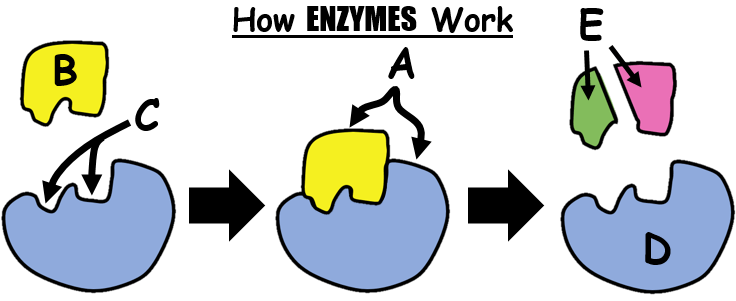
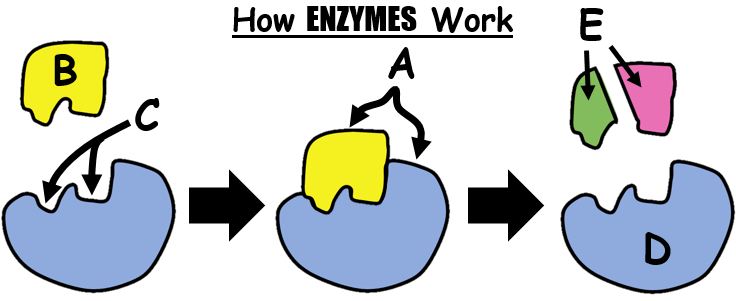
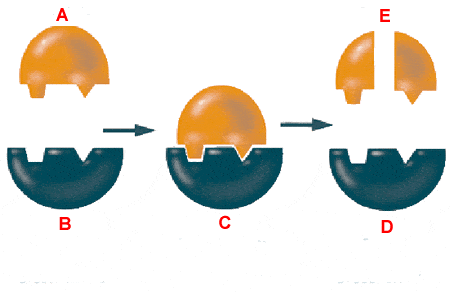
In the diagram, what is letter C?

a)

active site

b)

enzymes

c)

substrate

d)

products

5.
In the diagram, what is letter A? 
a)
product
b)
substrate
c)
enzyme-substrate complex
d)
active site
6.

Which substrate would this enzyme catalyze?

a)
b)
c)
d)
7.

Each enzyme only has one substrate that will fit its active site. What is this called?

a)

citation

b)

denaturation

c)

specificity

d)

peculiarity

8.
Enzymes are...
a)
nucleic acids
b)
proteins
c)
lipids
d)
carbohydrates
9.
With what 3 letters do enzymes typically end?
a)
-ose
b)
-ase
c)
-ese
d)
-tic
10.
Which of these is most likely an enzyme?  
a)
Sucrose
b)
Galactose
c)
Fructose
d)
Amylase
11.

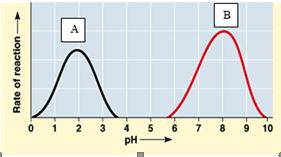
What is the optimal pH of enzyme A?

a)

8

b)

2

c)

5.7-10

d)

10

12.
Which enzyme is most efficient in a basic solution?
a)
A
b)
B
13.

Which factor does NOT affect the rate of enzyme activity?

a)

Light intensity

b)

Temperature

c)

pH

d)

Concentration

14.

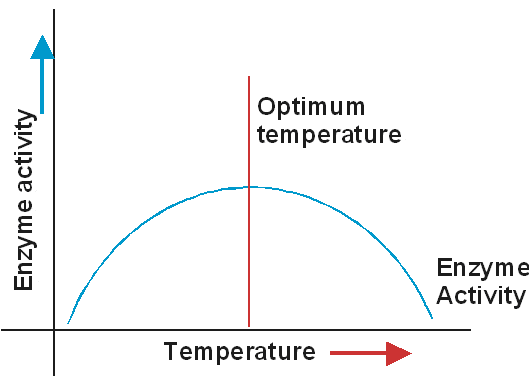
What happens when enzymes are heated above the optimum temperature?

a)

The enzymes die

b)

The shape of the enzyme changes as it denatures

c)

The enzymes become more active

d)

The enzymes remain the same

15.

Which of the following denatures an enzyme?

a)

High temperature

b)

Incorrect pH

c)

High temperature AND incorrect pH

d)

Neither temperature or pH

16.
Enzymes catalyze reactions by ___________ Activation Energy.
a)
Increasing
b)
Decreasing
17.
At low temperatures enzyme activity declines because of:
a)
Denaturation
b)
Decreased Kinetic Motion
c)
Increased H-Bonding
d)
Dissociation of Ionic Compounds
18.
What makes an enzyme substrate specific?
a)
Size
b)
Shape
c)
Name
d)
Location it is found in
19.
The mouth contains salivary glands which produce
a)
polysaccharides
b)
amylases
c)
proteases
d)
lipases
20.
Protein digestion begins in the
a)
mouth
b)
esophagus
c)
stomach
d)
liver
21.

Which of these is NOT an enzyme

a)

amylase

b)

protease

c)

lipase

d)

glycerol

22.
Which is NOT true?
a)
Enzymes speed up chemical reactions.
b)
Enzymes react best at a specific temperature.
c)
Enzymes only control ONE type of reaction.
d)
Enzymes are made of fatty acids.
23.

Lipids get broken down by lipase into...

a)

Amylase

b)

Glucose/simple sugars

c)

Amino acids

d)

Fatty acids and glycerol

24.

Protein gets broken down by protease into...

a)

Amino acids

b)

Simple sugars eg: glucose

c)

Fatty acids and glycerol

25.

What is the chemical test for starch?

a)

iodine turns blue-black with starch

b)

glucose turns blue-black with starch

c)

iodine turns yellow with starch

d)

glucose turns yellow with starch

26.

What effect does amylase have on starch?

a)

No effect

b)

It turns starch into iodine

c)

It turns starch into glucose

d)

It turns starch into fructose

27.

What effect will lowering the pH from 6 to 4 have on the time taken for a starch and human amylase solution to stay yellow when iodine is added?

a)

The time taken will increase

b)

The time taken will decrease

c)

No effect

d)

The reaction will no longer take place

28.

If it takes 150s for a reaction to occur under normal conditions, how long will it take if the rate is tripled?

a)

450

b)

300

c)

150

d)

75

e)

50