wayground logo

Free Printable Worksheets

NEW

Font size

S
M
L
XL
Worksheets

Quizizz #30

Total questions: 26

Worksheet time: 55mins
Name
Class
Date
1.
Organisms that make up the living part of an ecosystem.
a)
abiotic
b)
biotic factors
c)
ecology
d)
ecosystems
2.
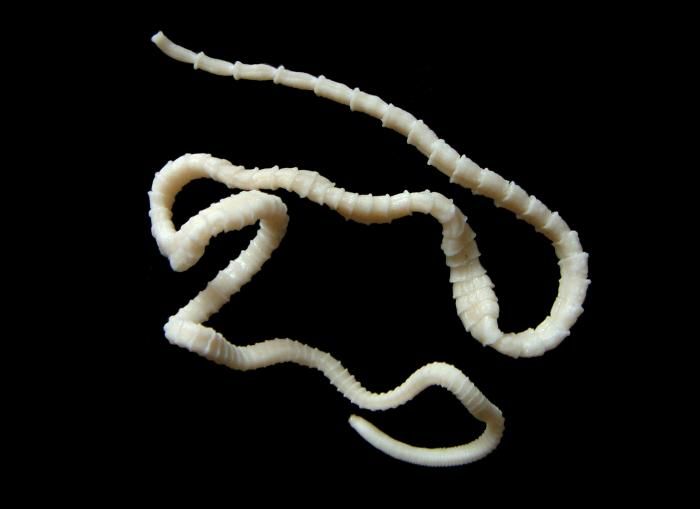
A tapeworm and a cat have this type of relationship.
a)
mutualism
b)
parasitism
c)
commensalism
d)
competition
3.
When a population grows past the ecosystem's carrying capacity, what happens to the population?
a)
Continues to grow
b)
The population starts to die off to return to carrying capcity
c)
The population will go extinct due to lack of resources
d)
The population grows then finds a new carrying capacity
4.
Which best describes what a food chain shows you?
a)
Energy flow through an ecosystem
b)
Food flowing through an ecosystem
c)
Consumers going into other consumers
d)
Who eats who
5.
In the energy pyramid below, which organism has the least amount of energy available?
a)
Producers
b)
Herbivores
c)
Carnivores
d)
Top Predator
6.
Plants perform photosynthesis through this organelle.  It captures energy from the sun and uses it to produce food for the cell.
a)
Chlorophyll
b)
Chloroplasts
c)
Mitochondria
d)
Golgi Apparatus
7.
Between starch, glucose, water, and starch indicator, which could NOT pass through an artificial membrane in our lab, because its particles were too big?
a)
starch
b)
glucose
c)
water
d)
starch indicator
8.
this coverslip is being lowered over the specimen (which is in a few drop of water) at a 45 degree angle. What is the importance of this angle?
a)
it decreases water bubbles
b)
no importance
c)
it will make the specimen more focused
d)
it will make the specimen darker and easier to view
9.
Cell membranes are said to be selectively permeable. Which statement best explains what selectively permeable means?
a)
The cell membrane prevents any harmful substance from entering the cell.
b)
The cell membrane lets certain substances enter the cell and keeps certain substances out of the cell.
c)
The cell membrane allows only large molecules to diffuse into the cell.
d)
The cell membrane has pores that let only water and glucose into the cell and carbon dioxide out.
10.
The diagram below shows the relative concentration of molecules inside and outside of a cell.

Which statement best describes the general direction of diffusion across the membrane of this cell?
a)
Glucose would diffuse into the cell.
b)
Protein would diffuse out of the cell.
c)
Oxygen would diffuse into the cell.
d)
Carbon dioxide would diffuse out of the cell.
11.

If body temperature is too high, some blood vessels increase in size and sweat glands will excrete sweat, resulting in a lower body temperature. These changes are an example of

a)

a learned behavior

b)

feedback mechanisms

c)

an inherited disorder

d)

genetic mutations

12.

Research has shown that treadmill training increases the number of certain energy-releasing structures in the brain cells of rats. The cellular structures referred to in this study are most likely

a)

mitochondria

b)

nuclei

c)

vacuoles

d)

ribosomes

13.

Although we rely on coal, oil, and natural gas to produce energy, some environmental scientists have proposed that we use less fossil fuel. One reason to support this proposal is to

a)

enable us to preserve rain forests in tropical areas

b)

help us to reduce the production of carbon dioxide gas

c)

allow us to decrease the use of fertilizers on crops

d)

encourage us to end research on wind and water power sources

14.

The image shows a food web. Which best describes the only part of the food web that is not living and provides the main source of energy?

a)

Sun

b)

Mushroom

c)

Seeds

d)

Grasses

15.
What is the purpose of a dichotomous key?
a)
to find a common ancestor
b)
to show the evolution of organisms
c)
to show relationships between organisms
d)
to identify organisms
16.
The first part of a scientific name is an organism's _______________ and the second part is its ________________.
a)
species, genus
b)
phylum, order
c)
class, spices
d)
genus, species
17.
Term given to describe the 2 name naming system is:
a)
dichotmous key
b)
binomial nomenclature
c)
2 scientific names
d)
binomial key
18.
When using a dichotomous key to identify organisms, what do we look at?
a)
physical features
b)
weather patterns
c)
environment
d)
diet
19.

This diagram shows .............................................. process.

a)

cloning

b)

regeneration

20.

The process shown is used to

a)

determine if a person has a genetic disease

b)

produce human growth hormone

c)

identify the father of a newborn

d)

produce a hormone to regulate blood sugar

21.

The diagrams represent a single-celled organism and a multicellular organism. Which statement correctly identifies the levels of organization for the structures indicated?

a)

A and B are tissues; E and G are organs

b)

A and B are organs; E and G are systems.

c)

A and B are tissues; E and G are organelles.

d)

A and B are organelles; E and G are organs.

22.

A student used a microscope like the one represented in the picture to observe cell division in onion cells. The part of the microscope that should be adjusted in order to better view the onion cells while using high power is

a)

A

b)

B

c)

C

d)

D

23.

This laboratory procedure is known as

a)

CLONING

b)

gel electrophoresis

c)

chromatography

d)

use of a dichotomous key

24.

In preparation for an electrophoresis procedure, enzymes are added to DNA in order to

a)

convert the DNA into gel

b)

cut the DNA into fragments

c)

change the color of the DNA

d)

produce longer sections of DNA

25.

This technique used to analyze DNA involves the

a)

synthesis of new DNA strands from subunits

b)

separation of DNA fragments based on size

c)

production of genetically engineered DNA molecules

d)

removal of defective genes from DNA

26.
Which suspect is likely guilty?
a)
Suspect #1
b)
Suspect #2
c)
Suspect #3