wayground logo

Free Printable Worksheets

Font size

S
M
L
XL
Worksheets

End of Year Review 2020

Total questions: 183

Worksheet time: 15hrs 15mins

Name
Class
Date
1.

In your experiment, the thing you measure is called the...

a)

independent

b)

dependent

c)

control

d)

ruler

2.

In an experiment, the variable you change is called the...

a)

independent

b)

dependent

c)

control

d)

spam

3.

These variables keep the experiment fair by keeping things the same...

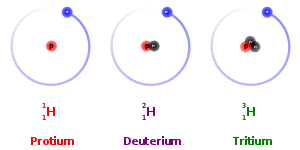
a)

independent

b)

dependent

c)

control

d)

the law

4.

The dependent variable is also called the...

a)

manipulated

b)

responding

c)

control

d)

super dependable

5.

Which variable is the data that you measure and record in the lab?

a)

independent

b)

dependent

c)

control

d)

math

6.

True or False: a test may have more than one independent variable

a)

true

b)

false

7.

Diego wants to know how drinking milk affects how tall Dora grows. Which is the independent variable?

a)

Drinking milk.

b)

Diego's growth.

c)

Dora's growth.

d)

Chocolate or plain milk.

8.

Does the distance Manny kicks the soccer ball affect how well he tests in math? What is the dependent variable?

a)

How far he kicks the soccer ball.

b)

The type of soccer ball.

c)

How well Manny does on his math test.

d)

How tall Manny is.

9.

In the question below, what is the independent variable? Question: Does adding dimples to car increase gas milage?

a)

regular car

b)

gas milage

c)

dimpled car

d)

the driver

10.

In any experiment, the independent variable ______________.

a)

remains the same to not mess up the experiment

b)

is purposely changed to test the hypothesis

c)

is known by the scientist before doing the experiment

11.

What part of the experiment changes as a result of the independent variable?

a)

The students

b)

The study time

c)

The grade on the quiz

12.
The variables in an experiment that stay the same are the - 
a)
IV
b)
DV
c)
Constants
13.
A student wants to test the effects of type of exercise on heart rate.  What is the dependent variable?
a)
heart rate
b)
type of exercise
c)
amount of exercise
d)
time of day exercise occurs
14.
A student is planning an experiment to find out how the height from which he drops a ball affects how high the ball bounces. The dependent variable is the _____.
a)
Diameter of the ball
b)
Force acting on the ball
c)
Height that the ball bounces
d)
Height from which the ball is dropped
15.
An experiment is performed on plants to see how different liquids affect plant growth. Each plant in the experiment is given a different liquid; water, apple juice, or milk. Each plant has the same amount of soil, sunlight, and listens to the same music. In this investigation, what is the dependent variable?
a)
Type of plant
b)
Water, apple juice, milk
c)
Plant growth
16.
Mr. S normally uses praise as a reward to train his dog. He wants to know the best way to train his dog, so he sets up an experiment to find out if there is a better way to get his dog to respond to commands. What is his independent variable?
a)
Type of reward
b)
Praise
c)
Type of dog
d)
Amount of time the dog follows commands
17.
Change from standard form to scientific notation: 12,000,000
a)
12.0  x  107
b)
0.12  x  107
c)
1.2  x  106
d)
1.2  x  107
18.
Change from standard form to scientific notation:  450,000
a)
4.5  x  105
b)
45  x  105
c)
4.5  x  104
d)
4.5  x  106
19.
Change from standard form to scientific notation:  0.000398
a)
39.8  x  10-5
b)
3.98  x  10-5
c)
3.98  x  10-4
d)
39.8  x  10-6
20.
Change from standard form to scientific notation: 0.004078
a)
4.078  x  10-3
b)
4.078  x  103
c)
40.78  x  10-4
d)
.4078  x  10-2
21.
125,678,000: Change to scientific notation
a)
1.25678  x  1012
b)
.125678  x  10-9
c)
12.5678  x  108
d)
1.25678  x  108
22.
7,000 g = ____ kg
a)
70
b)
700
c)
7
d)
0.07
23.
648 g = ____ mg
a)
6,480
b)
64,800
c)
648,000
d)
64.8
24.
240 cm = ___________ m
a)
2400
b)
24
c)
2.4
d)
0.24
25.
3 km = ___________ mm
a)
30
b)
300
c)
3,000
d)
3,000,000
26.
 68 cm = ___________ mm
a)
0.68
b)
6.8
c)
68
d)
680
27.

All matter is made of what?

a)

energy

b)

atoms

c)

electrons

28.

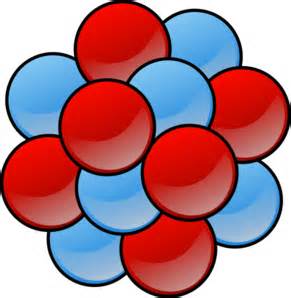
The center of an atom where its neutrons and protons are is called the _____________.

a)

nucleus

b)

electron cloud

c)

center

29.

An atom with atomic number 6 would have how many protons?

a)

6

b)

12

c)

3

30.

Particles in an atom that are neutral and have no charge are

a)

protons

b)

electrons

c)

neutrons

31.

What is the atomic number for an element with three protons?

a)

6

b)

1

c)

3

32.

A particle that moves around the nucleus is called an _________.

a)

Proton

b)

Neutron

c)

Electron

d)

Quark

33.
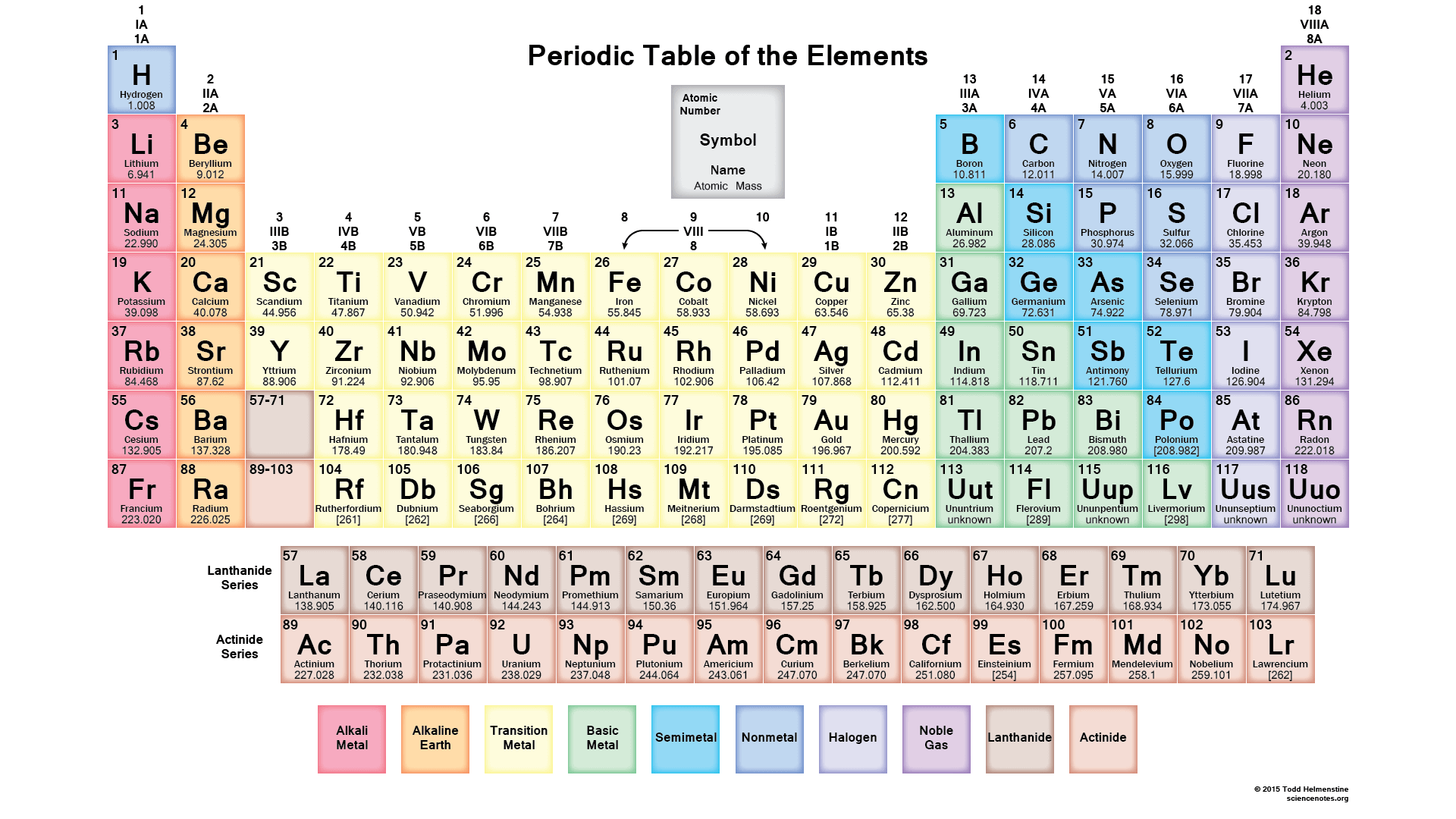
In the modern periodic table elements are arranged by:
a)
atomic mass
b)
atomic number
c)
valence electrons
d)
number of isotopes
34.
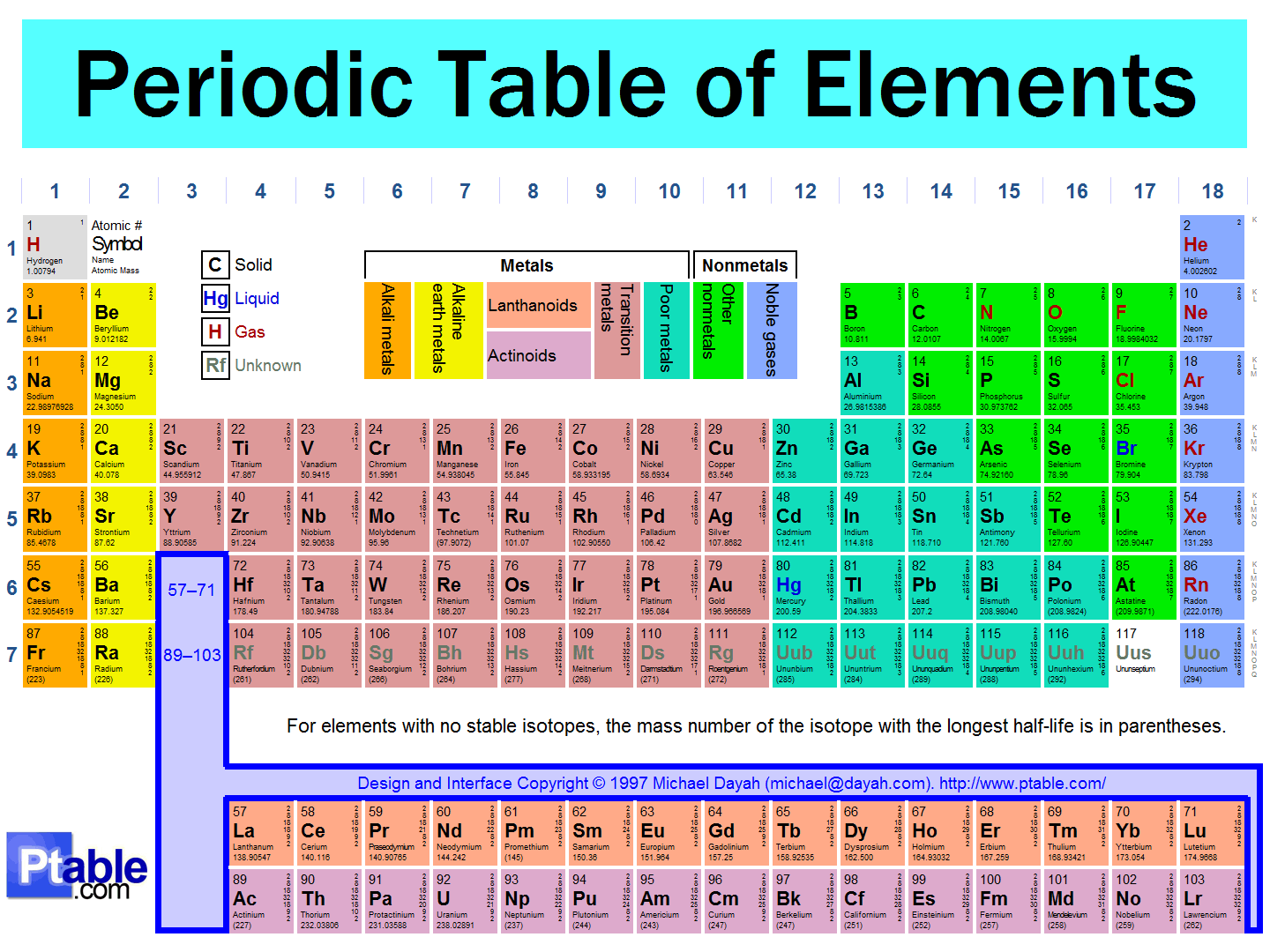
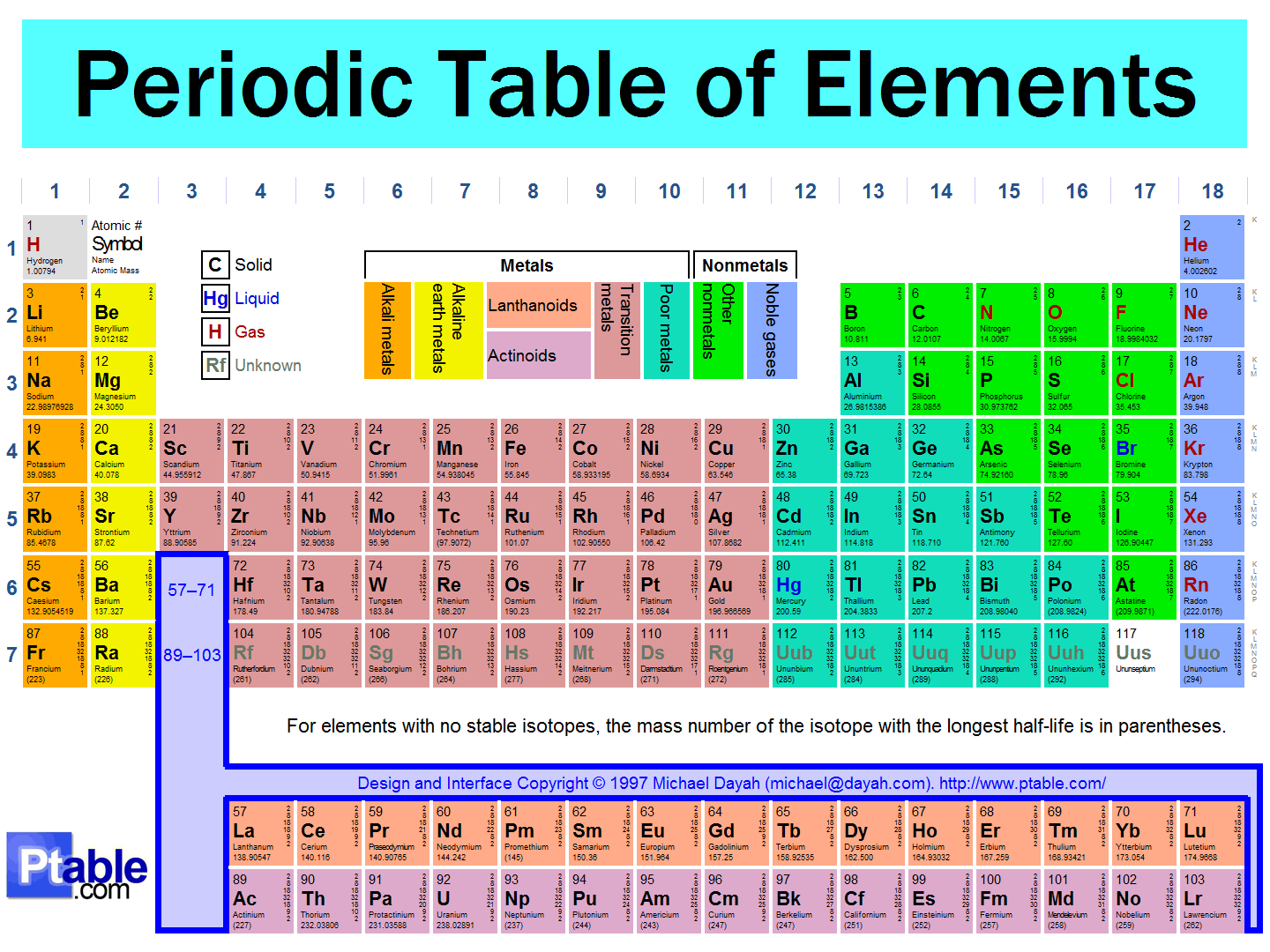
What does the 1.00794 stand for?
a)
Hydrogen
b)
atomic number
c)
atomic mass
d)
atomic explosion
35.
What does the nucleus of an atom contain?
a)
Electrons and neutrons
b)
Protons and neutrons
c)
Neutrinos and positrons
d)
DNA and RN
36.

Different isotopes have...

a)

different masses

b)

different protons

c)

different electrons

37.
An atoms overall charge is 
a)
positive 
b)
depends on its mood 
c)
neutral 
d)
negative 
38.

The vertical (up and down) columns in the Periodic Table are called

a)

groups

b)

towers

c)

periods

d)

atomic numbers

39.
The Modern Periodic Table of Elements is arranged by
a)
atomic mass
b)
atomic number
c)
valence electrons
d)
number of isotopes
40.
Sodium (Na) is found in period 
a)
3
b)
2
c)
4
d)
1
41.
Sodium (Na) is found in group 
a)
1
b)
2
c)
3
d)
4
42.
The atomic number tells you what?  READ THE ANSWERS CAREFULLY
a)
only the number of electrons
b)
 only the number of protons
c)
only the number of neutrons
d)
the number of both electrons and protons in an atom.
43.

The horizontal (side to side) rows in the Periodic Table are called

a)

groups

b)

families

c)

periods

d)

atomic numbers

44.
In a ___________change, a substance changes into a different substance.
a)
Physical
b)
Chemical
45.
In a chemical reaction, bonds are broken and new bonds are formed that create new substances. The bonds that are broken are called what?
a)
Reactants
b)
Products
c)
Atoms
d)
Catalysts
46.
The Law of Conservation of Mass states
a)
that matter exists in all states and reacts the same
b)
that matter can only be changed into new substances by introducing a catalyst
c)
that matter exists in the same state throughout any chemical change
d)
that matter cannot be created or destroyed and that the mass of the products must equal the mass of the reactants
47.
How many Al atoms are in this compound?         4Al2O3
a)
2
b)
8
c)
6
d)
4
48.
How many F atoms are in this compound?
6MgF2 
a)
2
b)
6
c)
8
d)
12
49.
a copper penny turning greenish after a few years.
a)
Chemical Change
b)
Physical Change
50.
An gel ice pack getting cold after you put it in the freezer for an hour.
a)
Chemical Change
b)
Physical Change
51.
Which of the following IS a physical change?
a)
Getting a haircut
b)
Rusty metal
c)
sour milk
d)
A compound
52.
___________________ are the elements are compounds that leave (are formed in) a chemical
reaction.
a)
Polymers
b)
Bonds
c)
Reactants
d)
Products
53.
A chemical change is different than a physical change because in a chemical change
a)
Chemicals are used
b)
Molecules do not physically touch
c)
A new substance is formed and in a physical change no new substance is formed
d)
The change can be seen but in a physical change it cannot
54.
The left side of the equation below is called
a)
Products
b)
Reactants
55.
The right side of the equation below is called the
a)
products
b)
reactants
56.
A number in front of a chemical formula in an equation that indicates how many molecules or atoms of each reactant and product are involved in a reaction.
a)
Coefficient
b)
reactant
c)
subscript
d)
product 
57.
A chemical reaction that absorbs heat
a)
Single replacement
b)
Exothermic
c)
Endothermic
d)
Decomposition
58.
Which of the following is NOT a sign of a chemical reaction? 
a)
Color changes
b)
Cutting into fourths
c)
Light is produced
d)
Gas is formed
59.
In a chemical reaction
a)
The atoms of the reactants always stay together to form the products
b)
The atoms of the reactants unbond, rearrange, and then rebond to form the products
c)
New atoms are formed which combine to make the products
d)
Some atoms disappear while others multiply to form the products
60.
Which of the following options correctly balances the equation below?
__HNO+ __O2 --> __HNO3
a)
4, 1, 4
b)
1, 2, 1
c)
1, 2, 1
d)
2, 1, 2
61.
Which of the following answers will balance the equation below?
__K + __Br2 --> __KBr
a)
2, 1, 1
b)
2, 3, 2
c)
2, 1, 2
d)
1, 2, 3
62.
Energy of motion is which type of energy?
a)
Potential
b)
Kinetic
c)
Sound
d)
Gravitational
63.
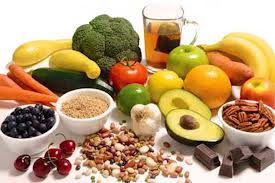
What kind of energy is represented in this picture?
a)
Thermal
b)
Potential
c)
Nuclear
d)
Mechanical
64.
What kind of energy does this device use?
a)
Chemical
b)
Electrical
c)
Thermal
d)
Chemical
65.
What kind of energy is represented in the picture?
a)
Thermal
b)
Chemical
c)
Sound
d)
Nuclear
66.
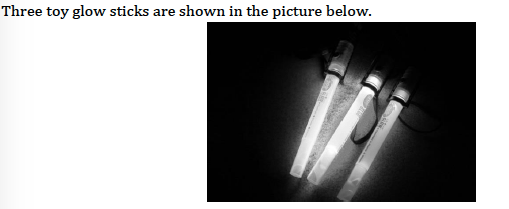
The glow sticks produce light for a short amount of time. The light from the glow stick is a conversion from what to what?
a)
thermal to light
b)
gravitational to potential
c)
radiant to electrical
d)
chemical to light
67.
On a roller coaster, where is maximum potential energy?
a)
At the bottom of a big hill
b)
When going around a corner
c)
When going upside down
d)
At the top of a big hill
68.
On a roller coaster, where is maximum kinetic energy?
a)
At the bottom of a big hill
b)
When going around a corner
c)
When going upside down
d)
At the top of a big hill
69.
Energy that is stored in bonds between atoms is:
a)
Mechanical energy
b)
Chemical energy
c)
Kinetic energy
d)
Nuclear energy
70.
Energy that comes from the nucleus of an atom. A form of potential energy.
a)
chemical energy
b)
Nuclear energy
c)
Sound energy
d)
Electrical energy
71.
According to which law of energy, energy can't be created or destroyed?
a)
First law of motion
b)
The law of tacos
c)
Laws of Energy
d)
law of conservation of energy
72.
The ability to do work is
a)
power
b)
energy
c)
thermal
d)
kinetic
73.
Heat energy is also called
a)
electrical energy
b)
chemical energy
c)
light energy
d)
thermal energy
74.
Sound energy needs a
a)
medium
b)
vacuum
c)
chemical
d)
light
75.
Heat transfers from ______ objects to cold objects. 
a)
Cold
b)
Hot
c)
Convection
d)
Radiation 
76.
What type of heat transfer happens in liquids and gases?
a)
Conduction
b)
Convection
c)
Radiation
77.
Touching hot sand is.... 
a)
Conduction
b)
Convection
c)
Radiation 
78.
Hot air ______ while cool air ____
a)
Sinks, Rises
b)
Rises, Rises
c)
Rises, Sinks
d)
Convection, Radiation 
79.
A heat lamp on a reptile cage is what type of heat transfer?
a)
Conduction
b)
Convection
c)
Radiation
80.
Hot air rising from a campfire is...
a)
Conduction
b)
Convection
c)
Radiation 
81.
Rubber is considered an _____
a)
Conductor
b)
Insulator
c)
Radiation 
d)
None of the above
82.
Objects that allow energy to pass through them easily are _______
a)
Insulators
b)
Conduction
c)
Conductors
d)
None of the above
83.
Temperature is the measurement of the average ________ energy of the molecules in an object
a)
Kinetic 
b)
Heat
c)
Motion
d)
None of the above
84.
Which of the following is not a conductor 
a)
Wood
b)
Copper
c)
Iron
d)
Silver 
85.
Waves that require a medium are called 
a)
mechanical waves
b)
transverse waves
c)
light waves
d)
gamma rays
86.
What happens when you increase the amplitude of a sound?
a)
it makes the sound louder
b)
it makes the sound travel faster
c)
it increases the wavelength of the sound
d)
it increases the frequency of the sound
87.

What kind of wave is pictured below?

a)

compressional wave

b)

transverse wave

c)

sound wave

d)

mechanical wave

88.
What can electromagnetic waves travel through?
a)
mediums
b)
empty space
c)
solely solids
d)
both mediums and empty space
89.
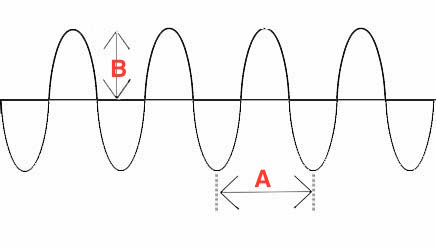
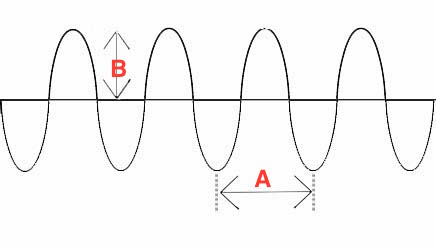
What property of this wave is represented by the letter "A"
a)
amplitude
b)
crest
c)
trough
d)
wavelength
90.
What property of the wave is represented by the letter "B"?
a)
amplitude
b)
crest
c)
trough
d)
wavelength
91.
What do waves carry from place to place?
a)
Energy, but not matter or particles
b)
Energy and matter or particles
c)
Matter or particles but not energy
d)
Neither energy nor matter or particles
92.
Which wave is pictured?
a)
Transverse
b)
Longitudinal
c)
Both
d)
Neither
93.
Which vocabulary term is used to identify the distance between points C & G?
a)
Amplitude
b)
Crest
c)
Frequency
d)
Wavelength
94.
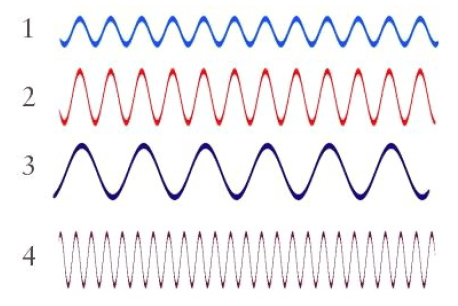
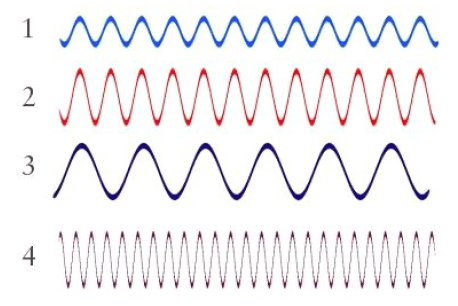
Which wave in the diagram has the greatest frequency?
a)
1
b)
2
c)
3
d)
4
95.
Which wave in the diagram has the greatest wavelength?
a)
1
b)
2
c)
3
d)
4
96.
Which of the following can sound travel through?
a)
solid
b)
liquid
c)
gas
d)
all of the above
97.

high point of a wave

a)

crest

b)

trough

c)

amplitude

d)

wavelength

98.

Low point of a wave

a)

crest

b)

trough

c)

Amplitude

d)

wavelength

99.

Height of a wave above the centerline

a)

amplitude

b)

crest

c)

trough

d)

wavelength

100.

How fast the wave is moving through a medium

a)

wave speed

b)

wavelength

c)

amplitude

d)

frequency

101.

Number of waves passing a given point in a certain amount of time, measured in Hertz (Hz)

a)

wavelength

b)

frequency

c)

amplitude

d)

wave speed

102.
Which electromagnetic waves have the highest frequencies and the shortest wavelengths?
a)
microwaves
b)
visible light
c)
gamma rays
103.
Which electromagnetic waves are used in ovens and cell phone communications?
a)
Infrared rays
b)
ultraviolet rays
c)
microwaves
104.
Electromagnetic waves that help your body produce vitamin D are called?
a)
ultraviolet rays
b)
x-rays
c)
gamma rays
105.
How much of the electromagnetic spectrum is made up of visible light?
a)
only a small portion
b)
a very l;arge portion
c)
about half
106.
For waves in any medium, as the wavelength decreases, what happens to the frequency?
a)
It also decrease
b)
It stays the same
c)
It increases
107.
Which of the following has wavelengths longer than microwaves?
a)
Infrared waves
b)
Radio waves
c)
Visible light
108.
The electromagnetic spectrum includes the complete range of electromagnetic waves placed in order of:
a)
increasing amplitutde
b)
increasing wavelength
c)
increasing frequency
109.

Longest Wavelengths and Lowest Frequencies?

a)

Visible Light

b)

Microwaves

c)

X-Rays

d)

Radio Waves

110.

Shorter Waves have ____Energy,Longer Waves___Energy?

a)

Lower,Higher

b)

Higher,Lower

111.

Shortest Wavelength and a Higher Frequency on the Electromagnetic System?

a)

X-rays

b)

Infrared

c)

Visible Lights

d)

Gamma Rays

112.
Contains only one kind of atom.
a)
Element
b)
Compund
c)
Mixture
113.

Contains two or more atoms chemically combined

a)

Elements

b)

Compounds

c)

Mixtures

114.
The air is a _________. 
a)
element 
b)
mixture 
c)
compound 
d)
energy 
115.
Elements can be broken down into simpler substances. 
a)
false 
b)
true 
c)
sometimes 
116.

Examples are diamonds (C) and Uranium (U)

a)

elements

b)

mixtures

c)

compounds

117.
Is sugar (C12H22O11) an element or a compound?
a)
Element
b)
Compound
118.
What is H2SO4 
 made up of?
a)
2 hydrogen, 1 sulfur, 4 oxygen
b)
1 hydrogen, 2 sulfur, 4 oxygen
c)
2 hydrogen & 4 sodium
d)
1 hydrogen & 6 sodium
119.

Stronger acids have a pH closer to...

a)

7

b)

0

c)

14

d)

9

120.

A pH level of 7 indicates

a)

acid

b)

base

c)

neutral

d)

none of the following

121.
A solution with a pH of 8.6 would be...
a)
Acid
b)
Base
c)
Neutral
d)
Acid and Base
122.

Which of the following is an acid?

a)

soap

b)

baking soda

c)

orange juice

d)

pure water

123.

What would be considered the weakest base?

a)

3

b)

14

c)

8.2

d)

11.6

124.

Which property is not associated with acids?

a)

Sour taste

b)

strong acids can burn you

c)

turns litmus paper blue

d)

reacts with metals

125.

Ammonia has a pH of 11. Ammonia is __________.

a)

an acid

b)

a base

c)

an element

d)

a metal

126.
Ranging from 0 to 14, a pH value indicates how acidic or basic a solution is.  Which of these pH values would be a strong acid?
a)
2
b)
6
c)
9
d)
13
127.

The pH scale is a range from:

a)

1-7

b)

0-14

c)

1-5

d)

1-14

128.
A solution with a pH of 8.6 would be...
a)
Acid
b)
Base
c)
Neutral
d)
Acid and Base
129.

Which property is not associated with acids?

a)

Sour taste

b)

strong acids can burn you

c)

turns litmus paper blue

d)

reacts with metals

130.
Which of the following is a pH for a strong base? 
a)
1
b)
8
c)
7
d)
13
131.

You test a solution with pH paper, and the paper turns blue. The solution is ______.

a)

neutral

b)

an acid

c)

a base

d)

an acid & a base

132.

A substance is found to have the following characteristics:


Very bitter taste

Feels slippery to the touch

Produces OH- ions when dissolved in water


In what category would the substance be classified?

a)

acid

b)

base

c)

enzyme

d)

fatty acid

133.
Which statement is true when acids and bases are mixed together?
a)
acids become stronger
b)
bases become stronger
c)
there is no change
d)
they neutralize each other
134.

Gas to liquid is

a)

Condensation

b)

sublimation

c)

deposition

d)

evaporation

135.

Solid to Gas is

a)

condensation

b)

sublimation

c)

evaporation

d)

deposition

136.

Liquid to solid is

a)

freezing

b)

Melting

c)

Boiling

d)

Steaming

137.

Solid to a liquid is

a)

freezing

b)

boiling

c)

steaming

d)

melting

138.

Liquid to a Gas is

a)

Melting

b)

evaporation

c)

condensation

d)

sublimation

139.

How close together particles are is called?

a)

Mass

b)

Weight

c)

Vibrate

d)

Density

140.

How much space particles take up is called?

a)

Density

b)

Volume

c)

Mass

d)

Weight

141.

Heat is also called?

a)

Thermal Energy

b)

Potential Energy

c)

Kinetic Energy

d)

Light Energy

142.

To change from one state of matter to another state of matter is called?

a)

phase change

b)

potential change

c)

kinetic change

d)

thermal change

143.

Mass is _______________.

a)

how much matter is in a object

b)

a measurement

c)

how had gravity pulls on an object

d)

how much volume is in an object

144.

Weight is ____________.

a)

How much matter is an object

b)

How hard gravity pulls on an object

c)

How much mass is in an object

d)

How much volume is in an object

145.

Boiling is....

a)

liquid rapidly changes to a gas

b)

solid rapidly changes to a gas

c)

gas rapidly changes to a liquid

d)

solid rapidly changes to a liquid

146.
subatomic particles found on the outermost shell & responsible for the atom's reactivity
a)
neutrons
b)
valence electrons
c)
isotopes
d)
ions
147.
Measure mainly of the nuclear particles: protons + neutrons
a)
Subatomic Particles
b)
Atomic Number
c)
Atomic Mass
d)
Gluons
148.
Value representing the number of protons in an element
a)
Atomic Mass
b)
Mass Number
c)
Valence Electrons
d)
Atomic Number
149.
Value representing the number of protons in an element
a)
Atomic Mass
b)
Mass Number
c)
Valence Electrons
d)
Atomic Number
150.
Atoms of the same element with a different number of neutrons
a)
Ion
b)
Gluons
c)
Isotope
d)
Quarks
151.
A charged atom
a)
Ion
b)
Isotope
c)
Electron Cloud
d)
Quark
152.
The smallest particle of an element that shows all the properties of that element.
a)
Subatomic Particles
b)
Atom
c)
Quarks
d)
Gluons
153.
Calculation used to find the number of neutrons in an atom
a)
Atomic Mass - Atomic Number
b)
Atomic Number - Atomic Mass
c)
Atomic Mass - Electrons
d)
none of these
154.

Valence electrons are found

a)

in the innermost energy level of an atom

b)

in the middle energy levels of an atom

c)

in the outermost energy levels of an atom
155.
Covalent bonds are between...
a)
Metal and Non-metal
b)
Non-metal and Non-metal
c)
Metal and Metal
156.
Ionic bonds are between...
a)
Metal and Non-metal
b)
Non-metal and Non-metal
c)
Metal and Metal
157.
Covalent bonds actually "share" electrons?
a)
true
b)
false
158.
How are covalent bonds formed?
a)
Sharing of electrons
b)
Transfer of electrons
159.
How are ionic bonds formed?
a)
Transfer of electrons
b)
Sharing of electrons
160.
Same repel, opposites
a)
avoid
b)
attract
c)
push
d)
pull
161.
Group numbers on the periodic table help us determine 
a)
The number of valence electrons
b)
Color of the elements
162.
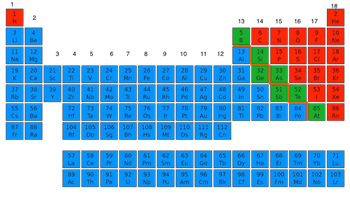
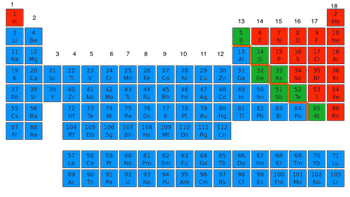
Where are metals located on the periodic table?
a)
Blue
b)
Green
c)
Red
163.
Where are the nonmetals located on the periodic table? 
a)
Blue
b)
Red
c)
Green
164.
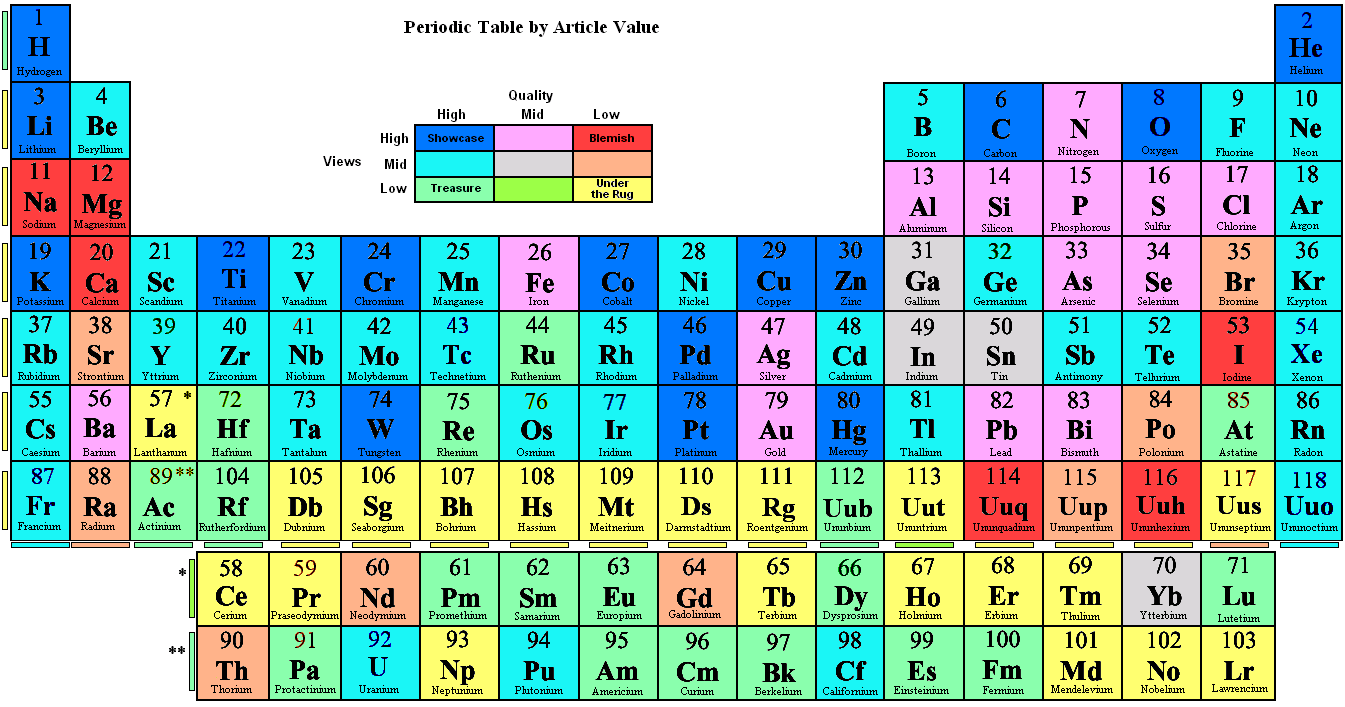
Where are the metalloids located on the periodic table?
a)
Blue
b)
Red
c)
Green
165.
A graph is a ___________ of your data
a)
description
b)
variable
c)
answer
d)
picture
166.
The Y axis runs
a)
up and down
b)
right to left
c)
on a diagonal
167.
The X axis
a)
runs up and down
b)
runs left to right
c)
runs on a diagonal
168.
The X axis is labeled with,
a)
the control variable
b)
the independent variable
c)
the sample variable
d)
dependent variable
169.
The Y axis is labeled with the
a)
control variable
b)
independent variable
c)
sample variable
d)
dependent variable
170.

The data table below shows that as the pressure of a gas sample was changed, the volume of the gas changed. The pressure was measured in atmospheres (atm) and the volume was measured in milliliters (mL).


According to the data table, as the pressure of the gas increases, the volume of the gas:

a)

decreases

b)

increases

c)

remains the same

171.

How many more average daily calories are needed by a 17 year old male than by a 17 year old female?

a)

300

b)

500

c)

2700

d)

3000

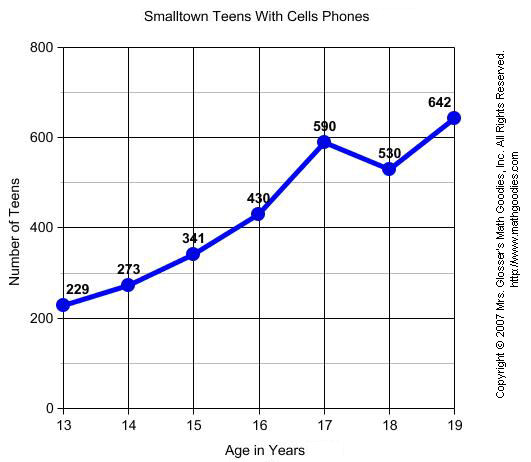
172.
What label is along the y-axis in this graph?
a)
Copyright 2007
b)
Lines
c)
Age in Years
d)
Number of Teens
173.

Examine the population curves for wolves and moose in the graph below.


Which statement correctly describes the population relationship between the wolves and moose from 1968 to 1973?

a)

As the moose population increased the wolf population increased.

b)

As the moose population increased the wolf population decreased.

c)

As the wolf population decreased the moose population decreased

d)

As the wolf population increased, the moose population decreased.

174.

A scientist wanted to see if the amount of garbage that Americans threw away changed over time. He collected information and then showed his results in the graph below.


Based on this graph, what could the scientist say about the amount of garbage that each person threw away?

a)

It increased over time

b)

it decreased over time

c)

it increased the most in 1980

d)

It decreased the most in 1990

175.
Non-Renewable resources are also known as what?
a)
Fossil Fuels
b)
Renewable
c)
Solar Energy
d)
Hydroelectric Energy
176.
What is a renewable resource?
a)
An object you can reuse
b)
An object you cannot reuse
c)
Fossil fuels
d)
Oil
177.
What is a non-renewable resource?
a)
Paper
b)
You can`t reuse them 
c)
A plastic bottle
d)
You can reuse 
178.
Which renewable resource gets its direct energy from the sun? 
a)
Geothermal
b)
Solar
c)
Wind
d)
Hydrogen
179.
Energy we get from burning living things
a)
Hydroelectricity 
b)
Wind Energy
c)
Biomass Fuel
d)
Hydrogen Power
180.
Energy we get from earth's interior heat
a)
Geothermal
b)
Solar Energy 
c)
Wind Energy 
d)
Hydroelectricity 
181.
What is the best pro about renewable resources? 
a)
The are inexpensive 
b)
They are always available
c)
They are expensive
d)
They create pollution  
182.
Both renewable and non-renewable resources give us what? 
a)
Energy
b)
Pollution
c)
Heat
d)
Both Heat and Energy
183.
Which renewable energy source uses the superheated water below earth's surface to spin a turbine and generator?
a)
hydroelectric dam
b)
geothermal power
c)
wind farm
d)
hydrogen fuel