wayground logo

Free Printable Worksheets

NEW

Font size

S
M
L
XL
Worksheets

Downard 3rd Grade Science Review

Total questions: 30

Worksheet time: 16mins

Name
Class
Date
1.
Four friends each put hot cocoa in a mug.  The cocoa that will cool the fastest is the one in the
a)
foam mug.
b)
metal mug.
c)
insulated mug.
d)
ceramic mug.
2.
Friction produces heat when two objects are
a)
mixed together.
b)
rubbed together.
c)
burned
d)
attracted to magnets.
3.
A metal roof gets very hot on a summer day.  What is the source of the heat energy?
a)
sun
b)
air
c)
clouds
d)
weather
4.
All the trees in a forest were cut down.  Which MAY benefit?
a)
birds that nest in trees
b)
short grasses and plants
c)
insects that eat leaves
d)
wood-eating termites
5.
People wear snowsuits to 
a)
help thermal energy leave their bodies.
b)
keep heat outside of their bodies.
c)
block the flow of heat from the air to their bodies.
d)
decrease how much heat energy leaves their bodies.
6.

The Atlantic Ocean is located on the ________ side of the state of Florida.

a)

East

b)

West

c)

South

7.
A habitat provides a place in which a plant or animal has all they need to ____________.
a)
eat
b)
survive
c)
balance
8.
What do you call the movement of weathered rock and soil?
a)
weathering
b)
erosion
c)
motion
9.
At what temperature does water freeze?
a)
0 degrees Fahrenheit
b)
0 degrees Celsius
c)
10 degrees Celsius
10.
What feature of a rose stops large animals from eating it?
a)
the flower's sweet smell
b)
the flower's bright colors
c)
the plant's sharp thorns
d)
the plant's waxy leaves
11.
Which of the following is NOT a renewable resource?
a)
sunlight
b)
trees
c)
air
d)
gasoline
12.

Which is a property of a baseball?

a)

round

b)

square

c)

soft

d)

spiky

13.

Which is an example of a solid?

a)

water

b)

steam

c)

oxygen

d)

ice

14.

Which would have the most mass?

a)

book

b)

paper clip

c)

eraser

d)

pencil

15.

Which happens to butter when it is heated?

a)

It melts.

b)

It becomes a gas.

c)

It freezes.

d)

It stays a solid.

16.

Which of the following is an example of matter?

a)

Air

b)

Water

c)

Books

d)

All of the Above

17.

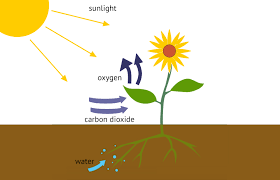
What is the process when plants turn light into energy?

a)

Cycle

b)

Photosynthesis

c)

Transpiration

d)

Germination

18.

The majority of Earth's surface is covered with what?

a)

Sand

b)

Grass

c)

Water

d)

Soda

19.

Liquid water becomes ice when it_________?

a)

Freezes

b)

Boils

c)

Melts

d)

Slides

20.

What type of change is breaking glass?

a)

Physical Change

b)

Chemical Change

21.

What type of change is baking cookies?

a)

Chemical Change

b)

Physical Change

22.
In what order does water travel through parts of the plant?
a)
leaf, root, stem
b)
root, leaf, stem
c)
root, stem, leaf
d)
stem, leaf, root
23.
Which part of the plant absorbs water from the soil?
a)
flower
b)
stem
c)
leaf
d)
root
24.
Which is true about the function of a cone?
a)
It helps support leaves
b)
It helps plant reproduce
c)
It is where the plant makes food
d)
It helps transport water to the leaves
25.
Which best describes why a plant's stem grows up, out of the ground and roots grow down?
a)
sunlight and gravity
b)
gravity and air
c)
air and sunlight
d)
soil and air
26.
Which organism makes its own food?
a)
bear
b)
tree
c)
eagle
d)
starfish
27.
Which forest animal lays eggs rather than giving birth to live young?
a)
deer
b)
rabbit
c)
raccoon
d)
snake
28.
Which of the animals below is most similar to a horse?
a)
chicken
b)
cow
c)
duck
d)
frog
29.
Out of frogs, sharks, snakes, turtles, and newts; which are amphibians?
a)
sharks and frogs
b)
newts and frogs
c)
turtles and newts
d)
snakes and turtles
30.
What is alike about flamingos, tortoises, and frogs?
a)
They lay eggs
b)
They have feathers
c)
They use gills for breathing
d)
They have scales on their skin