
 Worksheets
acid and alkaline
Total questions: 101
Worksheet time: 2hrs 54mins

WHAT ARE THE PROPERTIES OF ACID ?
Acids are corrosive, sour,
Lemon
Mint
tastes bitter

What is the pH of Lemon
3.5
14
2.0
1.7
Which are the examples of bases
Drain cleaner
Battery Acid
Lime water
Milk

How to neutralise wasp sting
baking soda
vinegar
Lime water
Drain cleaner

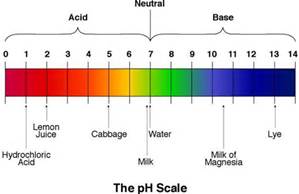
From which point to which point in the pH scale is Base
7.1- 14
0- 6.9
6.2- 9.1
12- 14

in which Acid base indicator is Acid is colourless base is pink
Methyl orange
Litmus paper
Phenolphthalein
Universal indicator
Is this neutralised wasp sting and vinegar
Yes
No

What can neutralise a strong base
Neutral
Weak base
Base
Hydrochloric acid (pH of 3.01)

Differentiate between Base and alkaline
Alkaline is corrosive and base is bitter
Alkaline is blue in colour and base is red in colour
Alkaline is soluble and base is insoluble
alkaline is insoluble and base is soluble
An acid is a solution that contains __________ ions dissolved in water.
positive
negative
What type of reaction occurs when you react an acid with an alkali?
combustion
decomposition
no reaction
neutralisation
What colour is Universal indicator when the solution is neutral?
Red
Green
Blue
Purple
What sort of reaction happens when an acid and an alkali are mixed?
Neutralisation
Combination
Acidifying
Displacement
Why is toothpaste alkaline?
It can neutralise strong alkaline in
your mouth
It can neutralise acid in
your mouth
It can refresh your teeth
Toothpaste is not alkaline.
Where does the acid in you mouth come from?
From stomach
From stomach acid
From the millions of
bacteria of mouth
From the teeth
... are used to neutralise acid in the stomach.
Toothpastes
Bacterias
Antacids
More strong acids
... put a question for investigation in a way that can be tested.
Scientists
Builders
Socialists
Writers
What colour is litmus in solution of pH 4?
green
red
blue
dark blue
Which of the following values would represent the pH of a strong base?
1
8
7
13
Which of the following values would represent the pH of a strong acid?
1
6
7
13
What range of values on the pH scale represent solutions with a higher ratio of hydronium (H3O+) ions?
0-14
below 7
7
above 7
What range of values on the pH scale represent solutions with a higher ratio of hydroxide (OH-) ions?
below 7
7
above 7
0-14
When found in food, acids often taste ________.
Sour
Bitter
Salty
Slippery
When found in food, bases often taste _______.
Sour
Bitter
Salty
Soggy
When you place blue litmus paper into an unknown clear solution, the blue litmus paper turns red.
Which of the following represents the most logical conclusion?
The substance has a pH value of "2".
The substance is a base.
The substance has a pH value of "7".
The substance is acidic.
Ocean water has a pH value near "8". It would be classified as...
slightly acidic
a strong base
a neutral substance
slightly basic (alkaline)
Four solutions are tested and found to have the following pH values. Which of these substances would be considered the weakest acid?
Lemon Juice - pH=2
Apple Juice - pH=4.5
Shower Cleaner - pH=5.5
Hydrogen Peroxide - pH=7
Many cleaning solutions are bases. Which of the following is a common property among basic solutions?
slippery feel
white color
salty taste
sour taste
Pure water (H2O) has a pH of 7 and would be classified as...
a base
a neutral substance
both an acid and a base
an acid
Acidic solutions exhibit a higher ratio of H3O+ ions, known as...
neutrons
hydroxide
electrons
hydronium

The products of a neutralization reaction are usually...
salt and water
an acid and a base
a neutral solution
carbon dioxide and oxygen
The reactants in a neutralization reaction are always...
salt and water
an acid and a base
a neutral solution
carbon dioxide and oxygen
Acids are __________, which means they "eat away" at other materials.
transitional metal
alkaline
flammable
corrosive

What is the hazard shown in this hazard sign?
Explosive
Corrosive
Irritant
High level Irritant
Strong acids and strong alkalis are.......
Able to turn blue litmus paper red
Corrosive
Sour
Sweet


Bleach is a strong alkali, what is the pH level of bleach?
13
10.5
1
2
Acid + Alkali --> Salt + Water
neutralization reaction
synthesis
decomposition
single displacement
Indicator that only changes colour at pH = 7
Universal indicator
Litmus paper
Acids are source of
hydrogen ions
hydroxide ions
Alkalis are source of
hydrogen ions
hydroxide ions
Which of the following about properties of acid is not true?
pH less than 7
Tastes bitter
Corrosive
Turns blue litmus paper to red
Acid reacts with metal to produce ___________ gas.
oxygen
carbon dioxide
hydrogen
nitrogen dioxide
Which of the following will change the red litmus paper to blue?
Sodium hydroxide
Hydrochloric acid
Sulphuric acid
Nitric acid
Which of the following indicator will show different colour in acid, neutral and alkali?
Phenolphtalein
Universal indicator
Methyl orange
Litmus paper
__________ is used to make fizzy drink.
Vinegar
Sulphuric acid
Carbonic acid
Acetic acid
Sodium hydroxide is used
to make fertilisers.
to make battery.
to cure gastritis.
to make detergent.
The chemical reaction between an acid and alkali is called
respiration.
combustion.
neutralisation.
photosynthesis.
Hydrochloric acid + Sodium hyroxide → ____________ + Water
Sodium sulphate
Sodium chloride
Sodium nitrate
________ + Potassium hydroxide → Potassium sulphate + Water
Sulphuric acid
Hydrochloric acid
Nitric acid
Nitric acid + __________ → Sodium nitrate + Water
Aluminium oxide
Magnesium hydroxide
Sodium hydroxide
The technique used in neutralisation is called
filtration.
titration.
Salt and water are produced when acid reacts with alkali. Salt produced is
acidic.
alkaline.
neutral.
______ facial cleanser can be neutralised by _______ facial toner.
Acidic, acidic
Acidic, alkaline
Alkaline, alkaline
Alkaline, acidic
Which of the following can help to neutralise bee sting?
Vinegar
Toothpaste
Waste substances from factories will be treated with _________ before being discharge into the river.
acid
alkali

