wayground logo

Free Printable Worksheets

NEW

Font size

S
M
L
XL
Worksheets

End of the year quiz

Total questions: 50

Worksheet time: 25mins
Name
Class
Date
1.

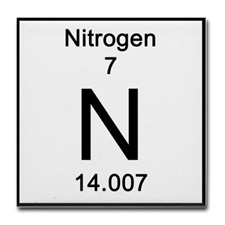
What is the number of protons that the element in this image contains?

a)

14

b)

7

c)

15

d)

18

2.
The particles that are found in the nucleus of an atom are
a)
neutrons and electrons
b)
electrons only
c)
protons and neutrons
d)
protons and electrons
3.
Which subatomic particle has a negative charge?
a)
Proton
b)
Neutron
c)
Electron
d)
Quark
4.
The Modern Periodic Table of Elements is arranged by
a)
atomic mass
b)
atomic number
c)
valence electrons
d)
number of isotopes
5.

On the periodic table, elements on the right side of the "stair-step" line are classified as:

a)

nonmetals

b)

metals

c)

gases

d)

Halogens

6.
Most of the elements on the periodic table are classified as _____.
a)
Metals
b)
Nonmetals
c)
Metalloids
d)
Periods
7.
An element's identity is determined by the number of
a)
electrons.
b)
protons.
c)
neutrons.
d)
valence.
8.

What is the atomic number?

a)

the number of protons

b)

the number of protons and neutrons combined

c)

the number of neutrons

d)

the number of protons and electrons combined

9.
Negative ions (anions) form when neutral atoms _________ valence electrons.
a)
lose
b)
gain
c)
share
10.
What is an ion?
a)
A Charged Atom
b)
A Large Atom
c)
A Small Atom
d)
A Cute Atom
11.
Why are ions formed?
a)
To make our lives difficult
b)
Because atoms want 8 valence electrons
c)
Because atoms have the same number of protons and electrons
d)
Because atoms gained neutrons
12.
An atom becomes _______ when it loses electrons.
a)
Positive
b)
Negative
c)
Neutral
d)
Invinsible
13.
What quantities vary between isotopes of an element?
a)
protons, electrons, and atomic mass
b)
protons, electrons, and atomic number
c)
neutrons and electrons
d)
neutrons and atomic mass
14.
Which is described as the force holding atoms together?
a)
formula unit
b)
cation
c)
lattice
d)
chemical bond
15.
An ionic bond forms when 
a)
Valence electrons are shared
b)
a sea of mobile electrons surround the cations
c)
valence electrons are transferred between atoms
d)
none of the above
16.
What is a valence electron?
a)
an electron that is found in the outermost shell of an atom. 
b)
an electron found in the innermost shell of an atom.
c)
an electron found in the middle shell.
17.
What type of bond forms when 2 or more electrons are SHARED?
a)
Covalent bond
b)
Incomplete bond
c)
Ionic bond
d)
Metallic bond
18.
What type of bond forms between two or more atoms that are charged (+/-)?
a)
Covalent bond
b)
Incomplete bond
c)
Ionic bond
d)
Metallic bond
19.
How many carbon atoms (C) are in a COmolecule?
a)
1
b)
2
c)
3
d)
0
20.
The smallest building block of matter is the......................
a)
compound 
b)
molecule 
c)
atom
d)
fluid
21.

How many elements are in C6H12O6?

a)

6

b)

24

c)

3

d)

18

22.
A way to show the number and type of elements (atoms) in a molecule or compound with a combination of symbols and numbers.
a)
Molecule
b)
Chemical formula
c)
Physical change
d)
Coefficient
23.
What is the mole used for? 
a)
To measure the amount of grams in a substance
b)
To measure the amount of atoms or molecules in a substance
c)
To measure the amount of energy in a substance
d)
To measure the amount of bonding in a substance 
24.
The molar mass of an element is the mass of one ____ of the element.
a)
atom
b)
molecule
c)
mole
d)
gram
25.
What can be determined from a balanced chemical equation?
a)
Mole ratio of any two substances in the reaction
b)
Energy released in the reaction.
c)
Electron configuration of all elements in the reaction. 
d)
Mechanism involved in the reaction. 
26.
Where do you look to calculate the molar mass?
a)
avogadros number
b)
periodic table 
27.

Which Chemical Equation is Balanced?

a)

CH₄+O₂ → CO₂+2H₂O

b)

H₂+O₂ → 2H₂O₄

c)

4Al+3O₂ → 2Al₂O₃

28.

To balance equations, ____ can be placed to the left of chemical formulas

a)

charges

b)

subscripts

c)

random numbers

d)

coefficients

29.

In this image, the information in red is called the_______.

a)

Products

b)

Reactants

c)

Chemical Subscripts

30.

In this image, the information to the right of the arrow (in black) is called the_______.

a)

Product

b)

Reactant

c)

Chemical Subscript

31.

State of matter with a definite volume, but no definite shape.

a)

solid

b)

liquid

c)

gas

32.

State of matter with no definite shape and no definite volume.

a)

solid

b)

liquid

c)

gas

33.

What happens to particles when their temperature increases?

a)

The particles move slower

b)

The particles move faster

c)

The particles lose mass

d)

The particles gain mass

34.

The amount of space something takes up is its...

a)

Mass

b)

Volume

c)

Thermal Energy

d)

Temperature

35.
The phase change from water vapor to liquid water is known as...
a)
evaporation
b)
precipitation
c)
condensation
d)
sublimation
36.

A change of state from a liquid to a solid is called....

a)

Melting

b)

Freezing

c)

Evaporation

37.

What is it called when a solid turns directly into a gas?

a)

Sublimation

b)

Condensation

c)

Liquid

38.
In an exothermic reaction, heat is ...
a)
taken in
b)
given out
39.

A solution with a pH of 8.6 would be...

a)

Acidic

b)

Basic

c)

Neutral

d)

Acidic and Basic

40.

What does pH measure?

a)

the amount of hydrogen (H+) ions

b)

the amount of hydroxide (OH-) ions

c)

amount of water

d)

all of the above

41.
What does the scientific method usually begin with?
a)
finding data
b)
analyzing data
c)
a question
d)
drawing a conclusion
42.
Why was the metric system created?
a)
to pick a fight with another country
b)
to standardize measurements
c)
to create a competing measurement system
d)
so that we have two systems to learn in school
43.
When should you hypothesize when using the scientific method?
a)
before you have a question
b)
after you analyze data
c)
after gathering data
d)
after having a question or problem
44.

The metric unit used for mass...

a)

liter

b)

gram

c)

pound

d)

meter

45.

The base unit for volume...

a)

meter

b)

gram

c)

Kelvin

d)

liter

46.
The amount matter in an object...
a)
mass
b)
weight
c)
matter
d)
atoms
47.
The independent variable is what you _______ during an experiment.
a)
change
b)
do not change 
c)
measure
d)
count
48.
Why do scientist use the scientific method?
a)
To make sure they get credit for their discoveries.
b)
To make sure their results are valid and can be performed by other scientists.
c)
So that other scientist don't get mad at them
49.

What is the independent variable for this graph?

a)

The Relationship between Time Spent Studying and Test Grades

b)

The effect of Time Spent Studying and Test Grades

c)

Time Spent Studying

d)

Test Grades

50.

How does missing free throws impact your team’s chance of winning?

a)

It does not impact it.

b)

Missing free throws decreases the likelihood of winning.

c)

Missing free throws increases the likelihood of winning.

d)

Free throws aren't how you win a game.