wayground logo

Free Printable Worksheets

NEW

Font size

S
M
L
XL
Worksheets

CXC Chemistry

Total questions: 50

Worksheet time: 31mins
Name
Class
Date
1.
What are the 3 particles that make-up the atom?
a)
protons, neutrons, and isotopes
b)
neutrons, isotopes, and electrons
c)
positives, negatives, and electrons
d)
protons, neutrons, and electrons
2.

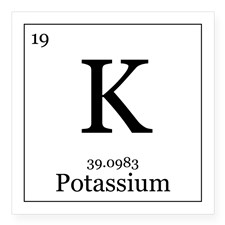
How many neutron are in the atom "K"?

a)

7

b)

2

c)

39

d)

12

3.

The proper formula for magnesium hydroxide:

a)

MgOH

b)

Mg2OH

c)

Mg(OH)2

d)

Mg2OH2

4.

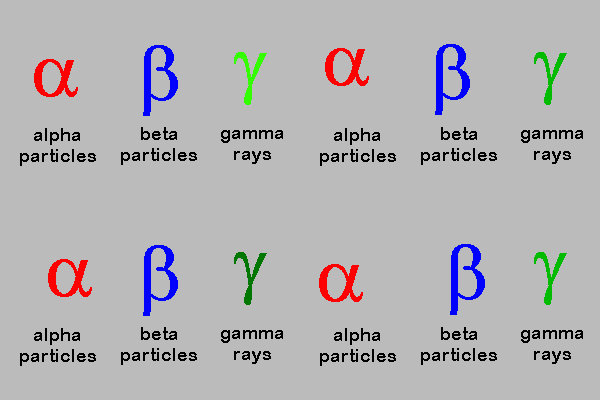
The three types of nuclear radiation in order of increasing penetrating power are

a)

alpha, beta, gamma

b)

alpha, gamma, beta

c)

beta, alpha, gamma

d)

gamma, alpha, beta

5.
How many elements are in C6H12O6?
a)
1
b)
2
c)
3
d)
4
6.
A molecule is made up of
a)
one or more mixtures.
b)
one or more compounds.
c)
one or more atoms.
d)
one or more solutions.
7.

what is an atom

a)

smallest part of the universe

b)

smallest part of a substance

c)

smallest part of anything

d)

smallest part of water

8.

name the group that has a single bond

a)

alkenes

b)

alcohols

c)

alkanes

d)

ethers

9.

molecules with double/tripple bond

a)

carbocilic acids

b)

alkynes

c)

unsaturated fats

d)

saturated fats

10.

the name of this compaund C4H10

a)

METHANE

b)

HEXENE

c)

BUTANOIC ACID

d)

BUTANE

11.

The group made up of alcohols and acids

a)

esters

b)

carbocilic acids

c)

ethers

d)

alkynes

12.

which compound is made up of carbons and hydrogen

a)

hydrocarbons

b)

aldehytes

c)

condensed structure

d)

alcohols

13.

molecule with the same molecular structure but different structural formula

a)

fats

b)

lipids

c)

fossil fuels

d)

isomers

14.

the MP and BP increases as the molecular structure increases

a)

hydrocarbons

b)

ethers

c)

ketones

15.

which bond does carbon mostly form

a)

hydrogen bond

b)

dipole-dipole

c)

covalent bond

16.

which reaction that releases oxidising agents, heat and light

a)

substitution

b)

combustion

c)

addition

17.
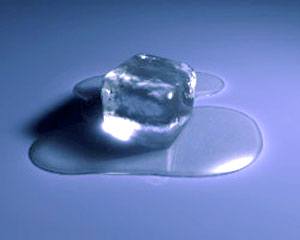
What kind of change is a phase change?
a)
Physical - it's still the same substance
b)
chemical - it's made of chemicals 
18.
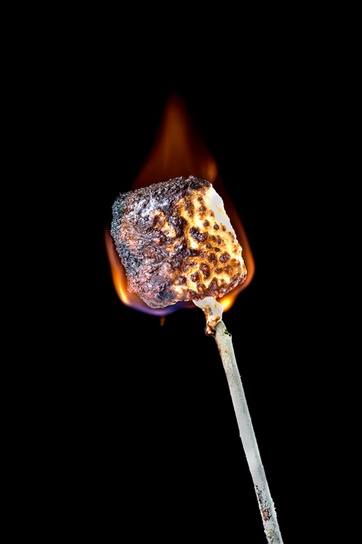
A chemical change happens when...
a)
a substance is changed at the atomic level 
b)
bonds are broken and formed 
c)
a new substance is made
d)
all of the above! 
19.
A catalyst  
a)
is added to a reaction to make it slow down 
b)
breaks apart and is changed 
c)
provides an energetic short cut to the products 
20.
The compounds or elements present at the end of a reaction 
a)
reactants
b)
catalyst
c)
products
d)
energy 
21.
The rings around the nucleus of an atom are called...
a)
energy levels
b)
electron circles
c)
proton levels
d)
neutron clouds
22.
How many neutrons would Potassium-41 (K) have?
a)
22
b)
19
c)
41
d)
1
23.
This whole number states the number of protons and neutrons in one specific isotope
a)
mass number
b)
atomic number
c)
atomic mass
d)
covalent number
24.
Which is NOT a property of metals?
a)
shiny
b)
good conductor
c)
has full outer shell 
d)
tends to lose electrons
25.
An element in period 2, group 3 would have how many valence (outer) electrons?
a)
3
b)
2
c)
5
d)
8
26.
These elements are the ones that are in all??
a)
dead organisms
b)
people and plants
c)
living organisms
d)
cats
27.
what does S stand for?
a)
salt
b)
sodium
c)
sulfur
d)
spit
28.
C stands for?
a)
cat
b)
calcium
c)
carbon
d)
crypton
29.
These are found on the Periodic Table.
a)
elements
b)
mixtures
c)
compounds
30.
Is NaCl (table salt) a Organic or Inorganic Compound?
a)
Inorganic
b)
Organic
31.
Which compound is inorganic?
a)
Glucose (C₆H₁₂O₆)
b)
Ethane (C₂H₆)
c)
Carbon Dioxide (CO₂)
d)
Stearic Acid (C₁₈H₃₆O₂)
32.
The four organic compounds found in living things are?
a)
Carbohydrates, Lipids, Nucleic Acids, and Oxygen
b)
Carbohydrates, Lipids, Proteins, and Carbon
c)
Carbohydrates, Lipids, Proteins, Nucleic Acids
d)
Carbon, Lipids, Proteins, Nucleic Acids
33.
What is an organic Compound?
a)
a group of molecules that contain calcium
b)
A group of molecules that contain carbon-hydrogen bonds
c)
A group of molecules that contain carbon
d)
A group of molecules that contain water
34.
P stands for
a)
Phosphorus
b)
Potassium
c)
Possum
35.
N stands for
a)
Nickel
b)
Nitrogen
c)
Ninja
36.
Function: Build organelles, build body parts, and helps with body defense
a)
Proteins
b)
Carbohydrates
c)
Nucleic Acids
d)
Lipids
37.
Function: store long term energy
a)
Lipids
b)
Carbohydrates
c)
Nucleic Acids
d)
Proteins
38.
Function: Store genetic information
a)
Carbohydrates
b)
Lipids
c)
Nucleic Acids
d)
Proteins
39.
What is a carbohydrate?
a)
A biological polymer that stores and transmits genetic information
b)
a group of organic molecules that includes sugars, starches , and glucose
c)
An oil used for your car
d)
hydrocarbon that contains only single bonds
40.
What is a lipid?
a)
A type of biological molecule that includes fats, oils, hormones, waxes, and components of cellular membranes
b)
A carbon compound
41.
What 3 subatomic particles make up atoms?
a)
Isotopes, protons, covalent bonds
b)
quarks, quirks, compounds
c)
protons, neutrons, isotopes
d)
protons, neutrons, electrons
42.
The isotopes of an element all have the same number of:
a)
electrons
b)
neutrons
c)
protons
43.
A chemical ________ is a pure substance made entirely of 1 type of atom.
a)
element
b)
compound
c)
mixture
d)
blend
44.
The electrons involved in chemical bonds are called ___________ electrons.
a)
valence
b)
ionic
c)
Van Der Waals
d)
covalent
45.
A slight attraction between oppositely charged regions of nearby molecules are called:
a)
Van Der Waals forces
b)
ionic bonds
c)
covalent bonds
d)
hydrogen bonds
46.
The main types of chemical bonds are:
a)
ionic and subliminal
b)
covalent and hydrogenated
c)
ionic and covalent
d)
ionic and flourite
47.
The nucleus of an atom usually contains:
a)
protons and neutrons
b)
electrons
c)
electrons and protons
d)
isotopes
48.
A chemical ________ is a pure substance made entirely of 1 type of atom.
a)
element
b)
compound
c)
mixture
d)
blend
49.

In order of most to least penetrating radiation we have

a)

Alpha , Beta, Gamma

b)

Beta , Gamma , Alpha

c)

Gamma, Beta, Alpha

d)

Gamma, Alpha, Beta

50.
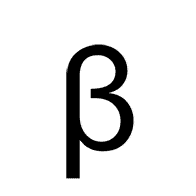
Has the symbol
a)
Alpha
b)
Beta
c)
Gamma