Wayground logo

Free Printable Worksheets

Font size

S
M
L
XL
Worksheets

Bumper Coasts Quiz

Total questions: 42

Worksheet time: 23mins

Name
Class
Date
1.
Waves are created by wind 
a)
True 
b)
False 
2.
I transport material along a beach. What am I?
a)
Longshore Drift
b)
Longshape Drift
c)
Longnose Drift
d)
Longway drift
3.
I happen when the waves don't have enough energy to carry sediment
a)
Deposition
b)
Erosion
c)
Swash
d)
Backwash
4.
The type of erosion that occurs when pebbles bang together
a)
Abrasion
b)
Attrition
c)
Hydraulic action
d)
Solution
5.
Which erodes quicker?
a)
Hard rock
b)
Soft rock
6.
Social Impacts are...
a)
impacts affecting people and communitites
b)
impacts affecting soccer
c)
impacts affecting animals
d)
impacts affecting work
7.
Economic impacts are...
a)
impacts that affect nature
b)
impacts that affect echoes
c)
impacts that affect money, jobs and businesses
d)
impacts that affect people
8.
Environmental impacts are...
a)
impacts that affect people
b)
impacts that affect engines
c)
impacts that affect money
d)
impacts that affect nature
9.
Erosion means 'the wearing away of rock'.
a)
True
b)
False
10.
What is this landform?
a)
Spit
b)
Sand dune
c)
Stack
d)
Stump
11.
Which is a landform of coastal erosion?
a)
Stack
b)
Spit
c)
Sand Dune
d)
Bar
12.
What is the first stage in a stack formation?
a)
Arch is formed
b)
Cave is formed
c)
Line of weakness in rock
d)
Stump is formed
13.
I am the type of erosion where sediment scrapes against the headland. What am I?
a)
Attrition
b)
Hydraulic action
c)
Solution
d)
Abrasion
14.
I am the forward motion of waves
a)
Backwash
b)
Swash
15.
What ecosystem forms behind a spit?
a)
Sand Dune
b)
Salt Marsh
c)
Coral Reef
d)
Mangrove
16.

What are the two types of wave called?

a)

Red and Green

b)

High and low

c)

Big and little

d)

Constructive and Destructive

17.

Why do we need to protect coastal areas?

a)

People like to eat fish and chips there

b)

They are areas of settlement, lots of people live there

c)

They provide habitats for wildlife

d)

They are popular tourist destinations which brings income to the area

18.

What do waves need to form?

a)

Boats

b)

A strong wind, a long fetch and a length of time for the wind to blow

c)

A tsunami

d)

An earthquake

19.

Longshore drift involves what process? (hint: focus on drift)

a)

Transportation of material

b)

Erosion

c)

People

d)

Depositing material

20.

What forms of coastal erosion take place?

a)

Hydraulic action

b)

Attrition

c)

Abrasion

d)

Solution

21.

What is the 'swash'?

a)

When a wave breaks, water is washed up the beach

b)

When the water runs back down the beach

c)

When water deposits material

d)

The erosion of the coast

22.

What is a form HARD engineering to protect the coast?

a)

Beach replenishment

b)

Managed retreat

c)

Sea walls

d)

Sand dune regeneration

23.

Which process involves the wearing away of the coastline by powerful waves?

a)

Transportation

b)

Deposition

c)

Erosion

d)

Long shore drift

24.

How does rock type affect rates of coastal erosion?

a)

Older rocks erode more quickly

b)

Harder rock erodes more slowly

c)

Harder rock erodes more quickly

d)

Bigger rocks erode first

25.

What is deposition?

a)

When waves lose energy and drop sediment along the coast.

b)

The wearing away of land by water or wind.

c)

The movement of sediment along the beach.

d)

The distance that the wind has traveled over water.

26.
What is backwash?
a)
Water that runs back into the ocean.
b)
Water that falls forward and moves up the shore.
c)
Tug of war between the drag of the wind and pull of gravity.
d)
Swirling of water in an area.
27.

What are destructive waves?

a)

Waves with a strong swash and gentle backwash.

b)

Waves with a strong backwash and gentle swash.

c)

Giant waves that come far into land.

d)

Large tidal waves that move up rivers.

28.

What is attrition?

a)

Sediment grinds against the cliff like sandpaper

b)

Chemicals in the sea water dissolve rock on the cliff face

c)

Waves smash into the cliff forcing air into cracks

d)

Rocks smash into each other becoming smaller and more rounded

29.

A large fetch creates big waves because...

a)

the wind has traveled a long distance

b)

the wind is falling from a great height

c)

the wind has less energy

d)

the wind has traveled over the land

30.

Rock armour prevents erosion by: (2)

a)

absorbing the energy of the waves

b)

deflecting the energy of the waves

c)

dissolving the energy of the waves

d)

eroding the energy of the waves

31.

This castle is situated on hard rock sticking out to sea. This is called:

a)

a headland

b)

a bay

c)

a wave-cut platform

d)

a spit

32.

Which are hard engineering strategies? (2)

a)

Beach nourishment

b)

Managed retreat

c)

Rock armour

d)

Groynes

33.

How do groynes prevent erosion?

a)

They deflect the energy of the waves

b)

They provide platforms for fishing

c)

They trap sediment and build up the beach

d)

They increase longshore drift

34.

Which are depositional landforms? (2)

a)

Spits

b)

Wave-cut platforms

c)

Beaches

d)

Caves

35.

Which is the correct order?

a)

Stack, stump, cave, arch

b)

cave, arch, stump, stack

c)

cave, stack, arch, stump

d)

cave, arch, stack, stump

36.
What is the first stage of a stack forming from a head land?
a)
Cracks erode to form a cave.
b)
Hydraulic action creates small cracks in the headland/cliff face.
c)
The cave becomes wider and deeper.
d)
The waves cut through the cave and form an arch.
37.
What are destructive waves?
a)
Waves that are tall and frequent, crashing into shoreline, digging out chunks.
b)
Long and low waves, beginning far out in the sea, with a smooth gentle landing.
c)
The circular movement caused by wind and gravity fighting.
d)
When people wave their hand to aggresively destroy things.
38.
What are constructive waves?
a)
Waves that are tall and frequent, crashing into shoreline, digging out chunks.
b)
Long and low waves, beginning far out in the sea, with a smooth gentle landing.
c)
The circular movement caused by wind and gravity fighting.
d)
When people wave their hand to aggresively destroy things.
39.

Identify this coastal landform:

a wide gently-sloping surface found at the foot of a cliff.

a)

Spit

b)

cliff

c)

wave cut platform

d)

cave

40.

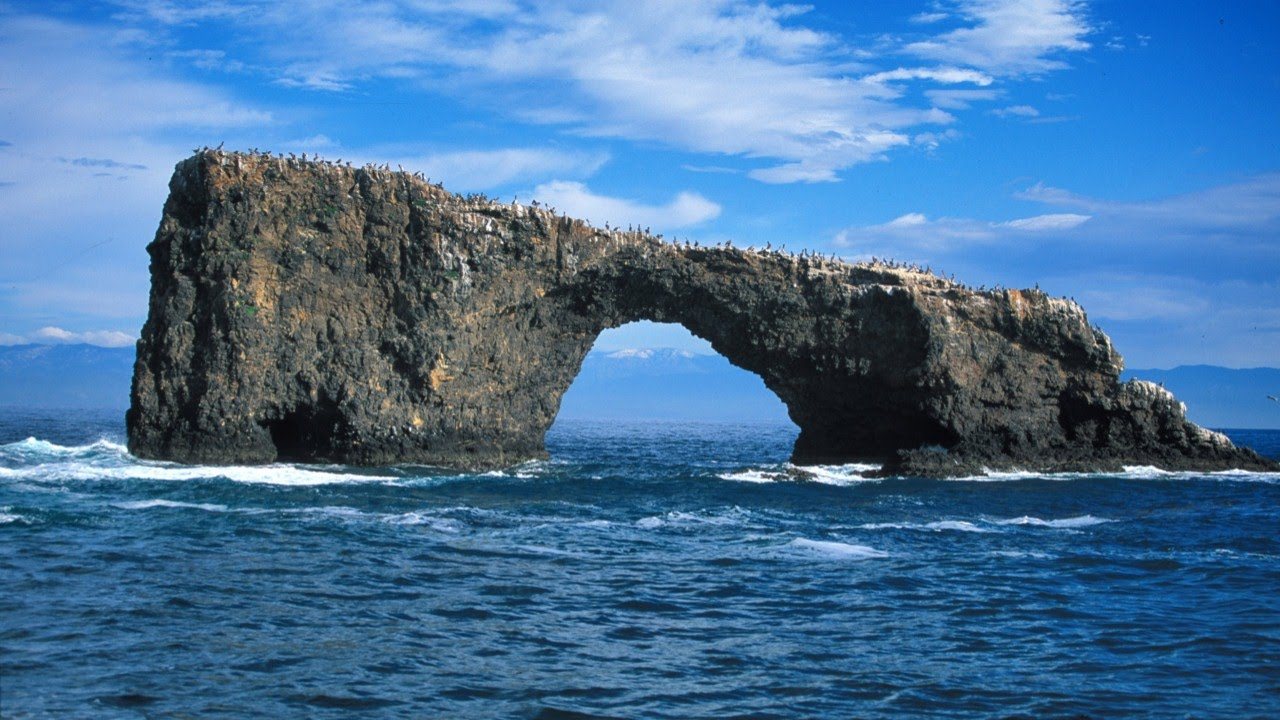
Identify the landform.

a)

Sea arch

b)

Tombolo

c)

Sea Stack

d)

Stump

41.

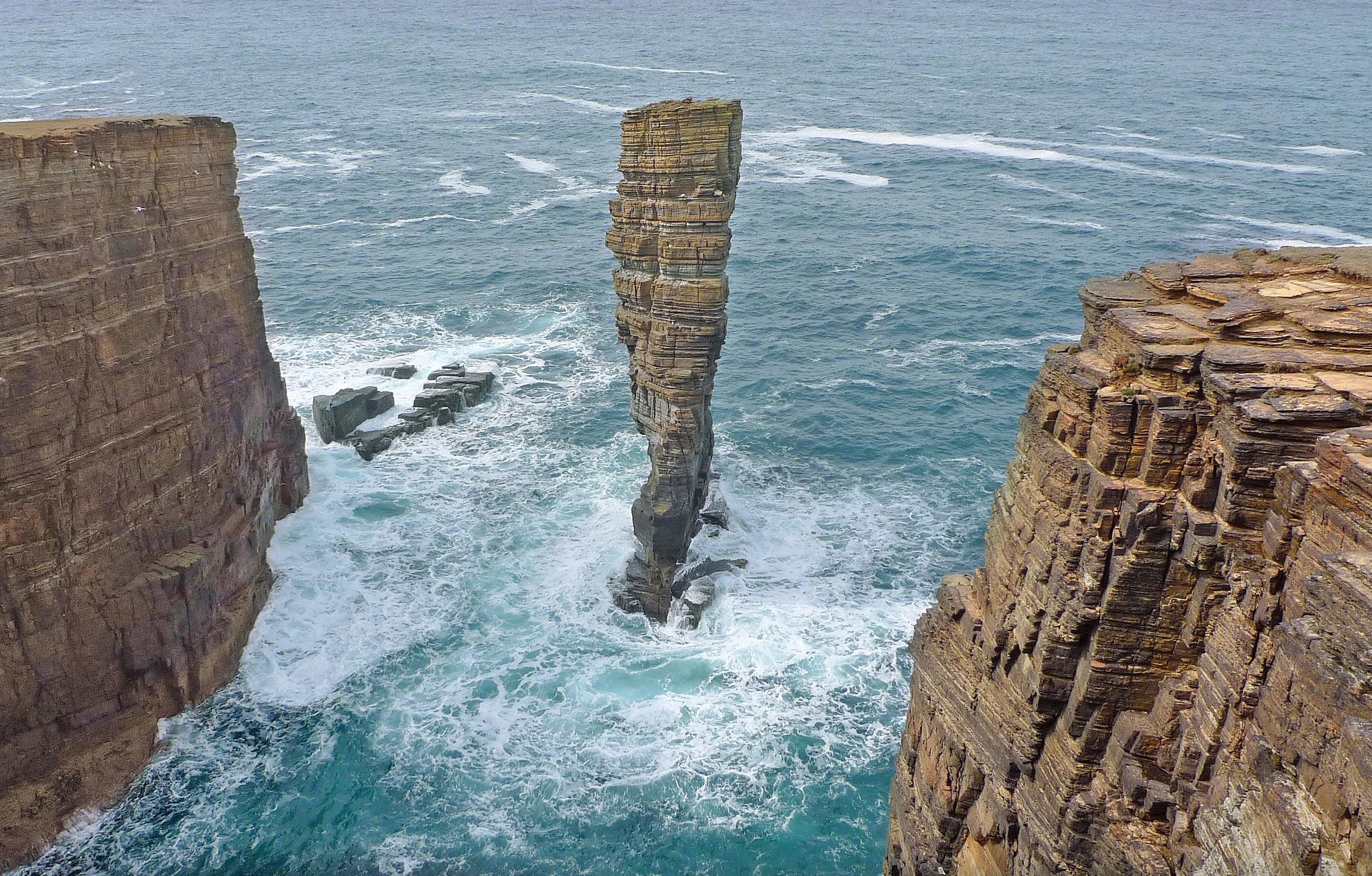
Identify the landform type.

a)

Sea Stack

b)

Sea Stump

c)

Arch

d)

Bay

42.

What is the name of the landform in this picture?

a)

Spit

b)

Wave Cut Platform

c)

Arch

d)

Stack