
 Worksheets
End of Year Review
Total questions: 53
Worksheet time: 53mins

Who was the scientist most famous for his study of natural selection and evolution?
Theodor Schwann
Robert Hooke
Charles Darwin
Rudolf Virchow

How do we measure the age of a fossil in years?
variation
absolute dating
selection
mutation

What do you call similar structures that related species have inherited from a common ancestor?
Natural Selection
Analogous Structure
Vestigial Structure
Homologous Structure

What do you call a characteristic that allows an organism to survive in an environment?
variation
adaptation
selection
overproduction

Hibernation is an example of which type of adaptation?
Behavioral Adaptation
Physical Adaptation

Beak shape, camouflage, and webbed feet are all examples of which type of adaptation?
Behavioral Adaptation
Physical Adaptation

Select ALL that show evidence of evolution.
DNA
mutations
fossils
skeletal structures

The photo above shows the different fur colors that occur naturally in "bunnius sciencius." What is this an example of?
homologous structures
different species
variation in traits
different structures.
Darwin believed that species changed ________________________, adapting to the particular conditions they lived in.
within their lives
on purpose, because they wanted to survive
gradually, over many generations
immediately
Adaptations help organisms - whether plants, animals, bacteria, fungi, or protists - survive in their environment. If they survive, they can _______________ and pass the genes for those adaptations to their offpsring.
adapt
evolve
reproduce
decompose

Which fossil is the oldest?
Fossil 1
Fossil 2
Fossil 3
Fossil 4
Scientists found a fossil (circled) in the same layer as fossil 1. They want to know if it is the exact same age as fossil 1.
How can they tell?
They can check for a common ancestor.
They can send it to a lab for radioactive dating.
They can send it to a lab for relative dating.
They can check for the fossil's color.
Passing on the trait of being tuskless has become an advantage for the female Mozambique elephants in their environment because....
females use the tusks for fighting
female elephants are more attractive without tusks
tuskless elephants are less likely to be killed by poachers
the females won't injure themselves with their tusks.
Most fossils are formed when organisms that died get buried in rocks and soil, which over millions of years forms.. .
sedimentary rock
metamorphic rock
igneous rock
lava
Why is the fossil record incomplete?
Scientists have lost most of the fossils.
Most animals hide when they start to fossilize
Most organisms decompose or are eaten before they can become fossils.
Once the dinosaurs became extinct, no more fossils were created.
What is the function of the cell membrane?
Produces ATP
Produces proteins and lipids
Keep the organelles in place
Control what enters and leaves the cell
I am much bigger in plant cells than I am in animal cells. What am I?
Golgi Apparatus
Nucleus
Vacuole
Ribosomes
I am the gel-like substance that holds all the organelles in place within the cell. Who am I?
Cell membrane
Cell wall
Cytoplasm
Centriole
You will find a lot of me in muscle cells, to produce the massive amounts of ATP for movement and exercise. Who am I?
Nucleus
ER
Mitochondria
Ribosomes
I am located in the leaf cells of plants, but NOT the root cells. Who am I?
nucleus
Chloroplast
Vacuole
Mitochondrion
I am the "security gate" of the cell and I control what enters and leaves all types of cells. Who am I?
Cell wall
nucleus
Cytoplasm
Cell membrane
The nonliving parts of an ecosystem are called __________ factors.
biotic
biology
abiotic
biography
A group of organisms of the same species living in the same area is called a/an __________.
community
habitat
population
ecosystem
A group of different species that live together and interact in an environment is called a/an __________.
community
habitat
population
ecosystem
Which is an example of a BIOTIC factor for coral?
lightning
algae
sand
clouds
Which are located at the very BOTTOM of an energy pyramid?
producers
consumers
decomposers
scavengers
Another name for a living thing is a/an ___________.
habitat
ecosystem
organism
population
The genotype for a yellow plant is...
Which of the following genotypes is purebred dominant?
A
Aa
AA
aa
Which of the following genotypes is hybrid?
Bb
BB
bb
B
In a flowering plant species, red flower color (R) is dominant over white flower color (r). What is the genotype of any red-flowering plant in this species?
rr
R
RR
RR or Rr
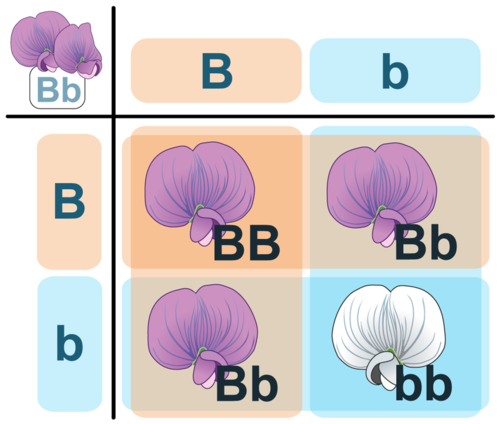
The B stands for bud.
The digestive and respiratory systems pair together to ...
bring carbon dioxide and wastes to cells.
bring oxygen and wastes to cells.
bring oxygen and nutrients to cells for cellular respiration.
bring carbon dioxide and nutrients to cells for cellular respiration.
The digestive and respiratory systems rely on the ___ systems to transport needed materials to the cells.
circlatory and excretory
circulatory and muscular
nervous and digestive
nervous and skeletal
All organ systems have this at its most basic unit.
Cells
Neurons
Tissues
Organs

