
 Worksheets
oxygen -carbon recycle
Total questions: 23
Worksheet time: 12mins
Name
Class
Date
1.
Which answer best defines organisms?
a)
a gas in the atmosphere that plants use during the process of photosynthesis
b)
living things
c)
tiny holes in the leaves of a plant that allow gases to enter or leave a plant
d)
plant parts that hold a plant in place and take in water and nutrients
2.
Which answer best defines chlorophyll?
a)
the green substance in plant leaves that captures energy from the sun
b)
living things
c)
a gas in the atmosphere that plants use during the process of photosynthesis
d)
the process in which plants use energy from
3.
Which answer best defines carbon dioxide?
a)
A gas in the atmosphere that animals breathe to survive
b)
a green substance in plant leaves that captures energy fro the sun
c)
The process in which plants use energy fro the sun to make their own food
d)
a gas in the atmosphere that plants use during the process of photosynthesis
4.
Stomata is best defined as
a)
tiny holes in the leaves of a plant that allow gases to enter or leave the plant
b)
a gas in the atmosphere that plants use during the process of photosynthesis
c)
Plant parts that hold a plant in place and takes in water and nutrients
d)
living things
5.
Which answer best defines photosynthesis?
a)
the movement of carbon dioxide and oxygen between organisms and the air
b)
Tiny holes in the leaves of a plant that allow gases to enter or leave the plant
c)
the process in which plants use energy from the sun to make their own food
d)
a gas in the atmosphere that plants use to make food
6.
The carbon dioxide-oxygen cycle is best defined as-
a)
the process in which plants use energy from the sun to make their own food
b)
a green substance in plant leaves that captures energy from the sun
c)
living things
d)
the movement of carbon dioxide and oxygen between organisms and the air
7.
Which answer best defines roots?
a)
a plant part that holds leaves up and moves water and nutrients throughout the plant
b)
plant part that hold a plant in place and take in water and nutrients
c)
a plant part that carries out photosynthesis to make food for the plant
d)
tiny holes in the leaves of a plant that allow gases to enter or leave the plant
8.
When humans burn fossil fuels, most of the carbon quickly enters the as carbon dioxide.
a)
Water
b)
Atmosphere
c)
Sun
d)
Air
9.
Which one of these does not add CO2 to the atmosphere?
a)
cooking with gas
b)
planting trees
c)
burning wood
d)
riding in a bus
10.
Combustion is another word for _______________.
a)
a train
b)
a bus
c)
a dog
d)
burning
11.
What does not produce carbon dioxide?
a)
Photosynthesis
b)
Burning Fossil Fuels
c)
Animal respiration
d)
Plants decaying
12.
How do living organisms return carbon to the atmosphere in the carbon cycle?
a)
respiration and photosynthesis
b)
decomposition and respiration
13.

In the carbon cycle, producers take in the gas __
a)
carbon dioxide
b)
oxygen
c)
nitrogen
d)
carbon monoxide
14.
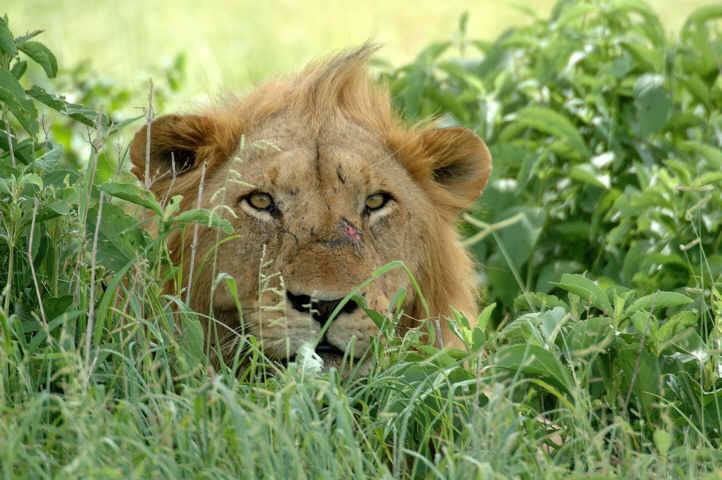
How does the carbon in grass become part of a lion?
a)
The lion eats the grass
b)
Carbon from grass doesn't end up in a lion.
c)
The carbon ends up in the lion's food chain.
d)
The lion breathes in carbon given out by the plant
15.
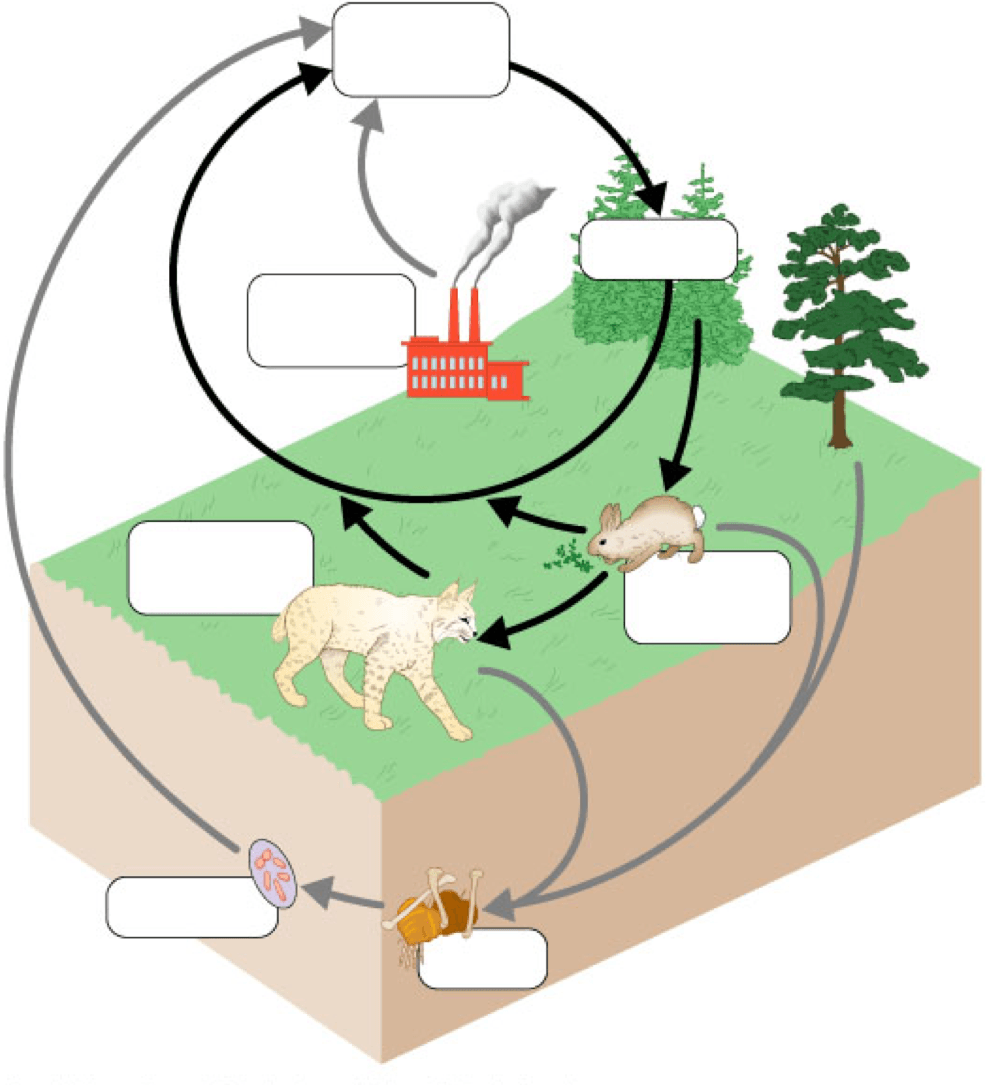
In what process is Carbon transformed into chemical energy?
a)
Photosynthesis
b)
Respiration
c)
Primary Production
d)
Secondary Production
16.
What is the role of decomposers in an Ecosystem?
a)
They recycle matter and nutrients to form fossil fuels
b)
They are burn and release as carbon dioxide
c)
Decomposers are responsible to turn oxygen into carbon dioxide
d)
They recycle energy back to the sun
17.
Photosynthesis
a)
absorbs CO2
b)
releases CO2
18.
Respiration
a)
absorbs CO2
b)
releases CO2
19.
The process in which light energy, water and carbon dioxide are converted into glucose and oxygen is ____
a)
Cellular Respiration
b)
Combustion
c)
Photosynthesis
d)
Decomposition
20.
The process in which oxygen and glucose are converted into carbon dioxide, ATP energy and water is _____
a)
Decomposition
b)
Cellular respiration
c)
Photosynthesis
d)
Combustion
21.
What are the end products of cellular respiration?
a)
Carbon dioxide, water and ATP energy
b)
Carbon dioxide, glucose and water
c)
Oxygen, glucose and ATP energy
d)
Water, Carbon dioxide and Oxygen
22.
What are all living things made of?
a)
Soil
b)
Oxygen
c)
Carbon
d)
water
23.
What is one way that carbon enters the atmosphere?
a)
Sunlight
b)
Factory emissions
c)
Ocean uptake
d)
Rain
100 %

