
Font size
 Worksheets
Natural selection and Evolution
Total questions: 30
Worksheet time: 3600secs

The theory of evolution was proposed by . . .
Charles Darwin.
Charles Dickens.
Albert Einstein.
James Watson and Francis Crick.
The theory of evolution explains how species change and new species arise through the process of natural _________.
selection
separation
difference

Animals that live in the same habitat often compete for limited resources. Which of these resources do animals not compete for?
territory
food
oxygen
mates
water
Plants that live in the same habitat often compete for limited resources. Select three resources that plants compete for.
space
food
light
water

Natural selection is the process that leads to evolution. True or false?
true
false

Giraffes eat leaves from trees. In a season when leaves are in short supply, which of these giraffes has an inherited variation that will improve its ability to compete for food?
A
B
C
D

The feet of four birds are shown in the diagram. Which foot would increase a bird's ability to kill its prey?
A
B
C
D

Some individuals within a population have a physical characteristic that helps them to survive for longer than those without that characteristic. The individuals that survive can be considered to be the fittest. The survival of the fittest is otherwise known as
genetic modification
natural selection
artificial selection
evolution
Darwin's book On the Origin of Species suggests that _______ are evidence of evolution.
photographs
fossils
eyewitness accounts

Why was Darwin's book On the Origin of Species controversial at the time of its publication?
Many people believed that God had made all the animals and plants the way they were.
Darwin used fossils as evidence, and there were a number of gaps in the fossil record.
DNA hadn't been discovered, so Darwin could not explain how features were inherited.
all of the above

The theory of evolution is
a theory that explains how species have changed over long periods of time.
a process by which individuals that are best suited to their environment survive and reproduce, passing on their genes to the next generation.
a theory that explains how the universe began.
Evolution is no longer taking place. True of false?
True
False

Sedimentary rocks form in layers that sometimes contain fossils. The image shows layers of sedimentary rock containing fossils. Layer ____ contains the oldest fossils.
A
B
C
D
E

The photographs show two fossils of trilobites. The trilobite fossil in the bottom photograph is __________ than the one in the top photograph.
older
younger

The photographs show two points in the evolution of trilobites. Which feature of the trilobite has undergone the most significant change?
length of eyestalks
shape of the head
colour of the shell
Fossils provide evidence that supports the theory of evolution. True or false?
True
False
Selective breeding is a process that uses artificial selection to breed organisms with desirable characteristics. True or false?
true
false
The purpose of selective breeding is to produce . . .
better organisms.
bigger organisms.
organisms with the most desirable characteristics.
Some farmers grow tomato plants that are frost resistant by selecting plants with some frost resistance and breeding them together. This is an example of . . .
genetic modification.
selective breeding.
natural selection.
evolution.

A strawberry grower wants to select strawberry plants that will grow large, bright red strawberries. Which two plants should he breed together to have the best chance of getting a plant that grows large bright red strawberries?
A
B
C
The sweetest strawberries are small and bright red. Which two plants have the best chance of producing offspring with the sweetest fruit?
A
B
C

Louise wants to breed her fish to produce fish with larger fan-tails. Which fish should Louise breed together?
A and B
B and C
C and D
A and D

What could happen to a species if it isn’t well adapted to its habitat?
The individuals of the species would change their features to cope with the new conditions.
The species could become extinct.
The number of individuals of the species could increase.

A grey squirrel can eat a wider range of foods than a red squirrel. Choose two statements that explain why this gives the grey squirrel a competitive advantage over the red squirrel when environmental conditions change.
The grey squirrel may starve.
If one type of food is lost from its habitat, the grey squirrel can eat other foods.
The grey squirrel will need to find a new habitat in order to survive.
The grey squirrel is able to cope with changes in the habitat.
Which features of a river could change, leading to the extinction of the species that live in it?
the temperature of the water
the presence of pollutants
speed of water flow
all of these

Darwin theorized that organisms with traits that are best suited to their environment will ________________
increase in number
become extinct
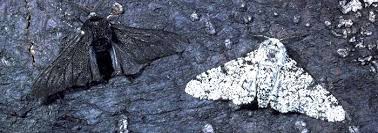
Predict which moth would be expected to increase in population
light
dark
Which word is used to describe a species at risk of extinction?
rare
endangered
unhealthy

Which two of the following can cause a species to become endangered?
loss of their habitat
high birth rate
large numbers of prey species in their habitat
death of a large number of individuals of the species

