wayground logo

Free Printable Worksheets

Font size

S
M
L
XL
Worksheets

5M - The Moon, Earth and Sun

Total questions: 28

Worksheet time: 28mins

Name
Class
Date
1.

What causes day and night?

a)

The sun's ROTATION

b)

The tilt of the earth on its axis

c)

The earth's ROTATION on its axis every 24 hours

2.

What is a REVOLUTION?

a)

When one object orbits around another object

b)

When one object rotates in place on an axis

c)

When two objects spin around each other

3.

What is a ROTATION?

a)

When one object orbits around another object.

b)

When one object spins around on its axis

c)

When two objects move around each other

4.

Why do we only see one side of the Moon?

a)

Because the amount of time it takes the Moon to make one rotation and one revolution is the exact same.

b)

Because the amount of time it takes the Earth to make one rotation and one revolution is the exact same.

c)

Because the Moon rotates on its own axis.

5.

What is the Sun?

a)

An aestroid

b)

A star

c)

A planet

6.

The star at the center of the Solar System that supplies heat and light to earth; its enormous gravity keep the Solar System in orbit.

a)

satellite

b)

sun

c)

craters

d)

moon

7.
Day and night is caused by the _____________ of earth on its axis.
a)
revolution
b)
orbit
c)
rotation
d)
space
8.

What motion of the Earth takes 365 14\frac{1}{4} days? 

a)

Rotation

b)

Tilting 

c)

Revolution

d)

Spinning

9.
The Earth spins on a tilted angle called a (an) 
a)
Axis
b)
Invert
c)
Revolution
d)
Bounce
10.
What does REVOLUTION mean?
a)
To SPIN
b)
To ORBIT or GO AROUND
11.
The MOON REVOLVES around the:
a)
Sun
b)
Earth
c)
The Moon doesn't revolve
d)
The Earth and Sun 
12.
Which happens in one year’s time?
a)
The moon makes one complete revolution around Earth.
b)
Earth makes one complete revolution around the sun.
c)
Earth makes one complete spin on its axis.
d)
The sun makes one complete spin on its axis.
13.

The Earth's _______ is an imaginary line that goes from the North Pole to the South Pole.

a)

rotation

b)

axis

c)

solar eclipse

d)

orbit

14.
Period during rotation when Earth is facing the Sun and it is lighted
a)
rotation
b)
day
c)
night
d)
shadow
15.
Period during Earth's rotation when Earth faces away from the Sun and it is dark
a)
day
b)
night
c)
shadow
d)
stars
16.

The path that the Earth follows as it revolves around the Sun.

a)

Orbit

b)

Atmosphere

c)

Earth

d)

Revolution

17.
The invisible line that passes through the North Pole and the South Pole is called Earth's ____
a)
axis
b)
equator
c)
ecliptic
d)
prime meridian
18.
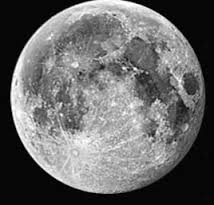
Name the moon phase
a)
First Quarter
b)
Last Quarter
c)
New Moon
d)
Full Moon
19.
What is illuminating the Moon?
a)
Nuclear Fusion
b)
Sunlight
c)
Mirrors
d)
Flood Lights
20.
Which of the following words describe the phases of the moon?
a)
none, quarter, half, three quarters, full
b)
new, crescent, quarter, gibbous, full
c)
dark, light, half, quarter, blue
d)
first quarter, second quarter, third quarter, fourth quarter
21.
How many phases does the moon go through?
a)
4
b)
8
c)
10
d)
16
22.
Define Gibbous
a)
Less than half of moon visible
b)
More than half of moon visible
c)
All of moon visible
d)
None of moon visible
23.
Changes in the moon's appearance are
a)
phases
b)
eclipses
c)
stages
d)
cycle
24.
If the last full moon was on April 4th, when can you expect to see the next full moon? 
a)
April 29th
b)
July 4th
c)
May 4th
d)
September 12th
25.

Based on lunar calendar,what is the phase of the Moon that can be seen on the 15th day?

(a)  

26.

A pupil find that the shadow of an object cannot be seen at 1 pm even though the Sun is still shining brightly in the sky. This is because ....

a)

The Sun is in the West.

b)

The Sun is located directly above the object.

c)

sunlight on that day is not too bright.

d)

sunlight is reflected by the object.

27.

The shadow of the tree outside your house will be the longest at ...

a)

8.00 a.m

b)

9.30 a.m

c)

10.00 a.m

d)

12.30 p.m

28.

Which of the following is not the phenomenon caused by the rotation of the Earth on its own axis? (You may choose more than one answer)

a)

The changes in the length and direction of the shadow

b)

The changes of the position of Sun

c)

Waves and tides

d)

Occurrence of day and night

e)

Four seasons in a year