
 Worksheets
RECAP OF PHYSICAL AND CHEMICAL CHANGES
Total questions: 15
Worksheet time: 19mins
Name
Class
Date
1.

mixing baking soda and vinegar
a)
physical change
b)
chemical change
2.

Kim lost her hammer outside. When she found it a few months later, some parts of the metal were covered with flaky, brown rust. Which type of change occurred when rust formed on the hammer?
a)
chemical
b)
electrical
c)
thermal
d)
physical
3.

Which best explains why burning leaves is a chemical change?
a)
The leaves emit light during the change.
b)
The temperature of the leaves increases.
c)
The shape of the leaves changes.
d)
The leaves turn to ashes.
4.

Which example best describes a physical change?
a)
baking a pie
b)
burning a candle
c)
making a paper airplane
d)
lighting a match
5.

Which is an example of a different substance being formed?
a)
glass breaking
b)
metal melting
c)
water freezing
d)
wood burning
6.
Which is a physical change?
a)
burning match
b)
vinegar in baking soda
c)
melting butter
d)
cooking an egg
7.

Is gatorade powder dissolving in water physical or chemical change?
a)
Physical
b)
Chemical
8.
What is photosynthesis?
a)
when energy is expose.
b)
when water and oxygen is composed.
c)
when plants turn carbon dioxide and water into energy.
d)
none
9.
what is the definition of physical change?
a)
any change that results in the formation of new chemical substances.
b)
rusting
c)
changes affecting the form of a chemical substance, but not its chemical composition.
d)
any property that is measurable, whose value describes a state of a physical system
10.
When you increase the energy by heating a liquid what happens to the motion of the molecules
a)
They slow down
b)
They speed up
c)
Heat doesnt change the motion of the molecules
11.
What do we call the molecules that are present at the end of a chemical reaction?
a)
Reactants
b)
Products
c)
Ingredients
d)
Atoms
12.
Which of the following is a sign that a chemical reaction has occurred?
a)
change in shape
b)
melting
c)
formation of a gas
d)
dissolving
13.
Fizzing, foaming, and burning are all examples of
a)
Chemical change
b)
Physical change
14.
The particles in a _____ are the farthest apart and move the fastest.
a)
gas
b)
solid
c)
banana
d)
liquid
15.
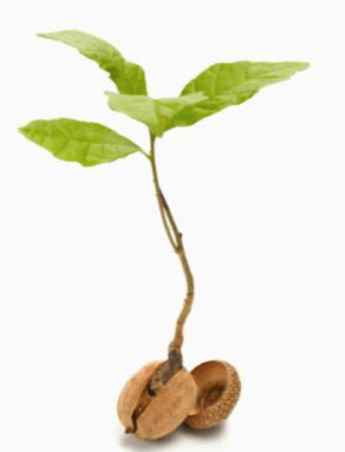
Is a tree sprouting a physical or chemical change?
a)
Physical
b)
Chemical
100 %

