
 Worksheets
Conductivity
Total questions: 13
Worksheet time: 7mins
Name
Class
Date
1.
Which of these materials is least useful as an insulator?
a)
Cardboard
b)
Aluminum
c)
Rubber
d)
Plastic
2.
The ability of a metal to allow heat or electricity to pass through it.
a)
conductivity
b)
insulator
c)
mass
d)
density
3.
What is the BEST example of a conductor?
a)
A wooden block
b)
A ceramic mug
c)
A glass cup
d)
A metal bowl
4.
Which of the following is NOT an insulator?
a)
Wool
b)
Plastic
c)
Copper
d)
Styrofoam
5.
Gloves help keep your hands warm in winter because:
a)
They are conductors of heat.
b)
They are fuzzy.
c)
They are conductors of electrical energy.
d)
They are insulators.
6.
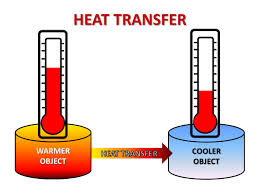
Heat transfers from an area of ____temperature to an area of ___ temperature.
a)
high to low
b)
low to high
c)
high to high
d)
It can travel high to low and low to high.
7.
A student touches a metal sink with her finger and notices that her finger feels cold. Which of the following statements explains this observations?
a)
Heat energy flows from the student's finger to the metal.
b)
Heat energy flows from the metal sink to the student's finger.
c)
The student's finger was originally at the same temperature as the sink.
8.
A barefoot student steps on a hot concrete surface. Most of the heat transferred to the student’s skin by this contact is by the process of—
a)
convection
b)
conduction
c)
vaporization
d)
radiation
9.
The ability of a metal to allow heat or electricity to pass through it.
a)
conductivity
b)
insulator
c)
mass
d)
density
10.
Which of the following increase the rate of conductivity?
a)
Large surface area
b)
Large temperature difference
c)
Small surface area
d)
Small temperature difference
11.
If a metal has fewer free electrons than it's conductivity is lower
a)
TRUE
b)
FALSE
12.
If the particles in a conductor are more tightly packed it will have a smaller conductivity
a)
TRUE
b)
FALSE
13.
The best insulator would have...
a)
Loosely bound particles that are spread out.
b)
Tightly bound particles that are close together.
c)
Tightly bound particles and lots of free electrons.
d)
No particles at all, it would be a vacuum.
100 %

