
NEW
Font size
S
M
L
XL
 Worksheets
L-4 Reproduction
Total questions: 13
Worksheet time: 7mins
Name
Class
Date
1.

How many parents does asexual reproduction involve?
a)
one
b)
two
c)
three
d)
four
2.
Which type of asexual reproduction is taking place?
A planarian is a non-parasitic flatworm. If a planarian was injured by a predator, it could re-grow its body parts. If the body parts were not eaten by the predator, the part could re-grow into a whole new planarian as well.
A planarian is a non-parasitic flatworm. If a planarian was injured by a predator, it could re-grow its body parts. If the body parts were not eaten by the predator, the part could re-grow into a whole new planarian as well.
a)
Budding
b)
Fission
c)
Vegetative propagation
d)
Regeneration
3.
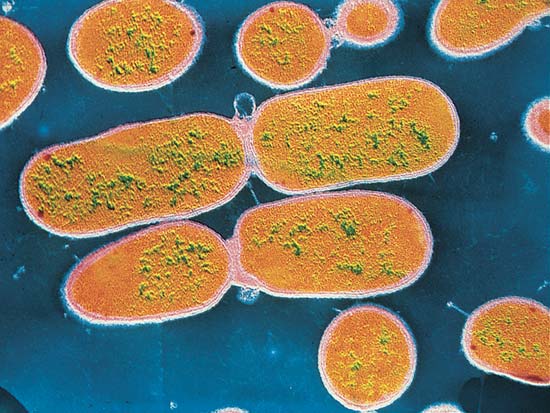
The offspring from asexually reproduced organisms are?
a)
Different than their parents
b)
Identical to parents
c)
Like a combination from both parents
d)
A different species
4.

Fishermen work hard to catch and remove all the starfish that get into their “underwater farms” where they raise clams & oysters. In the past, they put the starfish into their boats, cut them up with knives, and then throw the pieces of starfish overboard. They thought this would kill the starfish. What they did not know was that each piece of starfish will grow into a whole new animal. What type of asexual reproduction is taking place?
a)
Regeneration
b)
Vegetative propagation
c)
Budding
d)
Fission
5.

This is when a new organism grows by cell division on the body of its parent. The bud, or offspring is identical to the parent. The bud, when large enough, can break off of the parent and live on its own. Examples of this include yeast, hydra and potatoes.
a)
Regeneration
b)
Vegetative propagation
c)
Fission
d)
Budding
6.

Is the following asexual or sexual reproduction?
A labradoodle is a type of dog that is crossed between a labradoor retriever and a poodle. The labradoodle puppy takes on the traits of both of its parents. Female dogs have a pregnancy period of almost 70 days.
A labradoodle is a type of dog that is crossed between a labradoor retriever and a poodle. The labradoodle puppy takes on the traits of both of its parents. Female dogs have a pregnancy period of almost 70 days.
a)
Sexual
b)
Asexual
7.
How do bacteria reproduce?
a)
mitosis
b)
budding
c)
binary fission
d)
regeneration
8.
What is one advantage of asexual reproduction?
a)
offspring are different from parents
b)
diseases are not passed from parent to offspring
c)
it takes a longer time
d)
it takes less time
9.
How many parents are involved with sexual reproduction?
a)
none
b)
1
c)
2
d)
4
10.
Fertilization that occurs inside the body
a)
Internal Fertilization
b)
External Fertilization
11.
Both sperm and egg are released into the environment.
a)
Internal Fertilization
b)
External Fertilization
12.
Mammals, reptiles, and birds undergo this type of fertilization.
a)
Internal Fertilization
b)
External Fertilization
13.
Amphibians and fish undergo this type of fertilization.
a)
Internal Fertilization
b)
External Fertilization
Reset

