
 Worksheets
Networking
Total questions: 27
Worksheet time: 16mins
Which of these is NOT a key feature of a Computer Virus
Self-replicates to spread
Damages, corrupts or deletes files
It is a piece of software
Requires a user to click on a link
Which of these is the best definition of hacking
Unauthorised access to a computer or computer network
Stealing of private data such as passwords
Sending email with malicious attachments
Changing software to do something that was not intended
What is spyware?
Hardware that monitors your input to a computer & sends it to a 3rd person
Software that monitors your input to a computer & sends it to a 3rd person
Software that encrypts your files without permission
Software that sends your private files to a 3rd person

What is an IP address?
The numerical label assigned to a device that utilizes the Internet Protocol suite for communication (aka getting to a website)
An Internet procedure to give all websites a mailbox in the cloud

What is a domain?
A room dedicated to servers and equipment found on most schools, businesses, or companies. Domains can also be based in the cloud or be virtual.
A type of service provided by a company online
A name for an IP address For example, lcusd.net is the website domain for our district. This allows you to type the name instead of the IP address to access the website.
In a network, a domain is a specific area of the network identified by ports.

What role does a DNS server have in a network?
This server translates computer traffic into measurable data to see how busy the network is at any one time
This is a server that tracks what websites are used in a network in order to make accessing them much faster
This server acts like a phone book or contact list and translates the website domains into IP addresses. It is a domain name server
This is a server that stores the names of all the computers and equipment in a network. It is a directory and number server

What does LAN stand for?
Larger analog network
Local area network
Latent acre nectar
Longer auger napster

What is a broadcast storm?
An issue that comes from too many clients on the network
When a user goes to a website and gets a virus and that moves to the network
Unusually high amounts of traffic on the network that causes an impact or halt to all communication
When outside weather has an impact on the network performance

What does SSID stand for? (Also known as a wifi network name)
Stand-alone secure identity driver
Single server identification
Service set identifier
Secure storage information design

What does a firewall do in a network?
It filters the network traffic to protect against interference or attacks based on a set of rules allowing certain traffic or actions to occur
It is a piece of hardware in a server used to detect heat and then turn on the fan
It provides heat distribution in a server room
It is symbolic part of a network admins job when protect users from doing things they shouldn't

What is ethernet?
The proto-internet before we had wifi
A private internet, something that isn't public
Another term for services in the cloud
A set of networking standards for connecting computers and other equipment through cables

What are the main components of a network?
Servers, permissions, and cables
WiFI signals, passwords, clouds
Hardware, software, protocols, client devices
Ports, copper, and packets

What are packets and bytes?
The specs of a motherboard that direct graphics to a monitor
Network cable connections
Signals that measure power needs for computers and they report back to the router
Bytes are combined to make up packets, these are the pieces of information traveling through a network such as parts of emails


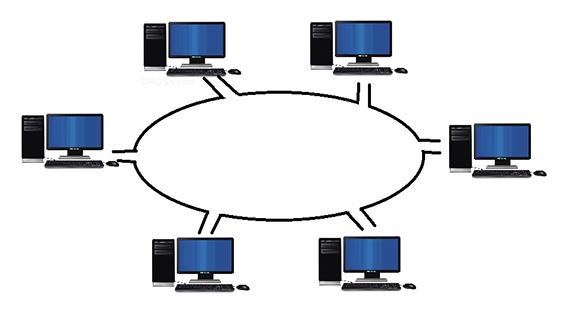
In my network, computers and devices are connected to one another. Messages travel around the connected devices until they arrive at the intended destination.
If one computer goes down, the entire network goes down.
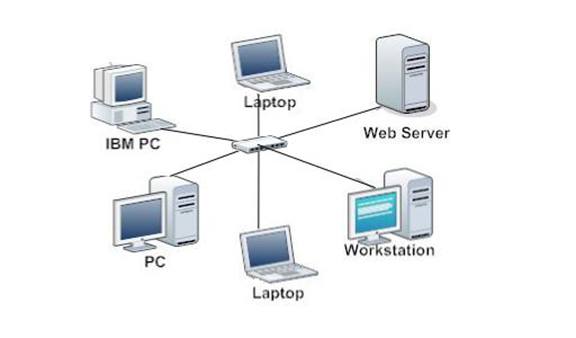
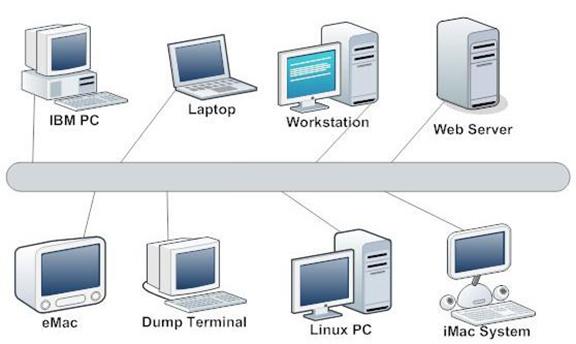
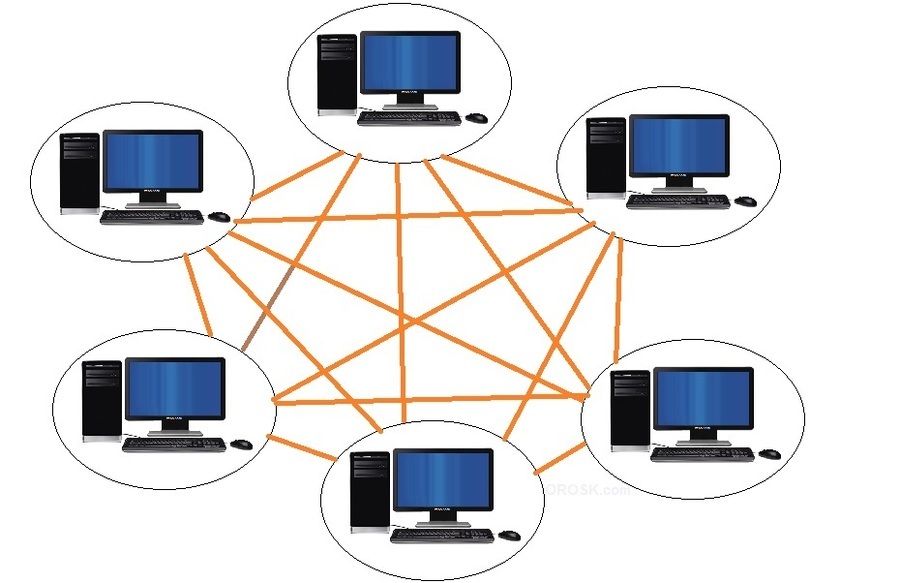
What network topology am I?


A Network Interface Card (NIC) connects you to...
Connect to a Local Area Network (LAN) using WiFi or Ethernet.
Connect to a Wide Area Network (WAN) using telephone line or satellite link.
Connect to a Wireless Personal Area Network (WPAN) using Bluetooth.

Identify and describe the hardware (Tick all that apply).
It is a switch
It is a router
It is used to share data, files and peripherals on a Local Area Network (LAN)
Devices can connect to it using Ethernet or WiFi
It has a modem built in in order to connect your LAN to the Internet (WAN).

