
 Worksheets
Rabea Physics Chapter 1
Total questions: 26
Worksheet time: 7mins
You have learned that atoms are really small. How many atoms do you think are there in a drop of water?
50
500
5000
5000000000000000000000
Which is bigger? Protons or atoms?
Protons are bigger than atoms
They are both the same size
Atoms are bigger than protons
Depends on the type of atom
Which is bigger? a quark or a neutron?
Quark is bigger than neutron
Neutron is bigger than quark
Both are the same size
Depends on the atom
Which of the following best describes elementary (fundamental) particles?
Composite particles like protons and neutrons
Antimatter particles
A particle not made of other particles. A particle which cannot be divided further
A general name for all types of atoms
Which of the following is an elementary particle?
Atom
Molecule
Compound
Quark
Which of the following is a fundamental force of nature?
Electromagnetism
Einsteins force
Centripetal force
Centrifugal force
Which of the following is a fundamental force of nature?
Friction
Air resistance
Strong Nuclear Force
Newtons Force
Which force is responsible for the repulsion between positive charged protons?
Electromagnetism
Gravity
Weak Nuclear Force
Strong Nuclear force
Which force enables two or more protons to stick together?
Electromagnetism
Gravity
Weak Nuclear Force
Strong Nuclear force
The "Gluon" is the boson which carries the strong force. Why is it named "gluon"?
The scientist who discovered it loved glue so he chose this name
As the strong force acts like "glue" holding the nucleus together
It was discovered by Dr. Fevicol Gluon
The scientific community just thought that it sounds cool
What is the electromagnet force known as in arabic?
قوة الكهر و المغناطيسية
قوة النووية القوية
قوة النووية الضعيفة
قوة الجاذبة
Which best describes nuclear fusion?
Splitting of a large nucleus into smaller nuclei
Joining of two smaller nuclei to form a larger nucleus
Smashing atoms together to discover fundamental particles
A new-clear glue made in india
Which process powers the sun?
Nuclear Fusion
Nuclear Fission
Fossil Fuels
Its magic!
If I want to discover newer subatomic particles, which of the following would I use?
Lightsabers
Powerful telescopes
Most advanced microscopes
Particle accelerators
Ibrahim claims that the weak force can change the flavour of quarks, thereby changing a neutron to a proton. Is he correct?
Yes
No
Ibrahim further claims that if protons can be changed into neutrons, than one element can be changed into another, such as lead can be changed into gold. Can this happen?
Yes
No
Ibrahim says he can change lead to gold in his school laboratory. Is this Possible?
Yes
No
Which of the following are flavours of quarks? Select all the correct options.
Up quark
Tau Quark
Down Quark
Vanilla Quark
Boson Quark
Which of the following carry the weak force? Select all the correct options.
W boson
X boson
Z boson
H quark
Gluon
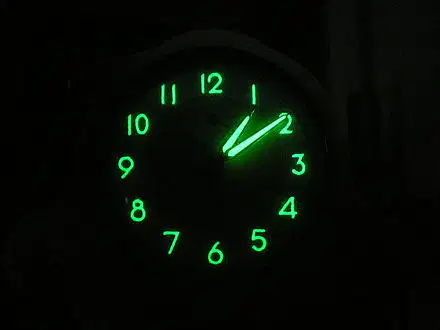
What is the following picture an example of?
The strong force
Nuclear fusion
Particle accelerator
Radioluminescence
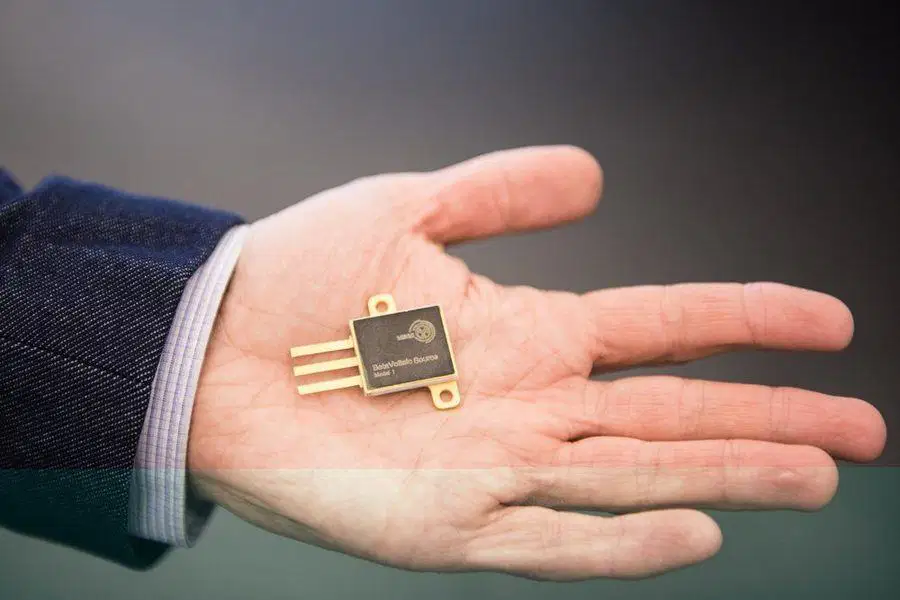
This tiny battery shown here can run for 100 years! It is a betavoltaic power source. Where does it get its energy from?
Fossil Fuels
Solar power
Radioactive Source
Fusion
The half-life of 200 Kg's of a radioactive isotope is 5 years. How much will be left after 15 years?
200 Kg's
25 Kg's
100 Kg's
2 Kg's
Radiocarbon dating is based on the principle that all living matter possesses a certain amount of a radioactive form of ______?
Carbon
Nitrogen
Oxygen
Helium
None of the above
Which of the following does not involve radioactive decay?
Tritium glowing wrist watches
Finding out how old a fossil is
Performing a PET scan
Fusion of hydrogen in a hydrogen bomb
Which of the following are fundamental forces? Choose all the correct options.
Gravity
Centripetal force
Strong nuclear force
Friction
Weak nuclear force
Would the production of the suns energy be possible without the weak nuclear force?
Yes, as the weak nuclear has no role in powering the sun
No, weak nuclear force has an important role in powering the sun

