
 Worksheets
Unit1: The Origin of the Universe and the Solar System
Total questions: 30
Worksheet time: 19mins
What is the big bang theory?
A theory that states that the universe started in a large mass and then imploded to form everything.
A theory that states that the universe was there, will be and is there. Is homogeneous and isotropic.
A theory that states that the universe is slowly coming back to a center.
A theory that states that the universe started in a small mass and then expanded, the expansion cooled down the temperature and that resulted in the formation of matter, energy, space and time.
What were the original two elements in our universe?
Hydrogen and Lithium
Helium and Oxygen
Helium and Hydrogen
None of the above
The age of the universe is probably close to___________________
14 million years
4 ½ billion years
15 billion years
30 billion years
The term big bang refers to _______________.
The origin of the universe
The ultimate fate of the universe
A supernova explosion
The formation of a quasar
What branch of science deals with the study of the origin and structure of the universe?
astrology
cosmology
geology
meteorology
Which is NOT a premise of the Steady State Theory?
Matter dilutes as the universe expands.
Matter is constantly created as the universe expands.
The universe expands but it does not change its appearance.
The early universe had no matter and energy.
The soalr system is believed to have come from a swirling dense hot cloud of dust and gas. What do you call this huge ball of dust and gas?
cosmos
nebula
planetesimal
sun
Which is the most accepted theory that explains the beginning of the solar system?
Big Bang Theory
Nebular Theory
Planetesimal Theory
Tidal Theory
It is a situation that scientists predict will happen which explains how the universe will end.
The Big Bang
The Big Bounce
The BIg Crunch
The Blackhole
What is the big bang theory?
A theory that states that the universe started in a large mass and then imploded to form everything.
A theory that states that the universe was there, will be and is there. Is homogeneous and isotropic.
A theory that states that the universe is slowly coming back to a center.
A theory that states that the universe started in a small mass and then expanded, the expansion cooled down the temperature and that resulted in the formation of matter, energy, space and time.
The galaxy we are a part of is called:
Milky Way
Andromeda
Whirlpool
Sombrero
the universe began a tremendous expansion 13-15 billion years ago
big bang theory
red shift
light abundance
theory of life
Together a star and all the planets and other object orbiting it form a(n)
asteroid
galaxy
solar system
star

Which of the following statements best describes a galaxy?
A system of planets with an elliptical orbit
A giant nuclear reactor held together by gravity
A cloud that produces stars
A system of gas, dust and billions of stars held together by gravity

What is an interstellar cloud of dust and gases where stars can form?
universe
solar system
galaxy
nebula

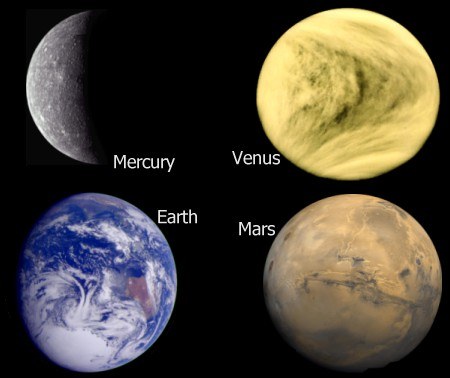
What are the Inner planets?
Select ALL that apply.
Mars
Venus
Mercury
Earth
Saturn
The inner planets are the ______ planets to the sun.
biggest
closest
farthest
coldest
The inner planets are _______ than the outer planets.
colder
bigger
warmer
smarter
All of the inner planets are made of _________ material.
liquid
icey
rocky
gassy

What is the only planet that supports life?
Mars
Neptune
Earth
Saturn
What are the outer planets made of?
Helium
Ice
Rock
Gases
According to evidence, all the galaxies in the universe are moving apart from each other.
True
False
What scientific theory states that the universe began from one point and has been expanding and cooling ever since?
The Darwin Theory
The Big Bang theory
The Super Cluster Theroy
The Local Galaxy Theory

