Wayground logo

Free Printable Worksheets

Font size

S
M
L
XL
Worksheets

Periodic Table Master

Total questions: 36

Worksheet time: 3hrs 43mins

Name
Class
Date
1.
Which is a halogen?
a)
Helium
b)
Chlorine
c)
Oxygen
d)
Neptune
2.
The atoms along the staircase are called 
a)
metals
b)
nonmetals
c)
metalloids
d)
noble gases
3.

Which element is not a metal?

a)

Na

b)

K

c)

Al

d)

Si

4.
Which group of the periodic table is composed of inert (not reactive)  gases?
a)
alkali metals
b)
alkaline earth metals
c)
halogens
d)
noble gases
5.

what is the name of group number 1

a)

halogens

b)

noble gases

c)

alkali metals

d)

alkaline earth metals

6.

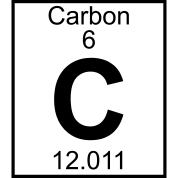
Based on its position on the periodic table, Carbon has __ orbitals and __ valence electrons.

a)

4,2

b)

2.4

c)

2,6

d)

6,2

7.
The periodic table has __ groups.
a)
8
b)
7
c)
18
d)
2
8.
Rows on the period table are called _____ while columns are called _____.
a)
groups, families
b)
groups, periods
c)
periods, groups
d)
families, groups
9.
Which elements have the most similar chemical properties?
a)
K and Na
b)
K and Ca
c)
K and Cl
d)
K and S
10.
The yellow atoms are called 
a)
metals
b)
nonmetals
c)
metalloids
d)
noble gases
11.
Atoms with similar properties are most likely located...
a)
in the same period.
b)
in the same group.
c)
in different periods.
d)
to the right and left of each other.
12.
________ are the COLUMNS on the periodic table and are organized by similar properties.
a)
Classifications
b)
Groups
c)
Periods
d)
Elements
13.
Most of the nonmetals on the periodic table are located...
a)
on the left side
b)
at the bottom
c)
on the right side
d)
in the middle
14.
Most of the nonmetals on the periodic table are located...
a)
on the left side
b)
at the bottom
c)
on the right side
d)
in the middle
15.
In the modern periodic table, elements are arranged by:
a)
atomic mass
b)
atomic number
c)
valence electrons
d)
number of isotopes
16.
_______ are the ROWS on the periodic table.
a)
Families
b)
Groups
c)
Periods
d)
Elements
17.

Which of the following is an Alkali Metal?

a)

Magnesium

b)

Chromium

c)

Sodium

d)

Fluorine

18.
Which of the following is an Alkaline Earth Metal? 
a)
Calcium
b)
Lithium
c)
Phosphorus
d)
Copper 
19.
Which of the following is a transition metal? 
a)
Iron
b)
Oxygen
c)
Neon
d)
Barium
20.
Which of the following is a Halogen? 
a)
Bromine
b)
Rubidium
c)
Argon
d)
Beryllium
21.
Which of the following is a Noble Gas? 
a)
Krypton
b)
Chlorine
c)
Radium
d)
Gallium
22.
Which of the following is the most reactive group of metals? 
a)
Alkali
b)
Alkaline Earth
c)
Halogen
d)
Transition Metals
23.
Which of the following is the most reactive group of non-metals? 
a)
Alkali
b)
Alkali Earth
c)
Halogen
d)
Noble Gas
24.
How many valence electrons does a halogen have? 
a)
1
b)
2
c)
7
d)
8
25.
How many valence electrons does an alkaline earth metal have? 
a)
1
b)
2
c)
7
d)
8
26.

Which of the following groups is not reactive (inert)?

a)

Alkali

b)

Transition Metals

c)

Halogens

d)

Noble Gas

27.

What causes an element to have higher electronegativity ?

a)

more orbitals with more protons

b)

more orbitals with fewer protons

c)

fewer orbitals with more protons

d)

fewer orbitals with fewer protons

28.
Which of the following will have a higher electronegativity than arsenic (As)?
a)
Carbon (C)
b)
Neon (Ne)
c)
Antimony (Sb)
d)
Germanium (Ge)
29.
As atoms of elements in group 16 are considered in order from top to bottom, the electronegativity of each successive element....
a)
decreases
b)
increases
c)
remains the same
d)
none of the above
30.
As you move down the periodic table atoms get bigger.  This is because ____________.
a)
The atoms have more mass.
b)
The atoms have more protons.
c)
The atoms have more energy levels
d)
The atoms have more neutrons
31.
As you move across the periodic table atoms tend to get smaller because, ______________.
a)
the atoms have more mass.
b)
the atoms have less mass
c)
the atoms have more protons.
d)
the atoms have less electrons.
32.
Electronegativity is...
a)
the ability of an atom to attract/ accept electrons
b)
the ability of an atom to lose electrons
c)
the energy required to remove an electron from a specific atom
d)
how easy it is to make friends. 
33.
Ionization energy is...
a)
the energy required to add an electron to a specific atom
b)
how much energy it takes to remove an electron from an atom
c)
the energy required to shield the outer electrons from the nucleus
d)
a measure of the ability of an atom to attract electrons
34.
The atom with the largest atomic radius in Group 18 is - 
a)
Ar
b)
He
c)
Kr
d)
Rn
35.
Metals have the largest - 
a)
atomic radius and electronegativity
b)
electronegativity and ionization energy
c)
atomic radius only
d)
ionization energy and atomic radius
36.

Which statement correctly and completely identifies a trend?

a)

Atomic radius decreases across a period and increases down a group.

b)

Electronegativity decreases across a period and decreases down a group.

c)

Ionization energy increases across a period and increases down a group.