
 Worksheets
CELL
Total questions: 23
Worksheet time: 2hrs 22mins

Identify the Rough Endoplasmic Reticulum.
D
R
P
F

Identify "B"
Nucleus
Nuclear pores
Chromatin
Ribosomes
How is DNA packaged into Chromosomes?
Wrapped around nucleosomes
Chromatin coiled and condensed
Long and loose
In a double strand
What is the function of nuclear pores?
for the nucleus to breath
to allow in/out of nucleus
to store new DNA inside the nucleus
to remove old DNA from nucleus

Directs all cell activities through the DNA located there.
Endomembrane System
Nucleus
Ribosomes
Mitochondria
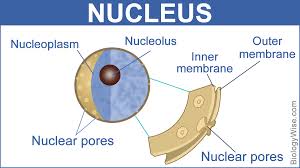
Made up of two layers (an inner and an outer), this acts like a cushiony outer shell of protection.
nucleoplasm
nuclear pores
nuclear membrane
nucleolus
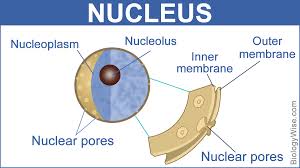
Tiny holes in the nuclear membrane that allow different cellular materials to come in and go out of the cell.
nucleus
nucleoplasm
nucleolus
nuclear pores
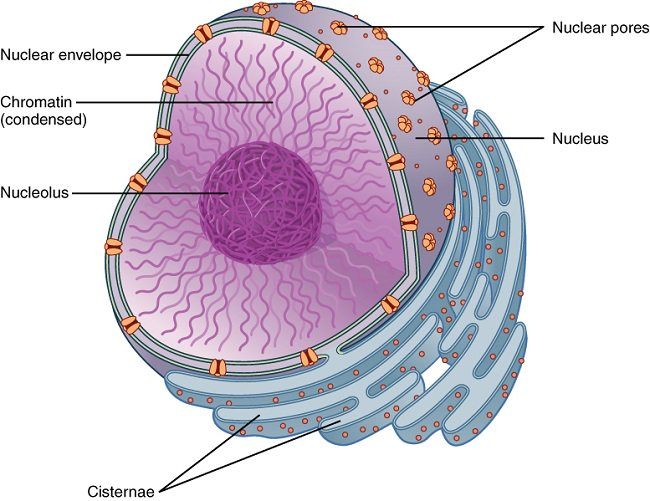
Helps assemble ribosomes, which are combinations made of protein and RNA (ribonucleic acid ).
nuclear membrane
nuclear pores
nucleoplasm
nucleolus
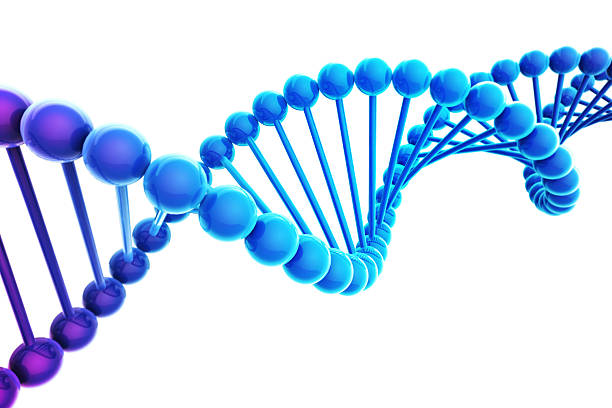
A double stranded helix that holds the code for all the cells in the body.
RNA
DNA
Chromatin
Nucleus

What is a cell?
A place where criminals live.
The smallest structural and functional unit of an organism.
Small circles on top of your body.

Where is the nucleus located?
In the cell
In the brain
In the blood
What is the function of the nucleus?
The nucleus gives the cell energy
The nucleus protects the cell from outside things
The nucleus controls what happens in the cell
The nucleus does not have a job in the cell
A continuous membrane system that forms a reticular network which transverses the cytoplasm is known as.....
Lysosome
Endoplasmic Reticulum
Golgi complex
Ribosome
E.R. (Endoplasmic Reticulum) composed of following kind of structure...
Cisternae, vesicles, tubules
Vesicles, ribosome, proteins
Tubules, vacuoles, centrioles
Which of the following is the basic type of E.R. ?
Rough E.R.
Smooth E.R.
Both of above
None of above
....... Acts as a storage organelle.
Smooth ER
Rough ER
Both of above
None of above
......is important in the creation and storage of lipids and steroids.
Smooth ER
Rough ER
Lysosome
Mitochondria
Rough ER is also known as.... due to the presence of ribosomes.
Granular ER
Agranular ER
Sarcoplasmic Reticulum
Smooth ER
.........biomolecules are NOT synthesized by the Endoplasmic Reticulum.
Proteins
Lipids
Cholesterol
Nucleic acids
E.R. is responsible for the..
Mechanical support
Protein synthesis
Enzyme transport
All of the above
Granular structure found attached with ER are
Lysosome
Ribosome
Mitochondria
F1 particle
Rough ER are found in the cells which are actively synthesizing..
Lipids
Cholesterol
Proteins
Nucleic acids

