
 Worksheets
UNIT 1 Early Atmosphere and Ocean 2025s
Total questions: 20
Worksheet time: 10mins
cyanobacteria
What was the effect of volcanoes on the Earth's early atmosphere?
Volcanoes released gases to form the atmosphere
Volcanoes released water vapour
Volcanoes released gases and water vapour
Volcanoes changed the landscape
What was the Earth's early atmosphere like ?
Similar to Mars and Venus. A large amount of carbon dioxide,little or no oxygen small amounts of other gases, such as ammonia and methane
Similar to Mercury. A large amount of oxygen, sodium and hydrogen.
Similar to Jupiter. A large amount of hydrogen and helium.
Similar to Pluto. A large amount of nitrogen.


Earth's Haden (2nd) atmospheric composition resulted from ____.

Which of these gases come from erupting volcanoes?
water vapour and carbon dioxide
ethane and carbon monoxide
oxygen and sulphur dioxide
hydrogen and helium

The air we breathe is made mostly of:
argon
carbon dioxide
nitrogen
oxygen
The atmosphere of the early Earth had all of the following gases except _____________________
carbon dioxide
carbon monoxide
oxygen
water vapor
What happened to the Earth at about 4 billion years ago?
oceans first formed
solid rock started to form
volcanoes showed up
continents started to drift
Young Earth formed a core, mantle, and crust in a process called
dispersion
settling
differentiation
accretion
What is the process that is responsible for plate movement on the surface of the Earth?
convection
conduction
isostasy
radioactive decay
Earth's magnetosphere is most likely evidence for:
convection in the Earth's mantle
earths spinning, liquid metallic outer core
climate change
plate tectonics
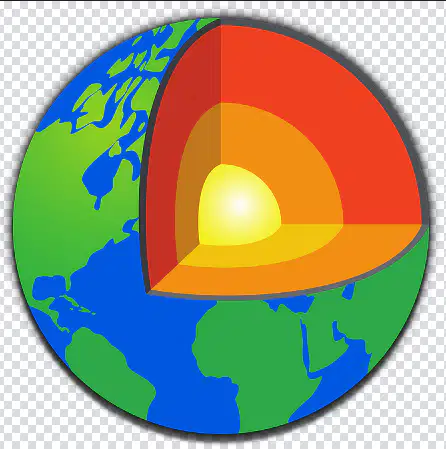
Use this picture identifying the layers from outer to inner
Inner Core
Crust
Mantle
Outer Core
Crust
Inner Core
Mantle
Outer Core
Outer Core
Inner Core
Crust
Mantle
Crust
Mantle
Outer Core
Inner Core

The image to the right shows what process by which heat drives plate tectonics?
equilibrium
convection
isostasy
conduction
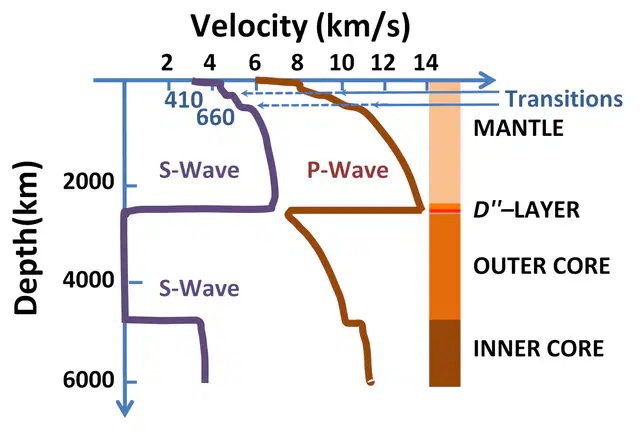
Based on the information provided in the chart, evidence for Earth's liquid, metallic, outer core presented is based on:
Both S & P waves travel through the Core
P waves travel slower in liquids
S waves don't travel though liquids
Both B & C

