
 Worksheets
What Do You Already Know?
Total questions: 20
Worksheet time: 17mins
What is the amount of matter in an object is called...
volume
liters
grams
mass
The color blue is a...
Chemical Property
Physical Property
I am a state of matter: my molecules are very close together and hardly move. I am ____________.
Solid
Liquid
Gas
Ooblek
Pressure always moves from...
High pressure to Low pressure
Low pressure to High pressure
Low pressure to Low pressure
High pressure to High Pressure
A particle that moves outside the nucleus is a(n)...
Proton
Neutron
Electron
Quark
When an object's distance from another object changes we call this...
Speed
Acceleration
Velocity
Motion
Potential energy refers to
the energy of something due to its position
the energy of something due to its location
the energy of something due to its temperature
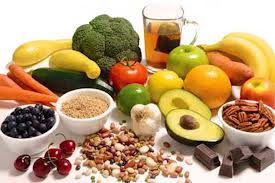
What kind of energy is represented in the picture?
Thermal
Chemical
Sound
Kinetic
In this example, which poles would attract each other?
north and north
south and south
north and south

What is a circuit that only has ONE path for electricity to flow?
series circuit
closed circuit
parallel circuit
light bulb
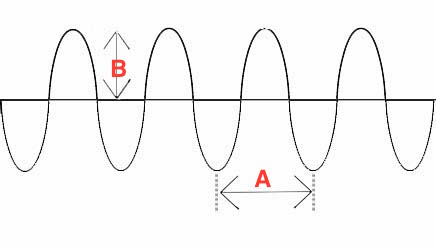
What property of the wave is represented by the letter "A"?
amplitude
crest
trough
wavelength

How much of the electromagnetic spectrum is made up of visible light?
only a small portion
a very l;arge portion
about half

