wayground logo

Free Printable Worksheets

Font size

S
M
L
XL
Worksheets

Organization and Two Cell Types

Total questions: 21

Worksheet time: 19mins

Name
Class
Date
1.
Which of the following is made up of two or more tissues and perform a specific function?
a)
A cell
b)
An organ
c)
An organelle
d)
An individual organism
2.
 What is a tissue?
a)
A group of similar cells working together.
b)
 A group of similar organs working together.
c)
A specific structure inside of an organism.
d)
The largest structure in a eukaryotic organism.
3.
Which of the following is the LARGEST and MOST complex level of organization in the body? 
a)
Cell
b)
Organ 
c)
Tissue
d)
Organ system
4.
The most basic unit of organization in animals is the ____. 
a)
Cell
b)
Tissue
c)
Organ 
d)
Organ system
5.
Your heart, arteries, and veins work together to carry blood to all parts of your body. What is the name for this group of body parts?
a)
Organism 
b)
Organ system
c)
Organ 
d)
Tissue
6.
Use this diagram of living systems to answer this question. Which figure is a tissue?
a)
1
b)
2
c)
1 & 2
d)
1 & 3
7.
The levels of organization from the simplest to the most complex are
a)
Cells, tissues, organs, organ systems, organism
b)
Organisms, organs, tissues, cells, organ systems
c)
Cells, organs, organ systems, tissues, organism
d)
Tissues, cells, organs, organism
8.
The most basic unit of life is
a)
a cell
b)
an organ
c)
an organ system
d)
a tissue
9.
Which three statements are part of cell theory?
a)
All living things are composed of cells, Cells are the smallest units of living things that can perform the processes necessary for life, and Living cells only come from other living cells.
b)
All living things are composed of cells, Atoms are composed of cells,  and Living cells only come from other living cells.
c)
All living things are composed of cells, Cells are the smallest units of living things, and The basic components of life consist of a nucleus, cell membrane and mitochondria.
d)
All living things are composed of cells, Atoms are composed of cells, and The basic components of life consist of a nucleus, cell membrane and mitochondria.
10.
Which of the following statements is not part of the cell theory?
a)
Cells are the basic unit of structure and function in all living things.
b)
All cells are produced from other cells.
c)
Only animal cells are composed of cells.
d)
All living things are composed of cells.
11.
Which statement is a part of the cell theory?
a)
all cells come from preexisting cells
b)
bacteria are prokaryotic cells
c)
eukaryotic cells are complex
d)
humans are multicellular
12.

What structures do all cells have in common?

a)

cytoplasm

b)

Ribosomes

c)

DNA

d)

cell membrane

e)

nucleus

13.
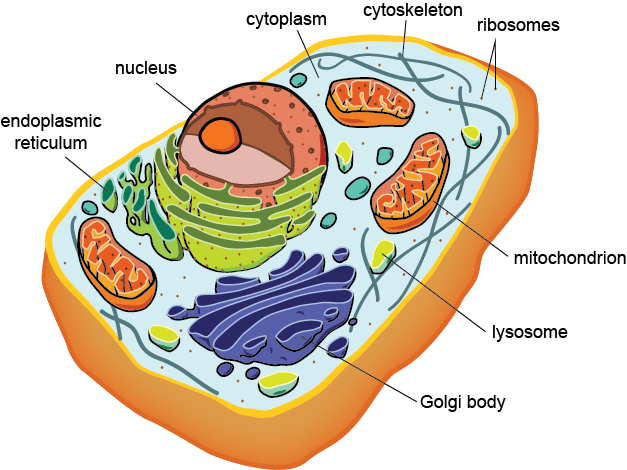
What type of cell has a nucleus? 
a)
eukaryotic
b)
prokaryotic 
14.
Plants and animal cells are examples of ___ cells 
a)
prokaryotic cells 
b)
eukaryotic cells 
15.

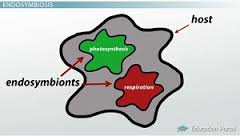
The theory of Endosymbiosis explains

a)

The origin of eukaryotes

b)

How bacteria live

c)

How species develop

d)

Why cells rely on one another

16.

____________ & _________________ are organelles that definitely arose from endosymbiosis.

a)

Nucleus and cell membrane

b)

Chloroplast and mitochondria

c)

Mitochondria and nucleus

d)

Cell wall and chloroplast

17.
Theory that says eukaryotic cells formed from symbiosis among several different prokaryotes.
a)
Natural Selection
b)
Biogenesis Theory
c)
Evolutionary Theory
d)
Endosymbiotic Theory
18.
Are prokaryotes multicellular or unicellular? 
a)
Multicellular
b)
Unicellular
19.

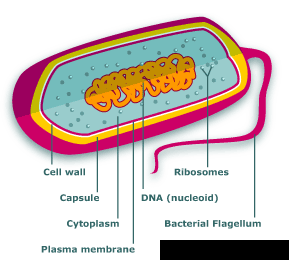
Why type of cell does not contain membrane bound organelles?

a)

Animal Cells

b)

Prokaryotic Cells

c)

Eukaryotic Cells

d)

Plant Cells

20.
Which type of cell? It has DNA, Ribosomes, Cell Membrane, but no nuclues. 
a)
Prokaryote
b)
Eukaryote
21.

Which of the following is evidence to support the endosymbiotic theory?

a)

Prokaryotes have the same number and types of enzymes as eukaryotes.

b)

Mitochondria and chloroplasts have their own DNA, which is similar to prokaryotic DNA.

c)

All eukaryotic cells have a double-layered membran composed of phosplipids and proteins.

d)

Fossil evidence shows that the first forms of life were prokaryotic cells.