wayground logo

Free Printable Worksheets

NEW

Font size

S
M
L
XL
Worksheets

Periodic Table

Total questions: 25

Worksheet time: 17mins
Name
Class
Date
1.
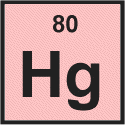
What is the atomic number of this element?
a)
4
b)
80
c)
79
d)
8
2.
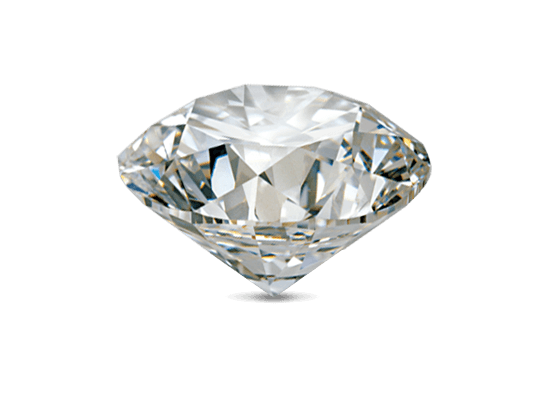
What element primarily makes a diamond?
a)
Hydrogen
b)
Silver
c)
Carbon
d)
Calcium
3.
What is the symbol for Potassium?
a)
P
b)
K
c)
Pb
d)
Pd
4.
What is the symbol for Carbon?
a)
C
b)
Ca
c)
Cl
d)
H
5.
What is the name of this element?
a)
Helium
b)
Rubidium
c)
Hydrogen
d)
Mercury
6.
Which one of these is not a noble gas?
a)
Helium
b)
Radon
c)
Iodine
d)
Krypton
7.
What is the atomic number of Rubidium?
a)
37
b)
44
c)
45
d)
86
8.
What is the atomic number of Oxygen?
a)
6
b)
7
c)
8
d)
9
9.
Which one of these is the symbol for lead?
a)
Rb
b)
Pb
c)
Li
d)
Au
10.
What family is Sodium a part of?
a)
Transition Metals
b)
Halogens
c)
Alkali Metals
d)
Alkaline Earth Metals
11.
What two elements come together to make this substance in the picture?
a)
Oxygen and Carbon
b)
Sodium and Calcium
c)
Sodium and Chlorine
d)
Helium and Nitrogen
12.
What family is Cadmium a part of?
a)
Noble Gases
b)
Metalloids
c)
Transition Metals
d)
Actinoids
13.
Silicon is a 
a)
Metal
b)
Nonmetal
c)
Metalloid
d)
Halogen
14.
__________ would have some characteristics of metals and some characteristics of nonmetals.
a)
Gold
b)
Sodium
c)
Arsenic
d)
Bismuth
15.

The order of elements in the periodic table is based on

a)

the number of protons in the nucleus.

b)

the electric charge of the nucleus.

c)

the number of neutrons in the nucleus.

d)

atomic mass.

16.

Atoms of elements that are in the same group have the same number of

a)

protons.

b)

neutrons.

c)

valence electrons.

d)

protons and neutrons.

17.

Which of the following elements is an alkali metal?

a)

calcium

b)

magnesium

c)

mercury

d)

sodium

18.

How was Mendeleev's periodic table arranged?

a)

by increasing atomic mass

b)

by decreasing atomic mass

c)

by increasing atomic number

d)

by decreasing atomic number

19.

Mendeleev left gaps in his periodic table because

a)

the table was too small.

b)

protons belonged there.

c)

the table was too full.

d)

no known elements fit there.

20.

Each column of the periodic table is

a)

an element.

b)

a group.

c)

an isotope.

d)

a period.

21.

The three main groups of elements are metals, nonmetals, and

a)

inert gases.

b)

alkali metals.

c)

radioactive isotopes.

d)

semiconductors/metalloids.

22.

Most elements are

a)

metals.

b)

nonmetals.

c)

metalloids.

d)

semiconductors.

23.

Elements in an elemental family have similar

a)

atomic symbols.

b)

atomic sizes.

c)

atomic weights.

d)

chemical properties.

24.

The order of elements in the modern periodic table is based on an element's

a)

atomic number.

b)

name.

c)

chemical symbol.

d)

atomic mass.

25.

Which of the following is a property of group 18 elements?

a)

malleable

b)

brittleness

c)

high electrical conductivity

d)

unlikely to react with other elements