Wayground logo

Free Printable Worksheets

Font size

S
M
L
XL
Worksheets

Atoms and Periodic Table Week 3 Review

Total questions: 30

Worksheet time: 26mins

Name
Class
Date
1.
Which two subatomic particles are found in the NUCLEUS of at atom?
a)
protons & nuetrons
b)
protons & electrons
c)
neutrons & electrons
d)
electrons & protons
2.
The subatomic particle with a neutral charge is:
a)
protons
b)
electrons
c)
neutrons
d)
cloud
3.
Which type of subatomic particles have the LEAST amount of mass?
a)
protons
b)
electrons
c)
neutrons
d)
nucleus
4.
What gives an atom mass?
a)
Protons & electrons in the nucleus
b)
electrons in the cloud
c)
protons & neutrons in the nucleus
d)
Protons & electrons in the cloud
5.
If an atom has 24 protons and 24 electrons, what is the atomic number of this element?
a)
24
b)
48
c)
0
d)
42
6.
How many protons does this element have?
a)
40
b)
21
c)
20
d)
41
7.
The number of protons is equal to 
a)
the atomic number
b)
the number of neutrons
c)
the energy levels
d)
the periodic table groups
8.
Elements in the same ________ are more chemically similar.
a)
group
b)
period
c)
club
d)
table
9.
Rows on the periodic table are called _____ while columns are called _____.
a)
groups, families
b)
groups, periods
c)
periods, groups
d)
families, groups
10.
What does the H stand for?
a)
Hydrogen
b)
atomic number
c)
atomic mass
d)
atomic explosion
11.
What does the 1 stand for?
a)
Hydrogen
b)
atomic number
c)
atomic mass
d)
atomic explosion
12.

Which of the following is the correct symbol for sodium?

a)

S

b)

Na

c)

So

d)

N

13.

The periodic table is organized into columns called _______ and rows called ______.

a)

groups and periods

b)

periods and groups

c)

categories and periods

d)

categories and groups

14.

Which element would you expect to be located in group 2 of the periodic table?

a)

Lithium

b)

Carbon

c)

Sulfur

d)

Beryllium

15.

Which particle does not have a charge?

a)

neutron

b)

proton

c)

electron

d)

megatron

16.

Which particle has a positive charge?

a)

neutron

b)

electron

c)

proton

d)

megatron

17.

An atoms nucleus has a _________ charge.

a)

positive

b)

negative

c)

neutral

d)

non

18.

Which of the following best describes the three general groups of elements?

a)

solids, liquids, gas

b)

metals, nonmetals, gases

c)

metals, nonmetals, metalloids

d)

metals, metalloids, synthetics

19.
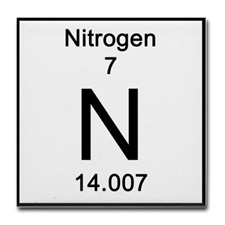
What is the number of protons that the element in this image contain?
a)
14
b)
7
c)
15
d)
18
20.
The central region of an atom where its neutrons and protons are is its _______.
a)
Nucleus 
b)
Electron cloud
c)
Core 
d)
Center 
21.
What is the number of protons that the element in this image contain?
a)
14
b)
7
c)
15
d)
18
22.
If an atom has 10 protons, 10 neutrons, and 10 electrons, what is the mass of the atom?
a)
10
b)
20
c)
30
23.

What two particles determine the mass number?

a)

Protons and electrons

b)

Electrons and neutrons

c)

Protons and neutrons

24.

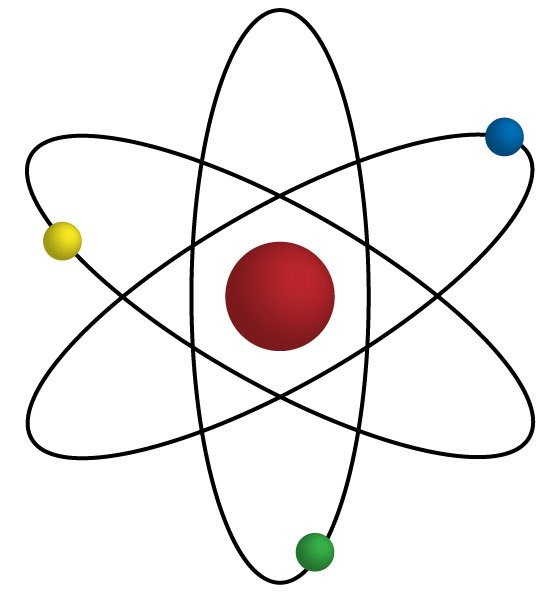
What is the atomic number of this atom shown in the Bohr model?

a)

11

b)

12

c)

13

d)

can't be determined

25.

Most of the mass of an atom is found in the ______.

a)

nucleus

b)

proton

c)

electron cloud

d)

isotope

26.
What are the 3 particles that make-up the atom?
a)
protons, neutrons, and isotopes
b)
neutrons, isotopes, and electrons
c)
positives, negatives, and electrons
d)
protons, neutrons, and electrons
27.

Which number here is the atomic number?

a)

5

b)

10.811

28.
How many valence electrons are in an atom of Se?
a)
2
b)
8
c)
6
d)
5
29.
How many valence electrons are in an atom of Ba?
a)
2
b)
8
c)
4
d)
1
30.
How many valence electrons are found in atoms of group 15?
a)
4
b)
5
c)
2
d)
3