
 Worksheets
Ecology Review Quiz
Total questions: 25
Worksheet time: 25mins
Name
Class
Date
1.
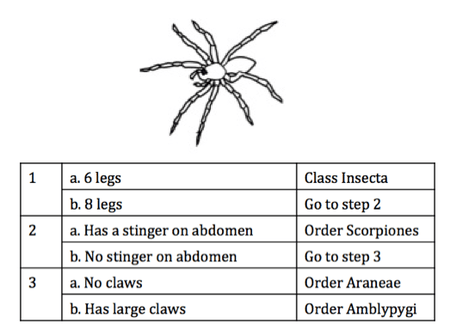
An illustration and a dichotomous key are given. What is the correct classification for this organism?
a)
Class Insecta
b)
Order Amblygygi
c)
Order Araneae
d)
Order Scorpiones
2.

A dichotomous key for trees is provided. Hikers found a tree that has large brown cones and single sharp needles. What species of tree have the hikers found?
a)
Juniper
b)
Pine
c)
Spruce
d)
Fir
3.
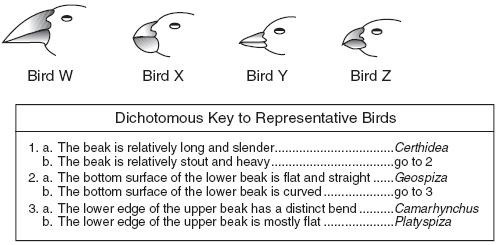
What is the name of bird W?
a)
Certhidea
b)
Geospiza
c)
Camarhynchus
d)
Platyspiza
4.
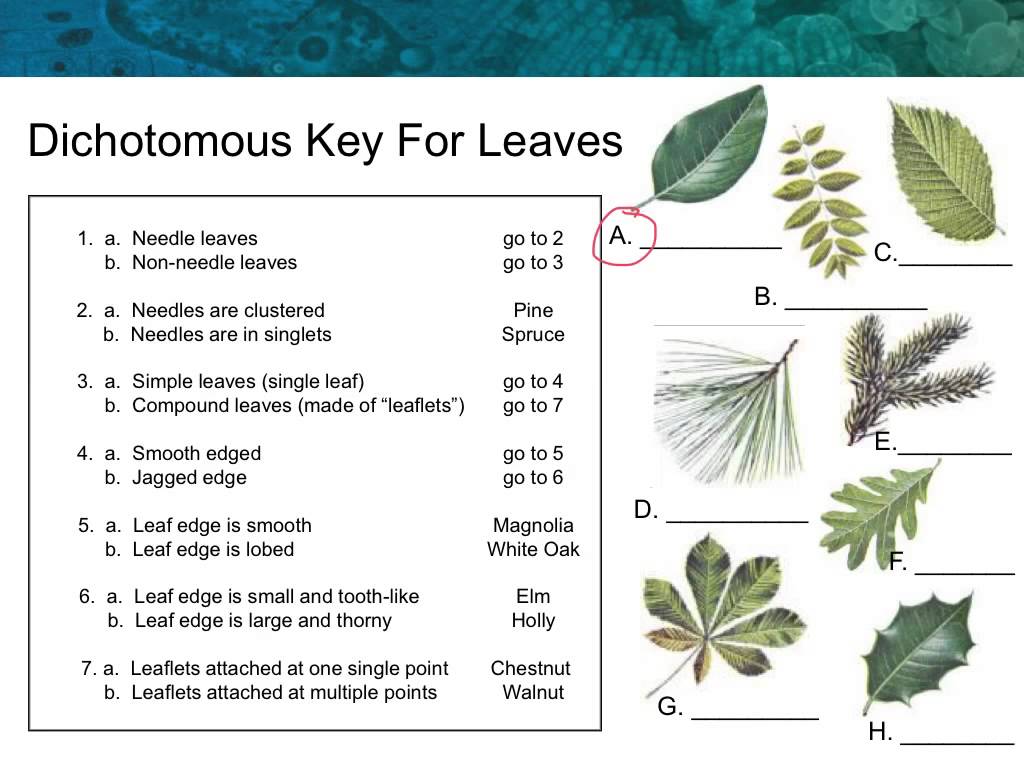
What is a dichotomous key used for in science?
a)
To organize biomes
b)
Classify organisms
c)
Identify bacteria only
d)
None of these
5.
Temperature, light, air, water, and soil are all _____ parts of the environment
a)
alive
b)
biotic
c)
abiotic
d)
living
6.
Is a fern an abiotic or biotic factor?
a)
abiotic
b)
biotic
7.
Which of the fallowing has only abiotic factors?
a)
Sunlight, algae, and temperature
b)
Guppy, crab, oxygen
c)
Sunlight, soil, and weather
d)
Algae, temperature, and dog
8.
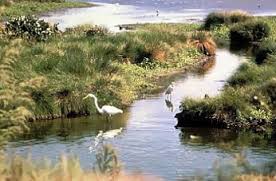
What are the abiotic factors in this image?
a)
water, sunlight, dirt, air
b)
birds and plants
c)
water, plants, and birds
9.
Which of the following lists has ONLY biotic factors?
a)
snail, algae, guppy, sunlight
b)
temperature, Daphnia (water flea), snail, guppy (fish)
c)
snail, guppy (fish), Daphnia (water flea), algae
d)
temperature, pH, conductivity, nitrite concentration
10.
Drought, erosion, flood, and prolonged heat spells are examples of —
a)
communities
b)
biotic factors within an ecosystem which affect abiotic components
c)
populations
d)
abiotic changes within an ecosystem which can affect biotic factors
11.
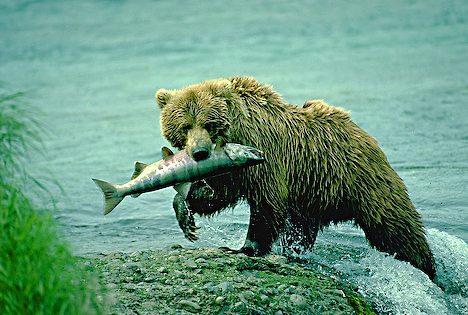
A grizzly bear survives because he is well-adapted to his environment. When he reproduces he passes on those traits to his offspring. this process is called
a)
Natural Selection
b)
Selective Breeding
c)
Random mutations
d)
Variations in a species
12.

The peppered moth's color camouflaged it on the light colored tree bark. It's color was an example of a/n
a)
Variation
b)
Dominant trait
c)
Recessive trait
d)
Adaptation
13.

Which beak is probably best suited to crack open nuts?
a)
1
b)
2
c)
3
d)
4
14.

All of the following statements are reasons for selective breeding except:
a)
To produce offspring with desirable characteristics
b)
Farmers increase their profit by improving crops
c)
To improve the quality of food products
d)
To increase migration patterns
15.
The overall function of selective breeding is to
a)
Create organisms with desirable traits
b)
Create bigger organisms
c)
Create smaller organisms
d)
Create animals with more genetic mutations
16.

Use the following table to answer the next question. A family visited a dog breeder and requested a puppy that had short fur and was friendly and lovable. Which dogs should the breeder select to be the parents of the requested puppy?
a)
1 and 2
b)
2 and 3
c)
1 and 4
d)
2 and 4
17.
Which describes a decomposer?
a)
an organism that eats only plants
b)
an organism that makes its own food
c)
an organism that breaks down dead matter
d)
an organism that recieves energy from the sun
18.

Which of the following is a herbivore?
a)
cricket
b)
frog
c)
hawk
d)
shrew
19.

Which organism do the owl and the weasel compete for in the food web?
a)
Hawk
b)
Spider
c)
Grasshopper
d)
Shrew
20.

What is this called?
a)
Food Web
b)
Food Chain
c)
Abiotic Factors
d)
Biotic Factors
21.

In the energy pyramid here, which organisms have the most energy available?
a)
Producers
b)
Carnivores
c)
Herbivores
d)
Top Predator
22.
A __________ includes all living and non-living things in an environment.
a)
population
b)
niche
c)
abitotic
d)
ecosystem
23.

A connection of food chains with many food energy paths in an ecosystem is a ____________
a)
ecosystem
b)
food web
c)
environment
d)
population
24.

Where do all life forms get their energy?
a)
Earth's Core
b)
Water
c)
Plants
d)
The Sun
25.

An energy pyramid represents what?
a)
How much sunlight is available for the ecosystem to use.
b)
How much energy a particular organism needs.
c)
How much energy is needed to build a pyramid.
d)
The amount of energy available to the next 'feeder' in a food web.
100 %

