wayground logo

Free Printable Worksheets

Font size

S
M
L
XL
Worksheets

Evolution B

Total questions: 30

Worksheet time: 30mins

Name
Class
Date
1.
Which of the following is a term for a group of similar organisms that can reproduce fertile offspring?
a)
individual
b)
population
c)
species
d)
fossil
2.

Evolution is best defined as:

a)

the process which organisms die.

b)

the process which organisms change over time.

c)

the process which organisms that are extinct become revived.

d)

the process which non-living things fossilize.

3.

The solidified remain or imprint of a once living thing are called:

a)

Fossils

b)

Homologous Structures

c)

Vestigial Structures

d)

DNA

4.

What type of evidence are shown in the picture above?

a)

Fossils

b)

Embryology

c)

Homologous Structures

d)

Vestigial Structures

5.
What process is being shown in this image?
a)
Variation
b)
Natural Selection
c)
Selective Breeding
d)
Homeostasis
6.
Inherited trait that helps an organism survive is a(n) __________.
a)
Fossil
b)
Adaptation
c)
Ancestor
d)
Natural selection
7.
Which layer is oldest?
a)
A
b)
W
c)
G
d)
Z
8.
The disappearance of a species.
a)
Evolution
b)
Extinction
c)
Migration
d)
Mutation
9.
What came into existence after the dragonfly?
a)
Spider
b)
Worm
c)
Ant
d)
Butterfly
10.
Which two species are most related?
a)
B&C
b)
A&B
c)
A&C
d)
C&B
11.
If two organisms have similar traits of DNA they are probably
a)
share a common ancestor
b)
share a common environment
c)
share a common population
d)
speciation
12.
The diagram shows fossils in different rock layers. Which of these statements about the age of these fossils is most likely correct?
a)
Fossil A and C are the same age
b)
Fossil B is older than fossil C
c)
Fossils A is older than fossil B
d)
Fossil D is older than fossil C
13.
According to evolution, people came from monkeys a long time ago.
a)
True
b)
False
14.
Evolution is only a theory, it has not been proven.
a)
True
b)
False
15.

The diagram below represents an important biological concept.

a)

overproduction

b)

natural selection

c)

homeostasis

d)

ecological succession

16.
What do we call a change in an organism's DNA?
a)
Variation
b)
Mutation
c)
Selection
d)
Homologous
17.
Which rock layer is the newest?
a)
A
b)
B
c)
C
d)
D
18.
Survival of the Fittest and Evolution were proposed by what scientist?
a)
Charles Darwin
b)
Albert Einstein
c)
Steven Hawking
d)
Isaac Newton
19.

Which of the following is not a genetic change in horses over time

a)

having four legs

b)

Increased in size

c)

has fewer toes

d)

More muscular

20.
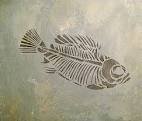
If scientists found this fossil, what could they infer?
a)
what fish are like today
b)
that this fish lacked oxygen
c)
what kind of animal ate this fish
d)
that water once covered the area
21.

The animals in the picture do not live in the same population. They are found in different parts of the world, but are all still part of the camel family. What can be said about these animals?

a)

They belong to the same species

b)

It is difficult for them to find food to eat

c)

They have a very similar skeletal structure

d)

They descended from a common ancestor

22.

What do these elephants show?

a)

The image shows convergent evolution.

b)

The image shows divergent evolution.

c)

The image shows adaptive radiation.

d)

The image shows analogous structures.
23.
a)
The image shows convergent evolution.
b)
The image shows divergent evolution.
c)
The image shows adaptive radiation.
d)
The image shows homologous structures.
24.
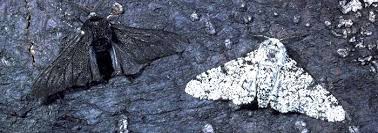
Predict which moth would increase in population
a)
light 
b)
dark
25.
asexual reproduction produces offspring with
a)
half of a single parent's genes
b)
the same genes as the parent
c)
a mix of genes from two parents
d)
lots of genetic variation
26.
Relative dating
a)
gives the exact age of rocks and fossils
b)
is when you date your cousin
c)
gives the approximate age of rocks
d)
tells us who to trust
27.

What type of fossil is pictured here?

a)

Mold fossil

b)

Trace fossil

c)

Cast fossil

d)

Body fossil

28.

What type of fossil is pictured here?

a)

Forest fossil

b)

Trace fossil

c)

Cast fossil

d)

Body fossil

29.

What is this fossil trapped in?

a)

Honey

b)

Gold

c)

Candy

d)

Amber

30.

Relative dating puts fossils in order. What do we call dating that tells you the age in years?

a)

Year dating

b)

Absolute dating

c)

Relative dating