wayground logo

Free Printable Worksheets

Font size

S
M
L
XL
Worksheets

Physics final Raks

Total questions: 160

Worksheet time: 4hrs 49mins

Name
Class
Date
1.

The metre rule and measuring tape are accurate to

a)

1cm

b)

0.1cm

c)

10mm

d)

0.1mm

2.
Temperature is a measure of the...
a)
total energy in a substance
b)
total kinetic energy in a substance
c)
average potential energy in a substance
d)
average kinetic energy of molecules in a substance
3.
A slower particle has a lower energy than an identical, faster particle.
a)
True
b)
False
4.
The transfer of thermal energy between objects of different temperatures is called...
a)
temperature
b)
heat
c)
internal energy
d)
none of these
5.
It is possible to reach absolute zero
a)
true
b)
false
6.

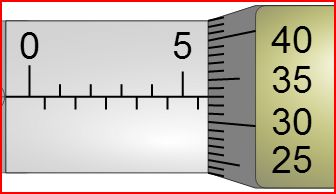
What is the zero error and the correct reading on this micrometer screw gauge?

a)

Zero Error = -0.04mm Actual reading = 5.35

b)

Zero Error = -0.04mm Actual reading = 5.85

c)

Zero Error = +0.04mm Actual reading = 5.77

d)

Zero Error = -0.04mm Actual reading = 5.27

7.

A pendulum takes 3.0s to go from P to R and back to the mid-point Q. What is the period of this pendulum?

a)

1.0s

b)

2.0s

c)

4.0s

d)

3.0s

8.

Which of the following show(s) the correct conversion?

I 4.5km = 4500m

II 7200s = 72h

III 475g = 4.8kg

IV 1m3 = 1000000cm3

a)

I only

b)

I and II only

c)

I and IV only

d)

III and IV only

9.

In order to increase the speed of a car, the car must travel

a)

more distance in more time

b)

more distance in less time

c)

less distance in more time

d)

less distance in less time

10.

If the volume of a gas is doubled without changing its mass, the density of the gas will be

a)

doubled

b)

halved

c)

reduced by a quarter

d)

unchanged

11.

m/s2 is a unit of

a)

speed

b)

velocity

c)

acceleration

d)

time

12.
What is the correct SI unit for mass?
a)
Kilograms
b)
newtons
c)
pounds
d)
grams
13.
The SI unit for temperature is __?__.
a)
degree fahrenheit  (° F)
b)
degree celsius  (° C)
c)
kelvin  (K)
d)
degree centigrade  (°C)
14.
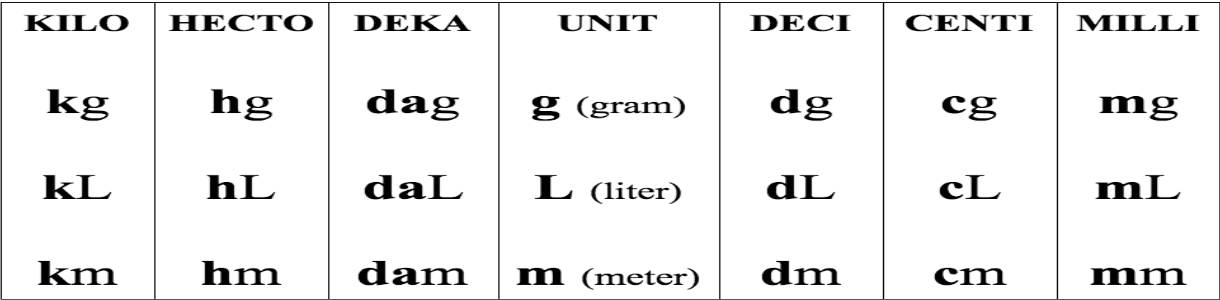
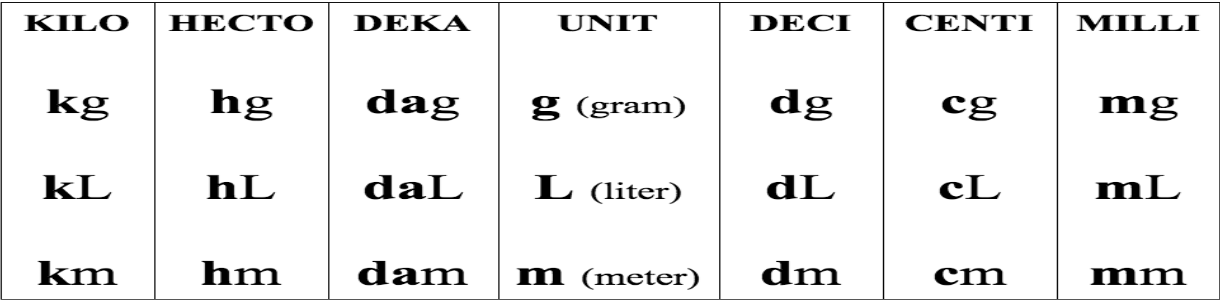
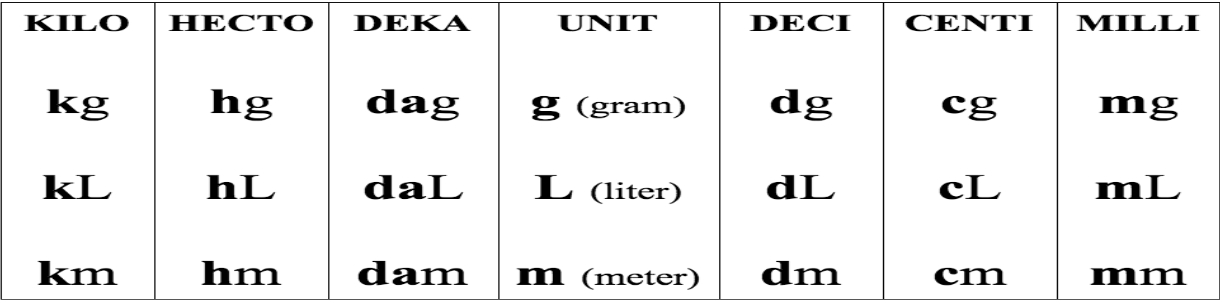
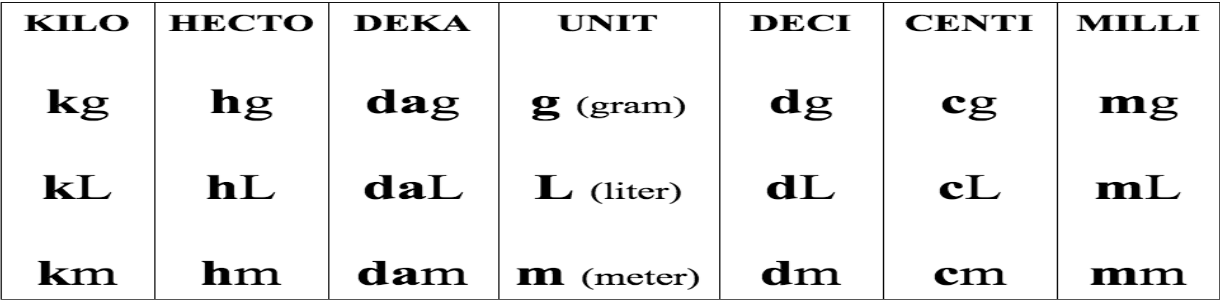
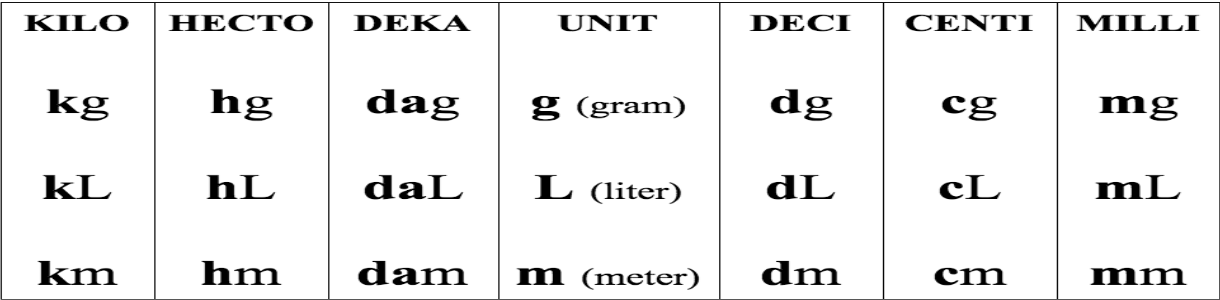
Convert into kilometers.
452.159 meters.
Round to the nearest thousandth.
a)
0.452159
b)
4.52159
c)
45.2159
d)
452159
15.
Convert into grams.
763.1247 milligrams.
a)
7631.247
b)
76312.47
c)
0.7631247
d)
7631247
16.
You know 1000 mg = 1 g.  Convert 2.5 grams into milligrams.
a)
25 mg
b)
25,000 mg
c)
250 mg
d)
2,500 mg
17.
Convert into centimeters.
25.12 meters.
a)
2512
b)
2.512
c)
0.2512
d)
0.2512
18.
You know that 1000 mL = 1 L.  Convert 600 mL into L.
a)
0.6 L
b)
0.006 L
c)
600,000 L
d)
0.06 L
19.
There are ___ millimeters(mm) in 2.7 centimeters (cm)
a)
270 mm
b)
.27 mm
c)
27 mm
d)
.027 mm
20.
Convert 0.085m to mm
a)
0.850
b)
8.50
c)
850
d)
85
21.
There are ___ meters in 25 kilometers (km)
a)
250 m
b)
2500 m
c)
25000 m
d)
.025 m
22.

64,600,000 cm = ____ km

a)

646

b)

64.6

c)

6,460

d)

6.46

e)

64,600

23.

425,000 mL = ___ L

a)

425

b)

42.5

c)

4,250

d)

4.25

e)

42,500

24.

0.000238 m = ___ cm

a)

0.0238

b)

0.238

c)

2.38

d)

0.00238

e)

0.000238

25.

6.81 cm = ___ m

a)

0.0681

b)

0.681

c)

0.00681

d)

0.000681

e)

6.81

26.

0.0079 cm = mm

a)

0.079

b)

0.79

c)

7.9

d)

0.0079

e)

0.00079

27.
Convert 0.58 m2 to cm2
a)
580
b)
5800
c)
58000
d)
580000
28.
a)

5.83 mm

b)

5.83 cm

c)

6.83 mm

d)

6.83 cm

29.

The part marked in red is ...

a)

Anvil

b)

Sleeve

c)

Thimble

d)

Ratchet

30.

The part marked in red is ...

a)

Anvil

b)

Sleeve

c)

Thimble

d)

Ratchet

31.

The part marked in red is ...

a)

Anvil

b)

Sleeve

c)

Thimble

d)

Ratchet

32.

The part marked in red is ...

a)

Frame

b)

Spindle

c)

Lock nut

d)

Ratchet

33.

What is the reading of the Micrometer Screw Gauge if there is a positive zero error of 0.02 mm?

a)

5.87 mm

b)

6.85 mm

c)

6.87 mm

d)

6.89 mm

34.

What is the reading of the Micrometer Screw Gauge if there is a negative zero error of 0.02 mm?

a)

5.87 mm

b)

6.85 mm

c)

6.87 mm

d)

6.89 mm

35.

The micrometer screw gauge is completely closed. What is the zero error of the micrometer screw gauge?

a)

+0.02 mm

b)

+0.2 mm

c)

-0.02 mm

d)

-0.2 mm

36.

The micrometer screw gauge is completely closed. What is the zero error shown?

a)

+ 0.04 mm

b)

- 0.04 mm

c)

+ 0.46 mm

d)

- 0.46 mm

37.

Sam is hover boarding down they hall at a constant velocity. Assuming there is friction, which of the following must be true?

a)

The force applied by the board must be greater than the frictional force

b)

The frictional force must equal the force applied by the board

c)

The force applied must equal zero

d)

There is not enough information

38.
"If we apply a ___________ to an object, its __________________ will change and it will  ______________."
a)
force, accelerate, gravity
b)
accelerate, inertia, gravity
c)
force, velocity, accelerate
d)
velocity, gravity, inertia
39.

A force of 8 Newton’s is applied to a crate so that it moves at a constant velocity of 1.5 m/s. What is the net force?

a)

1.5 N

b)

8 N

c)

12N

d)

0 N

40.

Here are 3 FBD diagrams for an elevator. Consider them to be A, B, C. Which one shows an elevator accelerating upward?

a)

A

b)

B

c)

C

d)

none of these

41.

The net force required to accelerate a 150.0 kg car at 10.00 m/s2 is

a)

150 N

b)

1500 N

c)

1.500 x 10² N

d)

1.5 x 10³ N

42.

What is the force required to accelerate a 16 000 kg plane from rest to a speed of 200 m/s over a time interval of 12.0 s?

a)

9.60 x 10⁵ N

b)

2.67 x 10⁵ N

c)

3.20 x 10⁶ N

d)

1.07 x 10⁶ N

43.

Which of the following units are equivalent to a Joule?

a)

kg x m/s2

b)

N x m

c)

kg x m2/s2

d)

both b and c

e)

none of these answers

44.

Determine the gravitational potential energy of a 0.350 kg bird sitting on a branch positioned 0.75 m above the ground.

a)

2.58 x 10⁵ J

b)

26.8 J

c)

4.67 J

d)

2.58 J

45.

What will be the mass of a ball travelling at a speed of 20.0 m/s if it has 27.0 J of kinetic energy?

a)

270 g

b)

135 g

c)

13.5 g

d)

27.0 g

46.

At point ____ and ____, the pendulum has only gravitational potential energy. At point ___, the pendulum has only kinetic energy.

a)

B, E, D

b)

B, D, C

c)

A, B, C

d)

A, E ,C

47.
An object remains in constant motion, weather that motion is rest, or actual movement.
a)
Inertia 
b)
 Gravity
c)
Force
48.
In "A Weighty Matter" we used a spring scale.  A spring scale is used as a device to measure?
a)
Newtons
b)
Mass
49.

Which force diagram shows the forces on a skydiver who is slowing down immediately after her parachute opens?

a)

A

b)

B

c)

C

d)

D

50.

Which of the following must be true if an object is accelerating?

a)

It is going really fast.

b)

It is moving away from the frame of reference point.

c)

Balanced forces are acting upon it.

d)

Unbalanced forces are acting upon it.

51.

Which statement describes a situation where the acceleration is zero?

a)

Only objects at rest experience an acceleration of zero.

b)

Only objects moving at a constant speed in a positive direction experience an acceleration of zero.

c)

Both objects at rest and objects moving at constant velocity experience an acceleration of zero.

d)

Only objects moving at a constant speed in a negative direction experience an acceleration of zero.

52.

The inertia of a body is determined by its

a)

mass

b)

volume

c)

size

d)

weight

53.
What is the net force?
a)
17 N Right
b)
3 N Right
c)
3 N Left
d)
17 N Left
54.
If a man and woman push each other in opposite directions at both 9 N, what is the net force?
a)
81 N
b)
18 N
c)
1 N
d)
0 N
55.

The greater the mass of an object,

a)

the easier the object starts moving.

b)

the greater its inertia.

c)

the more balanced it is.

d)

the more space it takes up.

56.

Inertia of an object is

a)

the friction force exerts to the object

b)

the friction force exerts to the object

c)

the force against the motion of the object

d)

the property of the object which resists a change in

its motion.

57.

Which object has the greatest inertia?

a)
b)
c)
d)
58.
A measure of how much matter an object has is--
a)
weight
b)
gravity
c)
mass
d)
volume
59.
The weight of an object _________ as it moves away from the center of Earth.
a)
increases
b)
stays the same
c)
triples
d)
decreases
60.
The mass of an object ___________ as it moves away from the center of Earth
a)
stays the same
b)
decreases
c)
increases
d)
doubles
61.
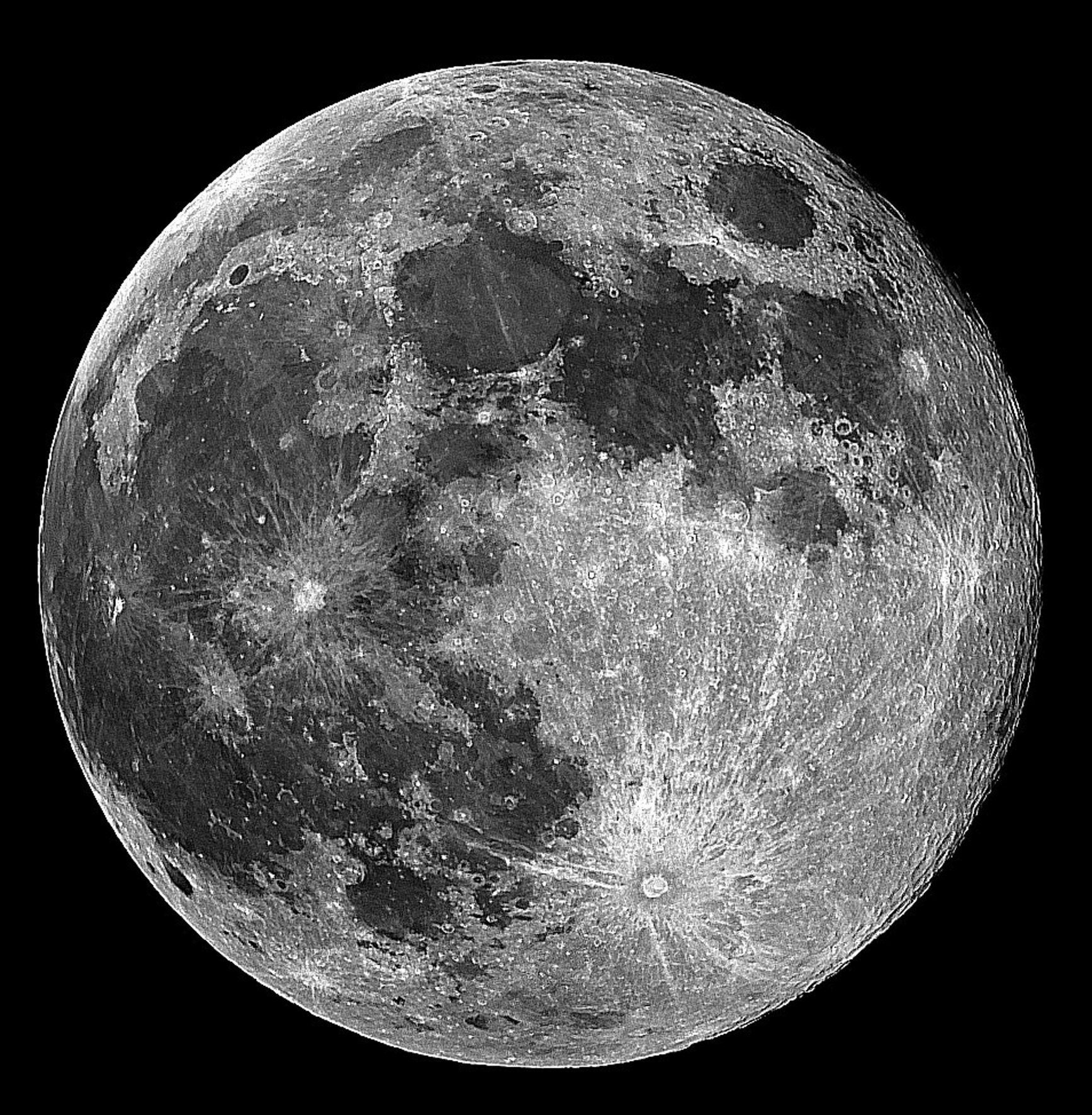
Why would you weigh less on the moon compared to Earth?
a)
less air
b)
less sunlight
c)
more gravitational pull
d)
less gravitational pull
62.
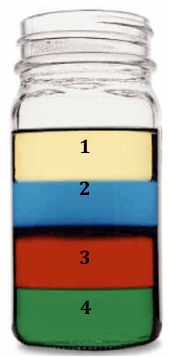
Put the liquids in order from most dense to least dense?
a)
4, 3, 2, 1
b)
1, 2, 3, 4
c)
3, 4, 2, 1, 
d)
4, 3, 1, 2
63.
An object with which of the following densities will float on water?
a)
0.7 g/cm3
b)
1.2 g/cm3
c)
3.5 g/cm3
d)
11.4 g/cm3
64.
True or False:  The density of a specific type of material never changes.  
a)
True
b)
False
65.
Which box has a higher density?  
a)
Box A
b)
Box B
c)
cannot be determined
d)
they are the same
66.
What is the volume of the fish?
a)
18.0 cm3
b)
6.0 cm
c)
38.0 cm3
67.

When water freezes and becomes a solid its density

a)

increases

b)

decreases

c)

stays the same

68.

True or false: A copper penny and a copper pot have the same density

a)

True

b)

False

69.

During a phase change which of the following will change?

a)

mass

b)

volume

c)

both mass and volume

70.

Liquid water

a)

is more dense than ice

b)

is less dense than ice

c)

has the same density as ice

71.

Density describes

a)

how much something weighs

b)

how big something is

c)

how tightly compacted molecules are in a substance

72.
If an object is huge, then it's density must be...
a)
A majority of mass and little-to-no volume
b)
Extremely heavy making it sink in water 
c)
Low, so it will float 
d)
Size does not determine the density of an object
73.
Find the volume of this piece of brass.  
a)
50 g
b)
10 cm
c)
6 cm3
d)
12 cm3
74.
If you poured 3 liquids that do not mix how could you tell which one is the most dense?
a)
The liquid on top
b)
The liquid in the middle
c)
The liquid at the bottom
75.
Water displacement is used to find what?
a)
Density
b)
Mass
c)
Volume
d)
Weight
76.
If two objects have the same volume but one has a greater mass, the one with greater mass 
a)
Has a lower density
b)
 Has a higher density
c)
Will float
d)
Will sink 
77.
If you cut a wooden block in half, each half would have 
a)
Half the density of the original piece
b)
 Twice the density of the original piece 
c)
The same density as the original piece
d)
No density at all 
78.
Density is a characteristic property of a substance. This means that the density of water 
a)
Changes depending on the volume 
b)
Stays the same regardless of the volume
c)
Is greater for a greater mass of water
d)
Is less for a smaller mass of water 
79.
 The density of hot water
a)
Is greater than the density of cold water 
b)
Is less than the density of cold water
c)
The same as the density of cold water
d)
Depends on the volume of water 
80.
A candle floats in water but sinks in alcohol. This is because 
a)
The candle has less mass in alcohol
b)
The water has less mass than the alcohol
c)
The water is denser than the alcohol
d)
Water and alcohol are both liquids 
81.
Although I am a solid, I am so light that I can float in any liquid listed on the chart. What am I? 
a)
Ice
b)
Cork
c)
Marble
d)
Rubber
82.

The car and minon's have a total mass of 875 kg. Each wheel has an area of 0.27m2 . Calculate the pressure that car has on the road.

a)

810.185 Nm-2

b)

8101.85 Nm-2

c)

32407.4N m-2

d)

16203.7 Nm-2

83.
_____________ air is more dense and tends to sink
a)
cold
b)
warm
c)
moist
d)
dry
84.

The unit for pressure

a)

Pascal

b)

Newton

c)

Gram

d)

Miles

85.

When force increases...

a)

pressure increases

b)

pressure decreases

c)

pressure stays the same

d)

pressure increases then decreases

86.

When area increases...

a)

pressure increases

b)

pressure decreases

c)

pressure stays the same

d)

pressure increases then decreases

87.

As elevation increases,

a)

pressure decreases.

b)

pressure increases.

c)

pressure stays the same.

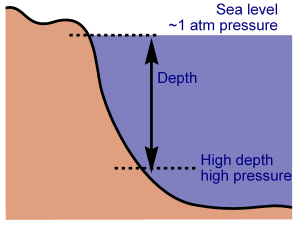
88.

As depth increases,

a)

pressure decreases.

b)

pressure increases.

c)

pressure stays the same.

89.
What will cause an object to move?
a)
Applied forces
b)
Balanced forces
c)
Unbalanced forces
90.
This is an example of what kind of force?
a)
Balanced Force
b)
Pushing Force
c)
Gravity Force
d)
Unbalanced Force
91.
True or false:
Pressure depends on depth
a)
true
b)
false
92.
Where is pressure the greatest on the dam?
a)
D
b)
C
c)
B
d)
A
93.

Determine the weight of an object that measures 2.4 m2 and exerts 398 Pa of pressure.

a)

398 N

b)

955 N

c)

69.2 N

d)

166 N

94.

When you increase your depth under water, the water pressure on your body

a)

increases

b)

decreases

c)

stays the same

95.
What decreases as you go up in the atmosphere?
a)
Altitude
b)
Atmosphere
c)
Meteors
d)
Air Pressure
96.

If you keep the size of the force the same, for a large area, the pressure will be ________

a)

higher

b)

lower

c)

same

97.

If forces on an object are unbalanced, it will _______

a)

make the object to move or change direction.

b)

make it move at same speed.

c)

it will remain still.

98.

Forces acting on an object are said to be balanced, when

a)

the forces are equal in size and are acting in opposite direction.

b)

the forces are equal in size and are acting in same direction.

c)

the forces are different in size and are acting in opposite direction.

99.

The sum of all forces acting on an object is called

a)

unbalanced force.

b)

balanced force.

c)

resultant force.

100.
What is the difference between particles in a gas and a solid?
a)
gas particles are closer together
b)
solid particles move faster than gas particles
c)
solid particles expand on heating
d)
gas particles have more kinetic energy than solid particles
101.
How can we increase the gas pressure inside a sealed container?
a)
Increase the number of particles inside the container
b)
Increase the temperature
c)
Decrease the volume of the container
d)
All of these
102.

A truck has four times the mass of a car and is moving with twice the speed of the car. If Kt and Kc refer to the kinetic energies of truck and car respectively, it is correct to say that

a)

Kt = Kc

b)

Kt = 2Kc

c)

Kt = 4Kc

d)

Kt = 16Kc

103.

Which of the following bodies has the largest

kinetic energy?

a)

Mass 3M and speed V

b)

Mass 3M and speed 2V

c)

Mass 2M and speed 3V

d)

Mass M and speed 4V

104.

A stone is held at a height h above the ground. A second stone with four times the mass of the first one is held at the same height. The gravitational potential energy of the second stone compared to that of the first stone is

a)

one-fourth as much

b)

one-half as much

c)

twice as much

d)

four times as much

105.

To move a suitcase up to the check-in stand at an airport, a student pushes with a horizontal force through a distance of 0.90 m. If the work done by the student is 18 J, what is the magnitude of the force he exerts?

a)

F = 20 N

b)

F = 16.2 N

c)

F = 34 N

d)

F = 120 N

106.

Gravitational potential energy is the energy stored in an object as the result of its:

a)

height.

b)

mass.

c)

velocity.

d)

direction.

107.

In the equation, Ugrav = mgh, what is the unit for "g"?

a)

N/kg

b)

k·m/s

c)

m/s2

d)

grams

108.

Kinetic energy (K) is the energy of motion, and it depends upon which two factors?

a)

mass and velocity

b)

mass and height

c)

speed and direction

d)

weight and size

109.

The sum of the kinetic and potential energies of an object is known as its __________________________________.

a)

mechanical energy

b)

Ugrav

c)

momentum

d)

velocity

110.

Which statement correctly describes the relationship between potential and kinetic energy? Potential energy:

a)

can be converted to kinetic energy.

b)

is always greater than kinetic energy.

c)

is always less than kinetic energy.

d)

is the same thing as kinetic energy.

111.

As the object moves from point A to point D across the surface, the sum of its gravitational potential and kinetic energies:

a)

remains the same

b)

decreases, only

c)

decreases and then increases

d)

increases and then decreases

112.
What is mass?
a)
It is the amount of matter in a body
b)
It is the amount of force in a body
c)
it is the gravitational force acting on a body
d)
it is the kinetic force acting on a body
113.
What is weight?
a)
It is the amount of matter in a body
b)
It is the amount of force in a body
c)
it is the gravitational force acting on a body
d)
it is the kinetic force acting on a body
114.

In which scenario is work = 0 J ?

a)

Pushing a stationary wall

b)

Pulling a trolley car

c)

Pushing a book across the table

d)

Dropping a set of keys from a height, h.

115.

If the net work done on an object is positive, what can you conclude about the object's motion?

a)

The object is speeding up.

b)

The object is moving with a constant velocity.

c)

The object is slowing down.

d)

The object is at rest; its position is constant.

116.

the forces that hold atoms together within a molecule.

a)

Velcro

b)

Intermolecular forces

c)

Intramolecular forces

d)

Polarity

117.

Matter is made up of particles that are constantly moving.

a)

True

b)

False

118.

The temperature of a substance is a measure of the average kinetic energy of the particles.

a)

True

b)

False

119.

What is condensation?

a)

water vapor turns to gas

b)

Gas turning into liquid

c)

Liquid turning into a water vapor

d)

Solid turning into gas

120.

How do particles move if in a solid?

a)

Not at all.

b)

Quickly

c)

Slow

d)

They don't move they vibrate

121.

The colder the temperature, the _______ the particle's motion.

a)

Faster

b)

Slower

c)

Smaller

d)

Larger

122.

When the temperature increases, the pressure ____.

a)

Decreases

b)

Stays the Same

c)

Increases

d)

Need more information

123.

Molecules are constantly moving, this is known as _______ Theory of Matter.

a)

Movement

b)

Atomic

c)

Potential

d)

Kinetic

124.

What is sublimation?

a)

Solid to Liquid

b)

Liquid to gas

c)

Gas to Solid

d)

Solid to gas

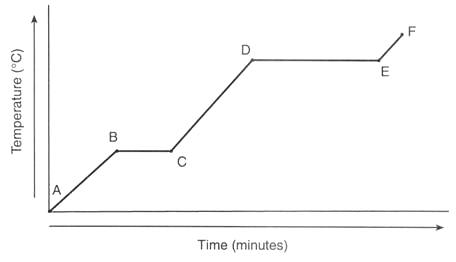
125.
What line segment represents only the solid state?
a)
A-B
b)
B-C
c)
C-D
d)
D-E
126.
What state(s) of matter are present at D-E?
a)
Solid-liquid
b)
Liquid
c)
Liquid-gas
d)
Gas-Solid
127.
Between which points is the temperature of the substance remaining constant?
a)
A-B only. 
b)
A-B, C-D, E-F
c)
B-C only. 
d)
B-C, D-E
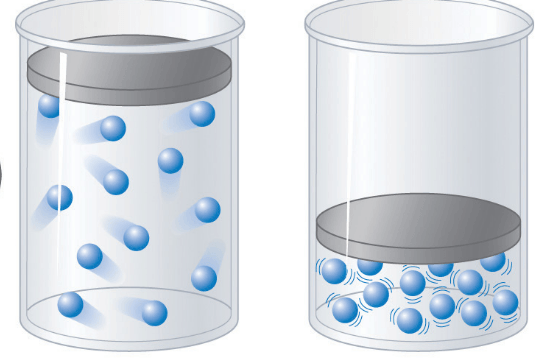
128.

Which container will have a lower pressure?

a)

left

b)

right

c)

they both have the same pressure

129.

The heating curve for a sample of pure ethanol is provided

above. The temperature was recorded as a 50.0 g sample of

solid ethanol was heated at a constant rate. What is the boiling point of ethanol?

a)

50K

b)

150K

c)

350K

d)

550K

130.
Gases are described as having a 
a)
definite shape and indefinite volume
b)
indefinite shape and indefinite volume
c)
definite shape and definite volume
d)
indefinite shape and definite volume
131.
When a gas changes its phase and turns into a liquid it is known as
a)
condensation.
b)
sublimation.
c)
vaporization.
d)
freezing or solidification.
132.
When a gas changes its phase and turns into a solid it is known as
a)
deposition.
b)
sublimation.
c)
condensation.
d)
freezing or solidification.
133.
When a solid changes its phase and turns into a gas it is known as
a)
deposition.
b)
melting.
c)
condensation.
d)
sublimation.
134.
During a phase change, the temperature remains the same
a)
True
b)
False
135.

A solid forms when the average kinetic energy of a substance's particles

a)

increases.

b)

decreases then increases.

c)

decreases.

d)

creates a random arrangement.

136.

Particles within a solid

a)

do not move.

b)

move about freely.

c)

vibrate about fixed positions

d)

exchange positions easily.

137.
Gas pressure is caused by
a)
gas molecules colliding with surfaces
b)
gas molecules condensing to a liquid
c)
gas molecules hitting other gas molecule
d)
barometers
138.

According to the Kinetic Molecular Theory a liquid's (SELECT ALL THAT APPLY)

a)

particles are held close together by intermolecular forces

b)

particles are in constant motion

c)

particles are vibrating in place and closely packed

d)

particles are not moving

139.
The total energy (kinetic & potential)  of all the particles in a substance is called: 
a)
temperature
b)
thermal energy
c)
degrees
d)
mass
140.
The movement of thermal energy from a warmer object to a cooler object is called: 
a)
temperature
b)
motion
c)
heat
d)
momentum
141.
Heated air moves from baseboard heaters to the rest of a room in a process called: 
a)
conduction
b)
convection
c)
radiation
d)
insulation
142.
TRUE/FALSE: During conduction, heat is transferred by the movement of currents within a fluid. 
a)
TRUE
b)
FALSE, radiation
c)
FALSE, convection
d)
FALSE, celsius
143.
A lizard basking (receiving heat from the light) in the sun is an example of: 
a)
Radiation
b)
Conduction
c)
Convection
144.
A metal spoon warming in a bowl of soup is an example of: 
a)
Radiation
b)
Conduction
c)
Convection
145.
A chair is placed several feet from a fireplace.  The fireplace has a glass screen.  The side of the chair facing the fireplace gets warm because of 
a)
conduction
b)
convection
c)
radiation
146.
Near the ceiling of a room the air is warmer.  The warm air rises because of
a)
conduction
b)
convection
c)
radiation
147.
You're holding hands with your best friend.  Your friend's hands are REALLY warm and yours are really cold.  After a few minutes, this has changed.  How might you explain what happened?
a)
The cold energy from your hand transferred to your friend's hand through conduction.
b)
The heat energy from your friend's hand transferred to your hand through conduction. 
c)
The cold energy from your hand transferred to your friend's hand through convection.
d)
The heat energy from your friend's hand transferred to your hand through convection.
148.
The more kinetic energy of the particles of matter the ________ it is moving. This means that the temperature is _________.
a)
faster; lower
b)
faster; higher
c)
slower; lower
d)
slower; higher
149.
No more energy can be removed from matter at:
a)
its freezing point
b)
0°C
c)
absolute zero
d)
273 K
150.
Heat transfer occurs:
a)
in many directions
b)
both from warm objects to colder ones and from cold objects to warmer ones
c)
only from warm objects to colder ones
d)
only from cold objects to warmer ones
151.
When you touch something that feels cold, 
a)
heat from your hand moves into the cold substance.
b)
coldness moves from the cold substance into your hand.
c)
it melts.
d)
it freezes.
152.
Energy that moves particles of matter is 
a)
temperature
b)
thermal energy
c)
heat
d)
friction
153.
The Law of Conservation of Energy states:
a)
Energy can created or destroyed but not transformed 
b)
Energy cannot be created or destroyed, it can only transformed
c)
Energy can't be created, destroyed or transformed
154.

The diagram shows a cart moving freely along a track. What happens to the energy of the cart as it moves from point A to point B on the diagram?

a)

Potential energy is transformed to kinetic energy.

b)

Kinetic energy is transformed to potential energy.

c)

Both potential energy and kinetic energy stay the same.

155.

A toy robot can walk and talk and runs on batteries. Which type of energy is stored in the batteries?

a)

nuclear

b)

chemical

c)

electrical

d)

mechanical

156.

What forms of energy are involved in hammering a nail into wood? Select all that apply

a)

Sound

b)

Kinetic

c)

Electrical

d)

Nuclear

157.

Which is a type of potential energy?

a)

Chemical

b)

Mechanical

c)

Sound

d)

Thermal / Heat

158.

Animals eat plants, so this means that plants are _________________ energy.

a)

Gravitational

b)

Light / Radiant

c)

Chemical

d)

Thermal / Heat

159.
Radiation is a method of thermal energy transfer that moves -
a)
through empty space.
b)
when objects touch.
c)
only through solids.
d)
in the motion of fluids.
160.
a)

A

b)

B

c)

C

d)

D