
NEW
Font size
S
M
L
XL
 Worksheets
Cell Theory and Characteristics of Life
Total questions: 21
Worksheet time: 29mins
Name
Class
Date
1.

What is the most basic unit of life?
a)
cell
b)
tissue
c)
organ
d)
organ system
2.

A _____ is something in the environment that causes an organism to respond.
a)
stimulus
b)
response
c)
cause
d)
effect
3.

When a baby kitten becomes an adult cat, this is an example of...
a)
energy metabolism
b)
growth and development
c)
response to stimuli
d)
having cells
4.
Maintaining a stable internal
environment is called
a)
homeostasis
b)
equilibrium
c)
balance
d)
evenness
5.
Identify the characteristic: A camel has eyelashes that work to keep the dust and sand out of its eyes.
a)
All living things adapt/respond to their environment
b)
All living things grow
c)
All living things have cells
d)
All living things use energy
6.
The dismissal bell rings and you pack up your belongings. In this scenario, what is the stimulus?
a)
The bell ringing
b)
You packing up your belongings
c)
More information is needed
7.
Multicellular means
a)
made of many cells
b)
made of one kind of cell
c)
made of only one cell
8.
Which of the following is NOT a characteristic shared by all living organisms?
a)
Ability to move
b)
Ability to grow and develop
c)
Made up of one or more cells
d)
Responds to stimuli
9.
Organisms, such as bacteria, are ______________ which means they consist of only a single cell.
a)
unicellular
b)
multicellular
c)
autotrophic
d)
heterotrophic
10.
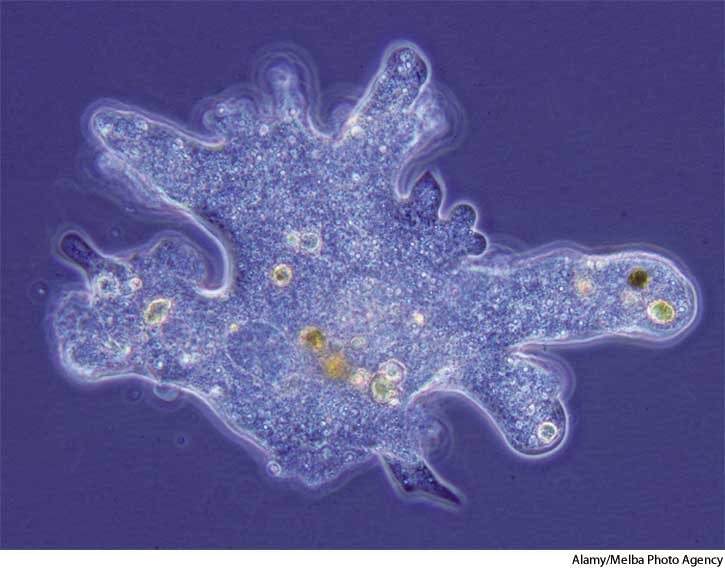
An Amoeba is a unicellular, animal-like protist that lives in ponds and streams. According to cell theory, where did this cell come from?
a)
another pre-existing amoeba cell.
b)
energy from sun that allowed the protist to reproduce.
c)
a multicellular organism.
d)
the nonliving environment.
11.
Rocks are not living because
a)
they never move
b)
they aren't needed for humans
c)
they are not made of cells
d)
they don't break down
12.
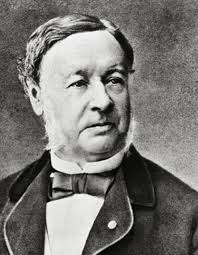
Which of the following scientists concluded that all animals are made of cells?
a)
Rudolf Virchow
b)
Matthais Schleiden
c)
Robert Hooke
d)
Theodor Schwann
13.

Which of the following scientists was the first to observe bacteria under a microscope?
a)
Anton van Leuwenhoek
b)
Matthais Schleiden
c)
Robert Hooke
d)
Theodor Schwann
14.
All plants are made of cells. This was discovered by....
a)
Matthias Schleiden
b)
Rudolf Virchow
c)
Robert Hooke
d)
Aristotle
15.
What tool do you use to view the cells?
a)
metric ruler
b)
centrifuge
c)
microscope
d)
pipette
16.
Which scientist disproved spontaneous generation of large organisms by showing maggots came from flies not from rotting meat?
a)
Redi
b)
Needham
c)
Spallanzani
d)
Pasteur
17.
Which scientist designed a special flask that allowed air in but kept microbes out and once and for all disproved spontaneous generation?
a)
Redi
b)
Needham
c)
Spallanzani
d)
Pasteur
18.
What is the idea that life can arise form nonliving material?
a)
biogenesis
b)
evolution
c)
spontaneous combustion
d)
spontaneous generation
19.
What did Redi use in his experiment?
a)
Broth and flasks
b)
Meat and jars
c)
swan-neck flasks
20.
Who finally disproved Spontaneous Generation?
a)
Redi
b)
Needham
c)
Spallanzani
d)
Pasteur
21.
Who was the first person to identify cells?
a)
Hooke
b)
Schleiden
c)
Schwann
d)
Pasteur
Reset

