
 Worksheets
Science Processes
Total questions: 20
Worksheet time: 18mins
Name
Class
Date
1.
Which of the following is an example of qualitative data?
a)
the color of the fur of an animal
b)
the mating behavior of an animal
c)
the average number of offspring that an organism has
d)
number of nose hairs
2.
This variable in an experiment is the one being deliberately changed by the scientist.
a)
dependent variable
b)
independent variable
c)
data
d)
control group
3.
In an experiment a variable known as the control is described as
a)
the variable that you purposely manipulate
b)
the variable that is being observed
c)
the variable that is not changed
d)
the variable that does not exist
4.
The factors in an experiment that can be changed.
a)
variables
b)
quantitative data
c)
hypothesis
d)
quantitative data
5.

The summary at the end of an experiment that explains the results.
a)
conclusion
b)
procedures
c)
materials
d)
responding variable
6.
What is independent variable?
a)
the variable that you purposely manipulate
b)
the variable that is being observed
c)
the variable that is not changed.
7.
A student wants to test the effects of type of exercise on heart rate. What is the dependent variable?
a)
heart rate
b)
type of exercise
c)
amount of exercise
d)
time of day exercise occurs
8.
Why do scientist use the scientific method?
a)
To make sure they get credit for their discoveries.
b)
To make sure their results are valid and can be performed by other scientists.
c)
So that other scientist don't get mad at them
9.
There are two types of data. Which type of data involves descriptions that cannot be counted or measured?
a)
qualitative
b)
quantitative
10.
What is the first step in the scientific method?
a)
Make an observation
b)
Design and conduct an experiment
c)
Make an hypothesis
d)
Share your results
11.
Should experiments be repeated over and over to see if the results are the same each time?
a)
yes
b)
no
12.
Science is a continually ongoing process.
a)
True
b)
False
13.
Which of these contains steps in the right order?
a)
Ask a question, state your hypothesis, research, experiment, analyze, make a conclusion
b)
State your hypothesis, ask a question, research, experiment, analyze, make a conclusion
c)
Ask a question, research, state your hypothesis, experiment, analyze, make a conclusion
d)
State your hypothesis, ask a question, research, make a conclusion, experiment, analyze
14.
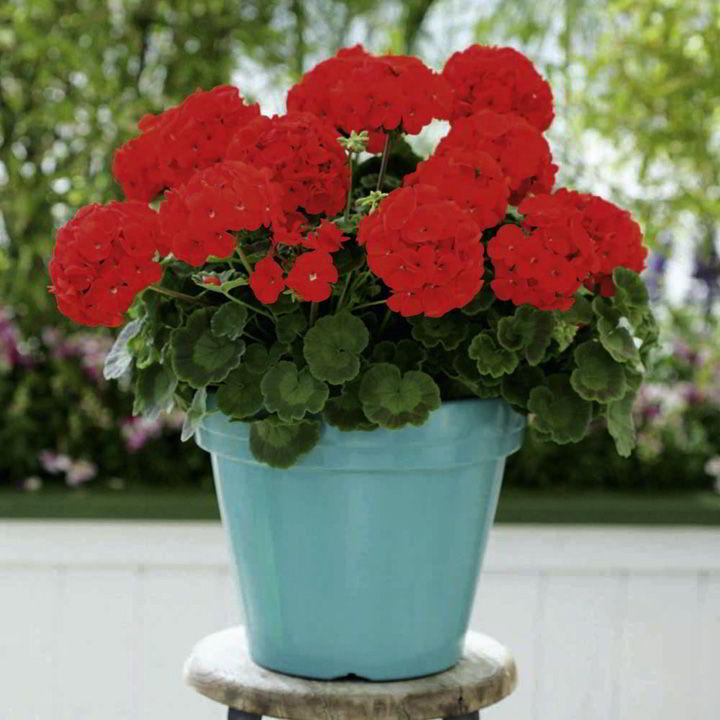
Susan said, “If I fertilize my geranium plants, they will blossom.”
a)
recognize a problem
b)
test the hypothesis with an experiment
c)
form a hypothesis
d)
draw conclusions
15.
An experiment is performed on plants to see how different liquids affect plant growth. Each plant in the experiment is given a different liquid; water, apple juice, or milk. Each plant has the same amount of soil, sunlight, and listens to the same music. In this investigation, what are the controlled variables?
a)
Type of plant, amount of music, and sunlight
b)
Water, apple juice, milk
c)
Plant growth
16.
An experiment is performed on plants to see how different liquids affect plant growth. Each plant in the experiment is given a different liquid; water, apple juice, or milk. Each plant has the same amount of soil, sunlight, and listens to the same music. In this investigation, the independent variable is ...
a)
The type of plant
b)
The amount of sunlight
c)
The type of music
d)
The type of liquid
17.
Qualitative data includes:
a)
an amount
b)
measurement
c)
a number
d)
a written description like a color
18.
Ms. Mynatt completes several trials of the same experiment to ensure that her data is accurate. This is an example of:
a)
Repetition
b)
Replication
c)
Independent Variable
d)
Constant
19.
Scientists do many types of work. Their work often includes making field observations, conducting surveys, creating models, and carrying out experiments. Which description characterizes an experiment?
a)
Observation of plants or animals in their natural environment
b)
Physical or mathematical representation of an object or process
c)
An organized procedure to study something under controlled conditions
d)
Collection of data from unregulated world for comparative purpose
20.
What two words should be in your hypothesis?
a)
I think
b)
If ...then...
c)
It will
d)
No idea
100 %

